How to Collimate a Reflector Telescope for Sharp Views
Published How we research
Collimation is the process of aligning the mirrors in a reflector telescope so that light comes to a clean focus. It sounds technical, but it is a routine maintenance task that becomes quick and painless with practice. A well-collimated reflector delivers crisp, high-contrast images, while a misaligned one produces soft, disappointing views no matter how good the optics are.
Products from this article
The highest-scoring picks from the buying guides this article links to. Scores are our editorial assessment, not customer ratings.
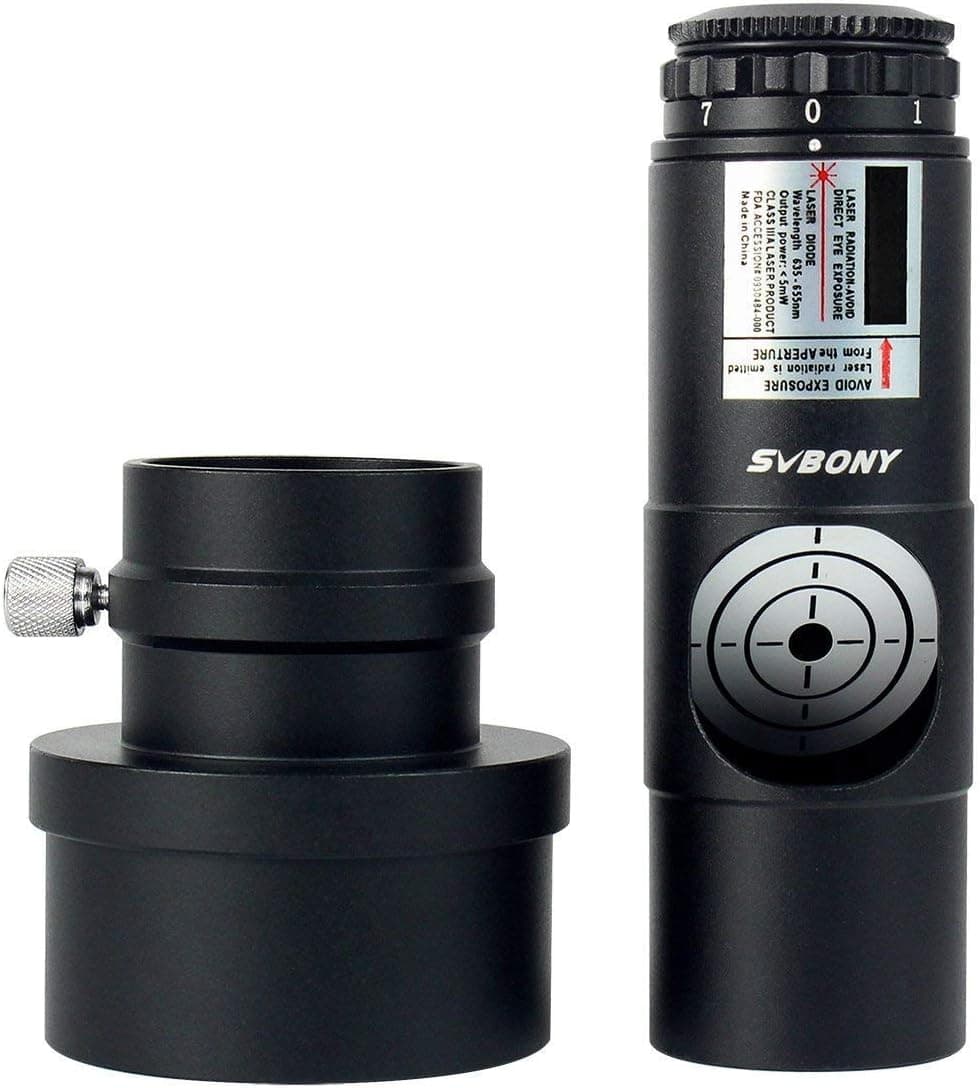
+ Self-centering adapter design reduces errors caused by loose focuser fit
From our guide: Best Collimators for Razor-Sharp Optics (2026)
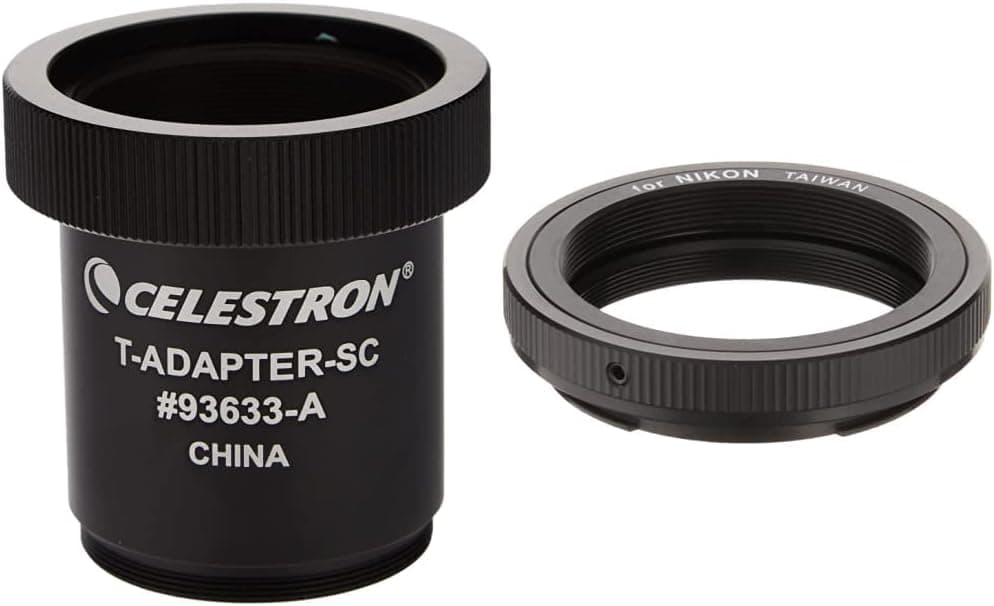
+ Bundle includes both SCT T-adapter and Nikon T-ring for a complete connection
From our guide: Best DSLR T-Adapters for Prime-Focus Imaging (2026)
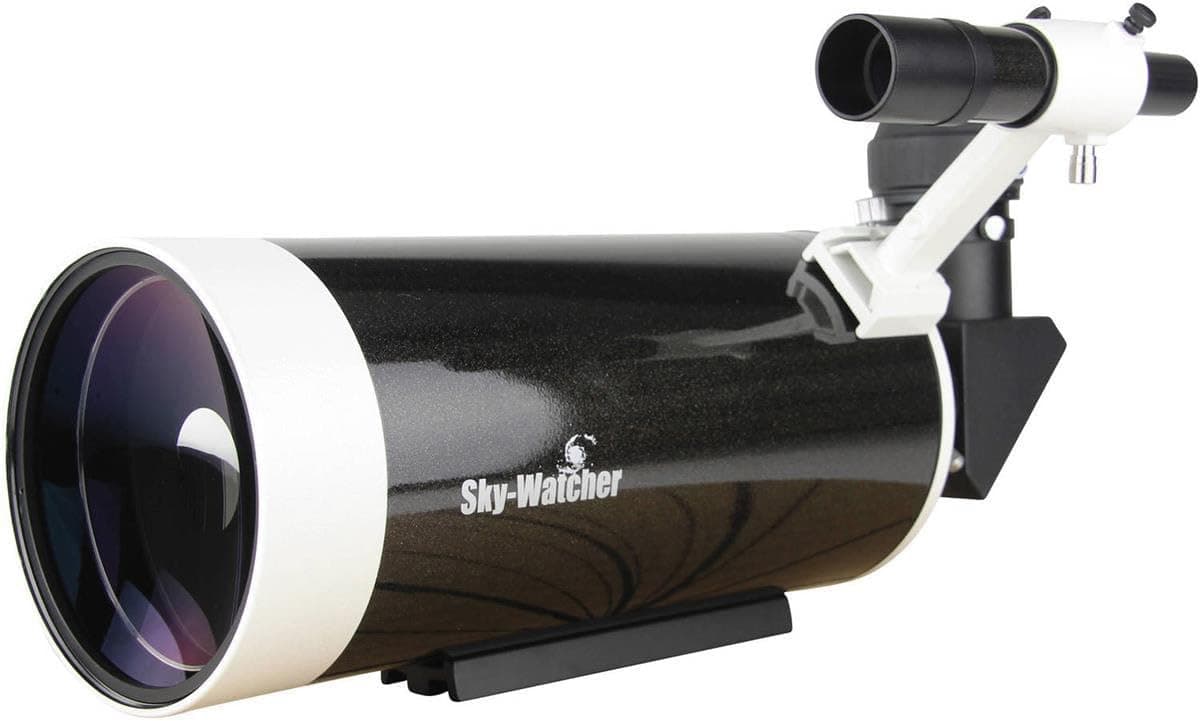
+ 127mm aperture is a sweet spot for sharp planetary views in a short, portable tube
From our guide: Best Maksutov Telescopes for Planets and Moon (2026)
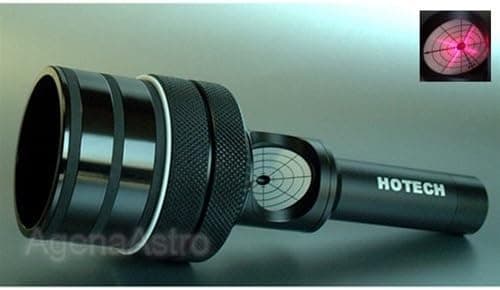
+ 7 bright levels help match laser brightness to your viewing conditions
From our guide: Best Collimators for Razor-Sharp Optics (2026)

Reflectors need collimation because their mirrors can shift slightly from transport, temperature changes, and ordinary handling. A Newtonian reflector has two mirrors: a large primary mirror at the base of the tube and a small secondary mirror near the front that directs light to the eyepiece. Both must be aligned so their optical axes coincide and point light precisely into the focuser. Refractors, by contrast, rarely need this because their optics are sealed and fixed.
The simplest alignment aid is a collimation cap, a cover with a small central hole that you look through to judge the alignment of the reflections. More precise is a laser collimator, which projects a beam down the optical path so you can see exactly where the alignment is off. A Cheshire eyepiece is another popular tool that uses crosshairs and a bright ring to guide the process. Any of these makes the job far easier than eyeballing alone.
Begin by adjusting the secondary mirror so that, looking through the focuser, it appears centered and round beneath the eyepiece. Small screws on the secondary holder let you tilt and rotate it until the view is symmetrical. This step is done less often because the secondary rarely shifts, but it forms the foundation for aligning the primary and should be checked first.
Next, adjust the primary mirror using the collimation screws at the back of the tube. The goal is to center the reflection of the secondary mirror and the small central mark placed on the primary. With a laser collimator, you simply adjust these screws until the returning beam lands back on its origin. Work slowly, turning one screw at a time and observing the effect, since the adjustments interact.
Always confirm collimation on the sky with a star test. Point at a moderately bright star, defocus it slightly, and examine the resulting disk. In a well-collimated scope, the disk appears as a series of even, concentric rings. If the rings look lopsided, small tweaks to the primary screws will bring them into symmetry. Do this at high magnification for the most sensitive check.
Collimation grows faster with repetition, and many observers do a quick check at the start of each session in under a minute. Keeping a reflector properly aligned is the difference between fuzzy frustration and the sharp, detailed views the design is capable of. Treat it as a normal part of ownership, like tuning an instrument, and your telescope will consistently perform at its best.
Popular right now
- Best Intervalometers for Automated Astro Shots (2026)Buying guide
- Best Finder Scopes to Locate Targets Fast (2026)Buying guide
- Telescope Aperture and Magnification ChartArticle
- Best Star Diagonals for Comfortable Viewing (2026)Buying guide
- Best Red Flashlights to Protect Night Vision (2026)Buying guide
- Equatorial mount explainedGlossary
Based on the last 28 days of search and visitor data.