Sky-Watcher Skymax 127mm Maksutov-Cassegrain - Large Aperture Compound-Style Reflector Telescope Review (2026)
Updated September 14, 2026 · Research-based review
Our verdict
The Skymax 127mm is a compact Maksutov-Cassegrain built for crisp, high-magnification views of the Moon and planets, thanks to a long focal length in a short, sealed tube. Its strength is sharp planetary detail in a portable package, and its trade-off is a narrow field of view that is a poor match for broad sky fields and large nebulae.
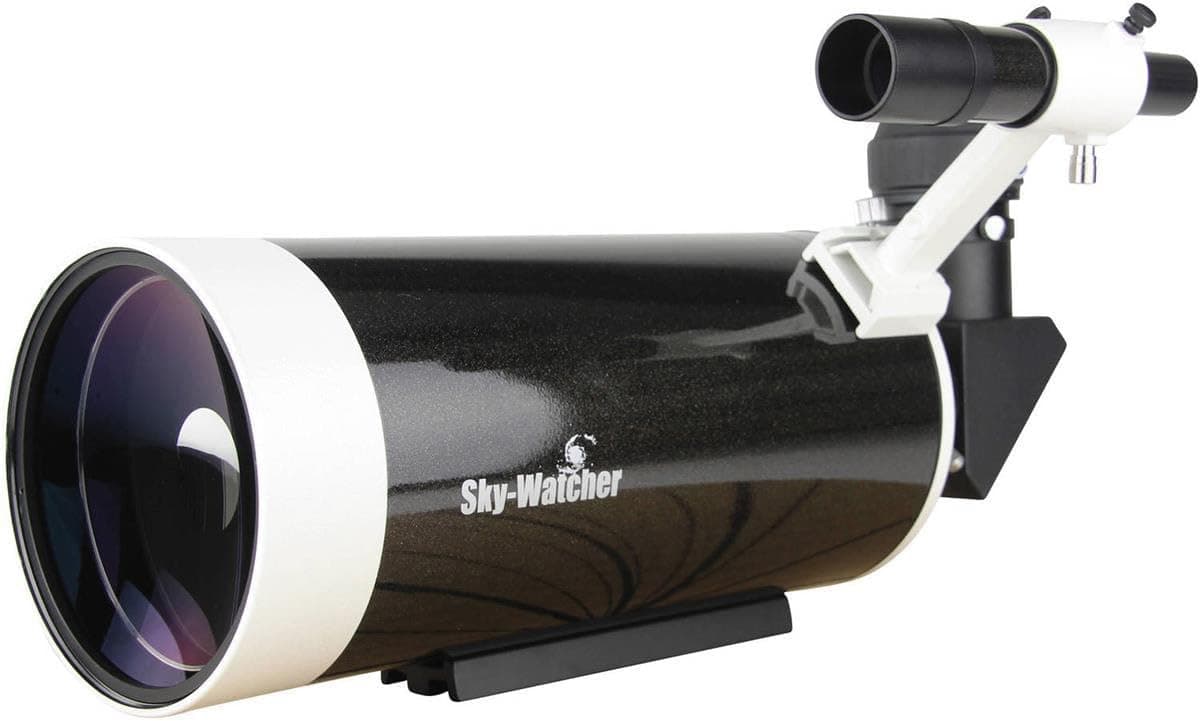
Sky-Watcher Skymax 127mm Maksutov-Cassegrain, a compact compound scope prized for crisp lunar and planetary detail.
Price range: See on Amazon
What we liked
- + 127mm aperture is a sweet spot for sharp planetary views in a short, portable tube
- + Sealed Maksutov design keeps dust off the optics and rarely needs collimation
- + Long focal length gives high magnification with ordinary eyepieces
Trade-offs
- - Narrow field of view makes large star fields and wide nebulae hard to frame
- - Thick corrector plate needs cool-down time before views sharpen fully
Who Should Consider This Telescope
This telescope is aimed at observers whose main interest is the Moon, Saturn's rings, Jupiter's cloud bands and other planets rather than large open clusters or large nebulae, since its long focal length concentrates on small, bright targets rather than sweeping fields of sky. The 127mm aperture is a well-regarded middle ground in the Maksutov-Cassegrain lineup, large enough to resolve real planetary detail while staying light and short enough to carry to a dark site in one hand. It suits an observer upgrading from a small refractor or reflector who wants noticeably sharper high-power views without stepping up to a much larger, heavier telescope. It is less suited to someone whose primary interest is deep-sky imaging of faint, extended objects.
Optical Design And What Is In The Tube
The optical tube pairs a 127mm aperture with a 1540mm focal length, giving a focal ratio around f/12.1, achieved through a Maksutov-Cassegrain design where light folds back through the tube via a primary mirror and a corrector plate at the front. The mirrors are borosilicate glass with a proprietary aluminum-quartz coating rated at about 94 percent reflectivity, and the corrector lens carries multiple anti-reflection coating layers on both sides for high light transmission and contrast. The tube ships with a 2-inch 28mm eyepiece, a 6x30 straight-through finderscope, a 2-inch 90-degree diagonal, and a Vixen-style dovetail bar with a standard quarter-20 tripod thread, so it can mount to a Sky-Watcher equatorial mount or a photographic tripod that supports its weight.
Getting It Ready For A Night Of Viewing
Because this is an optical tube only, it needs a separate mount, either a Sky-Watcher equatorial GoTo mount for automated tracking or a sturdy photo tripod for simple manual viewing, before it can be used. The sealed Maksutov design behind the corrector plate keeps dust and moisture off the mirrors, so it rarely if ever needs collimation, unlike an open-tube Newtonian reflector of similar aperture. The thick corrector plate does mean the tube needs 20 to 30 minutes to acclimate to outdoor temperature before images sharpen fully on a cold night, a known characteristic of this optical design rather than a flaw in this particular unit. Storing it in a padded case between sessions protects the coated corrector plate and finderscope from dust and knocks.
Trade-Offs And How It Compares
The long 1540mm focal length that makes planets look large also narrows the field of view considerably, so large open clusters, big nebulae and wide Milky Way vistas are difficult or impossible to frame fully, an honest trade-off for anyone coming from a wide-field refractor. Against Sky-Watcher's own larger 150mm and 180mm Skymax models, this 127mm version is lighter and more portable while giving up some light-gathering power and fine detail on faint targets. Compared with Celestron's NexStar 4SE, which bundles a similar 4-inch Maksutov tube with a computerized GoTo mount in one product, this Sky-Watcher tube offers more flexibility in mount choice but requires that mount to be bought and set up separately.
Final Take For Planetary Observers
For an observer chasing sharp lunar and planetary detail in a compact, low-maintenance tube, the Skymax 127mm is a strong choice, reflected in our score of 8.6 out of 10 built on fit for the job and value. Remember that the price covers the optical tube alone, so a mount is a required additional purchase before first light. Anyone whose main interest is broad sky fields, large nebulae or deep-sky imaging of faint, extended targets should choose a shorter-focal-length refractor or a fast Newtonian reflector instead, where this Maksutov design's narrow field becomes a real handicap.
Frequently asked questions
Does the Skymax 127mm include a mount or tripod?
No, this is the optical tube only. It has a Vixen-style dovetail and a standard tripod thread, so it needs a separate equatorial or photo tripod mount to be usable.
Why does the view look soft right after setup on a cold night?
The thick corrector plate needs time, typically 20 to 30 minutes, to reach outdoor temperature before the image sharpens fully. This is normal for Maksutov-Cassegrain telescopes.
Is this telescope good for viewing nebulae and open clusters?
Its long focal length gives a narrow field of view, so it is better suited to the Moon and planets than to large nebulae or broad sky fields, which are better framed with a shorter-focal-length telescope.
Does the sealed tube design need regular collimation like a reflector?
The sealed Maksutov-Cassegrain design keeps dust off the mirrors and rarely needs collimation, which is one of its advantages over an open-tube Newtonian reflector of similar aperture.
Prices change often, so check the current price and availability on Amazon.
Check price on AmazonStargazer Nest may earn a commission from the link above.