Refractor vs Reflector vs Dobsonian
Published How we research
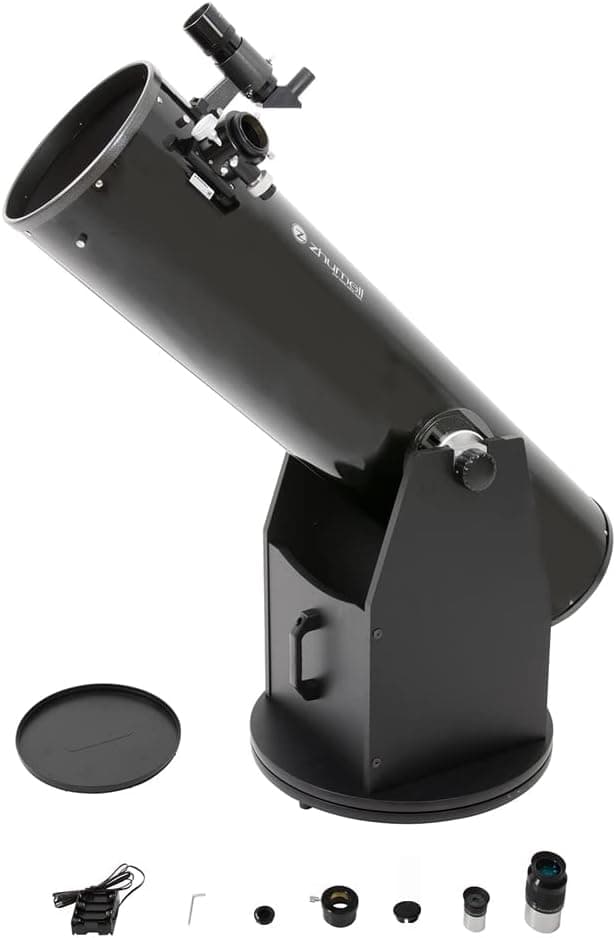
Amateur telescopes come in a few core designs, and understanding their differences helps you match an instrument to your interests and budget. The three names most beginners encounter are refractors, reflectors, and Dobsonians. It helps to know that Dobsonian is not a separate optical design but a type of reflector mounted in a particular way, which is why the comparison can seem confusing at first.
Products from this article
The highest-scoring picks from the buying guides this article links to. Scores are our editorial assessment, not customer ratings.
+ 10-inch aperture reveals globular clusters as stars and shows galaxy structure
From our guide: Best Dobsonian Telescopes for Deep-Sky Views (2026)
+ 130mm aperture with fast f/5 optics and a 650mm focal length for the Moon, planets, galaxies and nebulae
From our guide: Best Reflector Telescopes for Deep-Sky (2026)
+ Largest aperture class among tabletop scopes, so faint galaxies and nebulae become reachable
From our guide: Best Tabletop Telescopes for Grab-and-Go Views (2026)
+ 8-inch-class mirror shows Saturn's rings, cloud belts on Jupiter and many galaxies
From our guide: Best Dobsonian Telescopes for Deep-Sky Views (2026)
Refractors use a lens at the front of the tube to bend and focus light. They produce sharp, high-contrast images and need almost no maintenance because the optics are sealed inside the tube. Their sealed design also makes them rugged and quick to use. The drawback is cost: large lenses are expensive to manufacture, so refractors offer relatively small apertures for the price and can show slight color fringing around bright objects unless built to a higher standard.
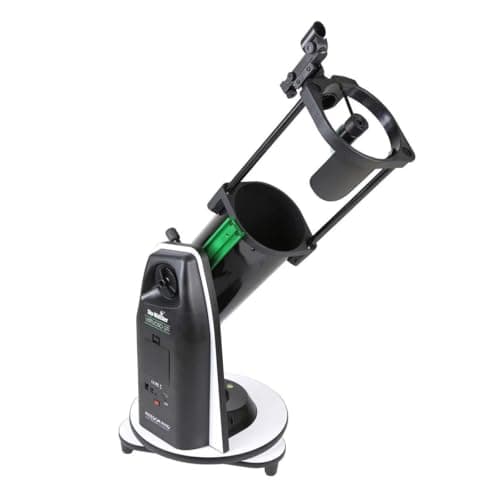
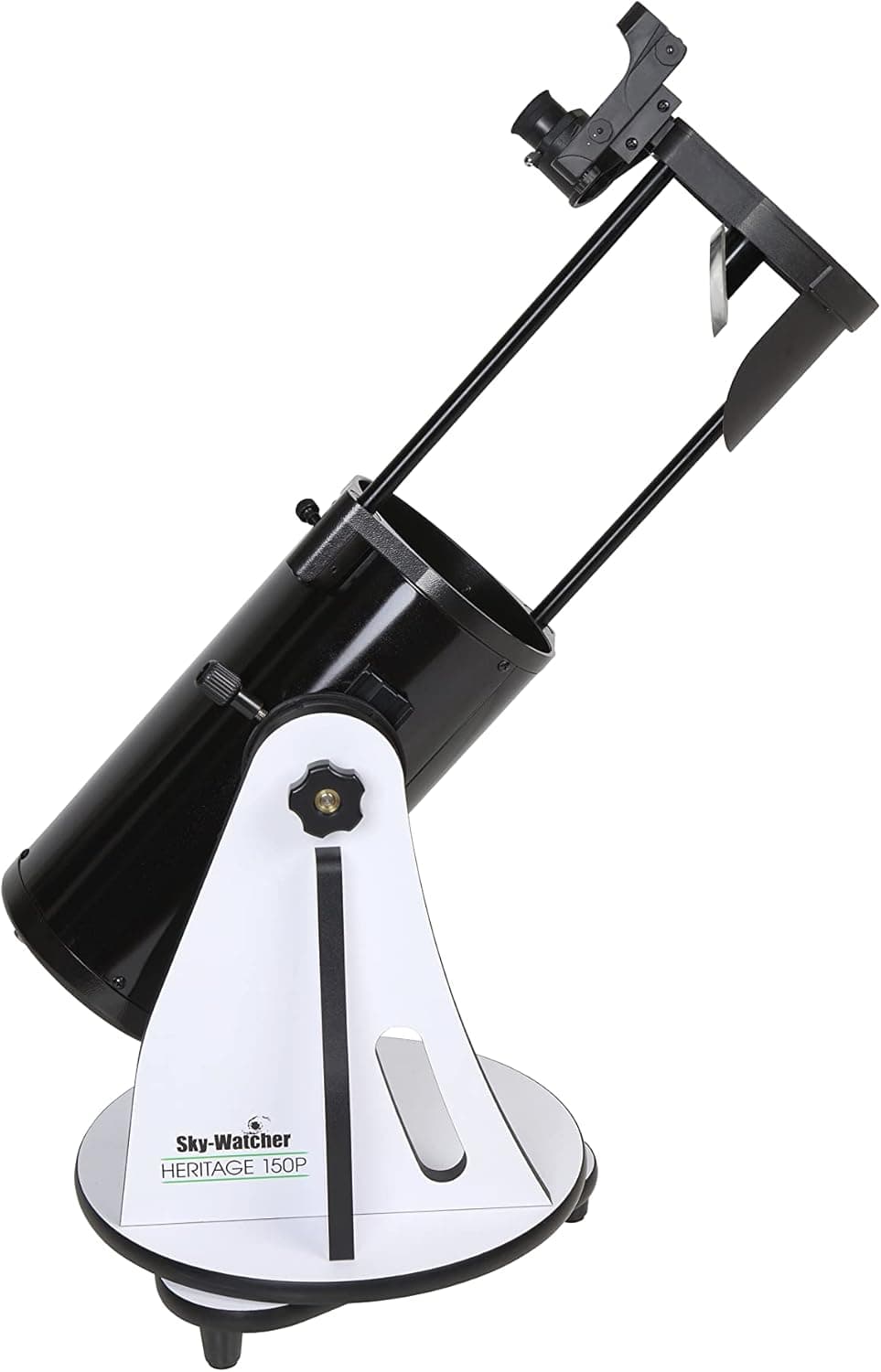
Reflectors use mirrors instead of lenses, with a large primary mirror at the base of the tube gathering light. Because mirrors are cheaper to make at large sizes, reflectors deliver far more aperture per unit of cost. This makes them excellent for faint deep-sky objects like galaxies and nebulae. The tradeoffs are that the open tube can collect dust, and the mirrors occasionally need realignment, a process called collimation, which is straightforward once learned.
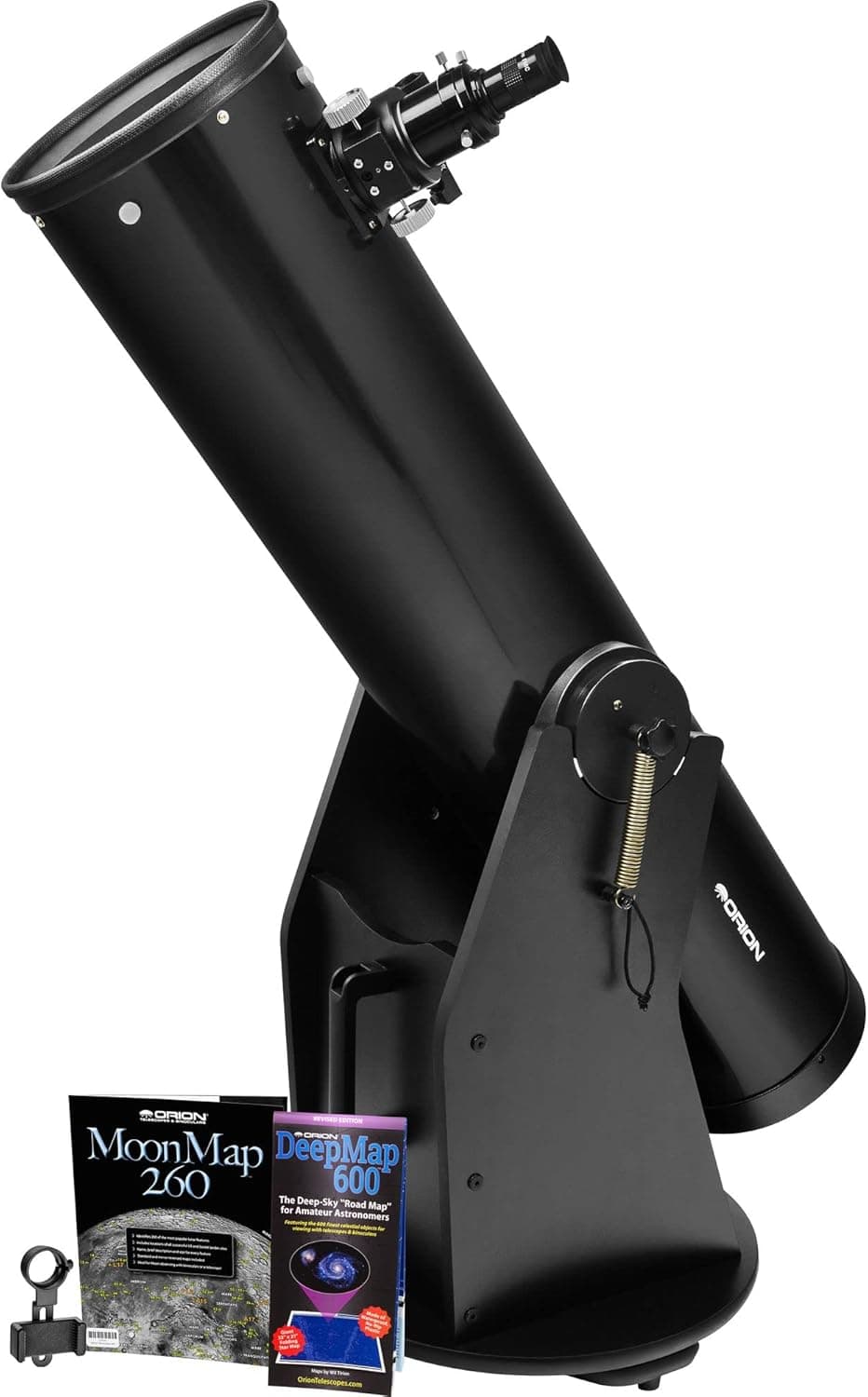
A Dobsonian is a reflector placed on a simple, sturdy base that pivots up, down, and side to side. This mounting is inexpensive and rock solid, so nearly all of your money goes into aperture rather than a complicated mount. Dobsonians are widely recommended as first telescopes because they offer huge light-gathering power for the price and are intuitive to aim by hand. The main limitation is that they do not automatically track objects, so you nudge the tube to follow the sky.
When deciding, consider what you most want to observe. Refractors excel on the Moon, planets, and double stars, where their crisp contrast shines and their modest aperture is enough. Larger reflectors and Dobsonians reward those chasing faint galaxies, star clusters, and nebulae that demand light-gathering muscle. Many observers eventually own more than one scope for exactly this reason.
Portability and lifestyle also weigh in. A small refractor is grab-and-go friendly and travels well, while a large Dobsonian gives spectacular views but takes up serious space and may need two hands to carry. Be honest about your storage, your vehicle, and how far you must drive to dark skies before committing.
For most beginners seeking the best value and the widest range of visible objects, a Dobsonian reflector in the 150mm to 200mm range is hard to beat. Those prioritizing convenience, low maintenance, and sharp planetary views may prefer a quality refractor even at smaller aperture. There is no single correct answer, only the design that best fits how and where you plan to observe.
At a glance: Refractor vs Reflector
| Refractor | Reflector | |
|---|---|---|
| Aperture per dollar | Low | High |
| Maintenance | Almost none | Occasional collimation |
| Cool-down time | Short | Longer for large mirrors |
| Image | Sharp, high contrast, some colour fringing on budget models | Bright, no colour fringing |
| Best targets | Moon, planets, wide fields | Faint galaxies and nebulae |
| Portability | Compact at small apertures | Bulkier at the same price |
Choose Refractor if
- You want grab-and-go simplicity
- You mostly view the Moon and planets
- You also want terrestrial viewing
Choose Reflector if
- You want the most aperture for your budget
- Deep-sky objects are the goal
- You do not mind occasional collimation
Bottom line: For visual observing on a budget a reflector, especially a Dobsonian, shows the most. A small refractor is the easiest telescope to own and use often.
Popular right now
- Best Intervalometers for Automated Astro Shots (2026)Buying guide
- Best Finder Scopes to Locate Targets Fast (2026)Buying guide
- Telescope Aperture and Magnification ChartArticle
- Best Star Diagonals for Comfortable Viewing (2026)Buying guide
- Best Red Flashlights to Protect Night Vision (2026)Buying guide
- Equatorial mount explainedGlossary
Based on the last 28 days of search and visitor data.