SVBONY SV165 Mini Guide Scope 30mm F4 Finder for ZWO QHY Orion Auto Guiding Cameras Deep Sky Review (2026)
Updated September 21, 2026 · Research-based review
Our verdict
A light, budget friendly way to add autoguiding to a deep sky imaging rig without piling on extra weight. The wide field 30mm optics make finding a guide star simple, but it needs its own guide camera and its short focal length limits precision for long focal length imaging setups.
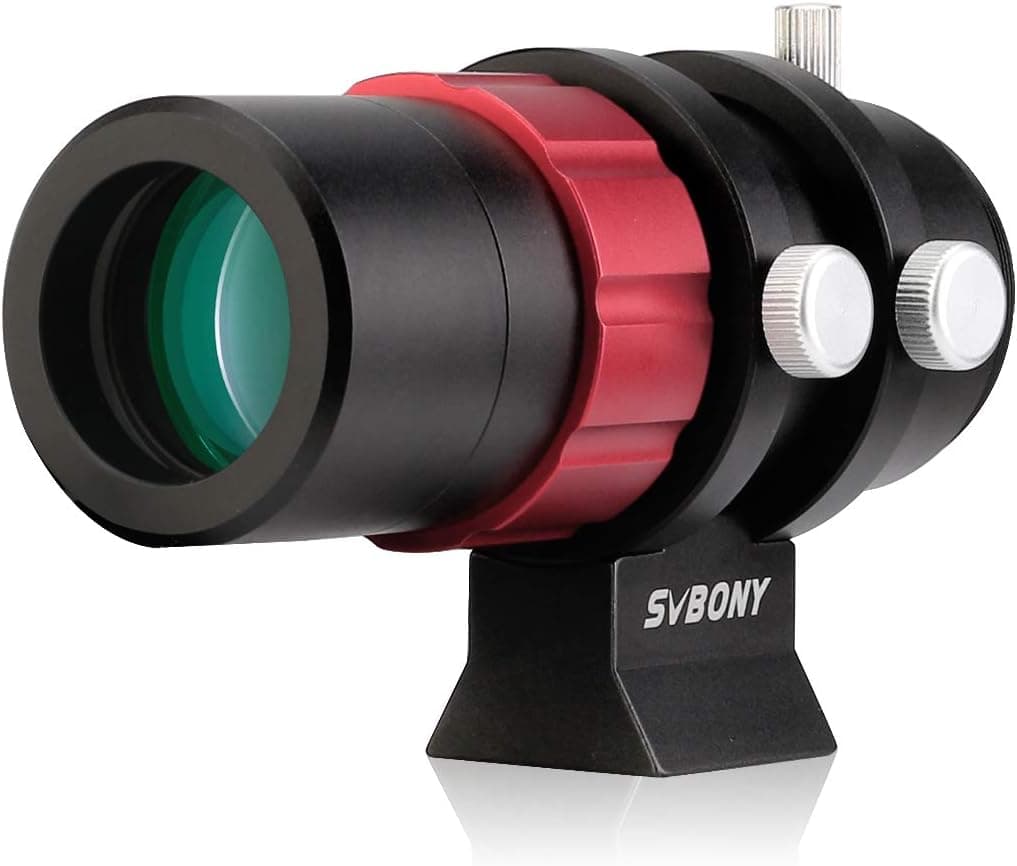
SVBONY SV165 mini guide scope, 30mm F4 finder for ZWO, QHY and Orion autoguiding cameras in deep-sky setups.
Price range: $ (Budget)
What we liked
- + 30mm F4 optics give a wide field for easy guide star selection
- + Compatible with ZWO, QHY and Orion guide cameras
- + Doubles as a finder scope to save weight on the telescope
Trade-offs
- - Guide camera is not included, so it needs a separate purchase
- - Short focal length gives less guiding precision for long focal length imaging
Optical specifications
The SV165 is a small refractor with a 30mm aperture, about 120mm focal length, and an F4 focal ratio, built specifically to serve as a guide scope rather than a primary imaging or viewing telescope. Fully multi coated lens elements are meant to keep light transmission reasonably high despite the small aperture, and the short focal length gives a wide field of view compared with a longer guide scope of the same aperture, which makes it noticeably easier to find a guide star bright enough to lock onto in any given patch of sky. That combination of small size and wide field is the main design trade off at the heart of this scope, prioritizing ease of finding a star over fine positional precision.
Build and mounting
The tube is aluminum with a sandblasted, oxidized surface finish, and the whole assembly weighs a little over 340 grams, which is light enough to mount alongside a guide camera on most imaging rigs without meaningfully affecting balance. It attaches through a standard quarter twenty threaded mount, and a two ring bracket with a dovetail base is included so it can be clamped onto a telescope tube ring or a dedicated guide scope rail alongside the main imaging telescope. A helical focuser with roughly 45mm of travel and a thumbscrew lock lets you dial in focus on a star field and then lock it in place so it does not drift during an imaging session.
Camera compatibility
This scope does not include a guide camera, it is sold as the optical tube only, so it needs to be paired with a separate autoguiding camera from a brand such as ZWO, QHY, or Orion, connected through the 1.25 inch or M42 threaded interface at the back of the scope. That means the real cost of building a working autoguiding setup includes both this scope and a compatible guide camera, which adds meaningfully to the total price compared with the scope alone. Buyers who do not already own a guide camera should factor that additional purchase into their budget before deciding this is the right guiding solution for their imaging train.
Guiding precision trade offs
Because the focal length is short at around 120mm, the image scale at the guide camera is coarse compared with a longer guide scope, which means small amounts of star movement on the sensor translate to comparatively large real world tracking errors that the mount has to correct for. For imaging setups using a wide field, short focal length main telescope, that level of precision is usually adequate, but anyone imaging through a long focal length instrument such as a Schmidt Cassegrain or a large refractor will generally get tighter guiding and rounder stars from a longer focal length guide scope, since the finer image scale lets it catch smaller amounts of drift before they show up in the final image.
Who this guide scope suits
This is a sensible, low cost choice for imagers using a relatively short or medium focal length main telescope who want a lightweight guiding setup that will not unbalance the rig or require a heavier duty mount, and who are comfortable choosing and buying a compatible guide camera separately. Its wide field also makes initial setup and finding a guide star less frustrating than with a narrower field scope, which matters for anyone still learning the autoguiding workflow. Imagers working at long focal lengths who need the tightest possible guiding precision should look at a longer focal length guide scope instead, since the extra magnification there will generally deliver rounder stars over long exposures.
Frequently asked questions
Does this guide scope come with a guide camera?
No, it is sold as the optical tube only, so you need a separate compatible autoguiding camera from a brand such as ZWO, QHY, or Orion.
How much does the scope weigh?
It weighs a little over 340 grams, light enough to mount alongside a guide camera without significantly affecting balance on most imaging rigs.
Is this guide scope good for long focal length imaging setups?
It works, but its short roughly 120mm focal length gives coarser guiding precision than a longer guide scope, which is a better match for long focal length instruments.
What camera interfaces does it use?
It connects to a guide camera through a 1.25 inch or M42 threaded interface at the back of the scope.
Prices change often, so check the current price and availability on Amazon.
Check price on AmazonStargazer Nest may earn a commission from the link above.