ZWO ASI174MM-MINI 2.1 MP CMOS Monochrome Astronomy Camera with USB 2.0 Autoguider Review (2026)
Updated September 21, 2026 · Research-based review
Our verdict
The ZWO ASI174MM-MINI pairs a larger than entry level Sony sensor with a mini form factor, making it easier to find and lock onto guide stars for autoguiding than the smallest guide cameras. Its USB 2.0 interface keeps it in the guiding and planetary role rather than high speed imaging, and it costs more than basic guide cameras.
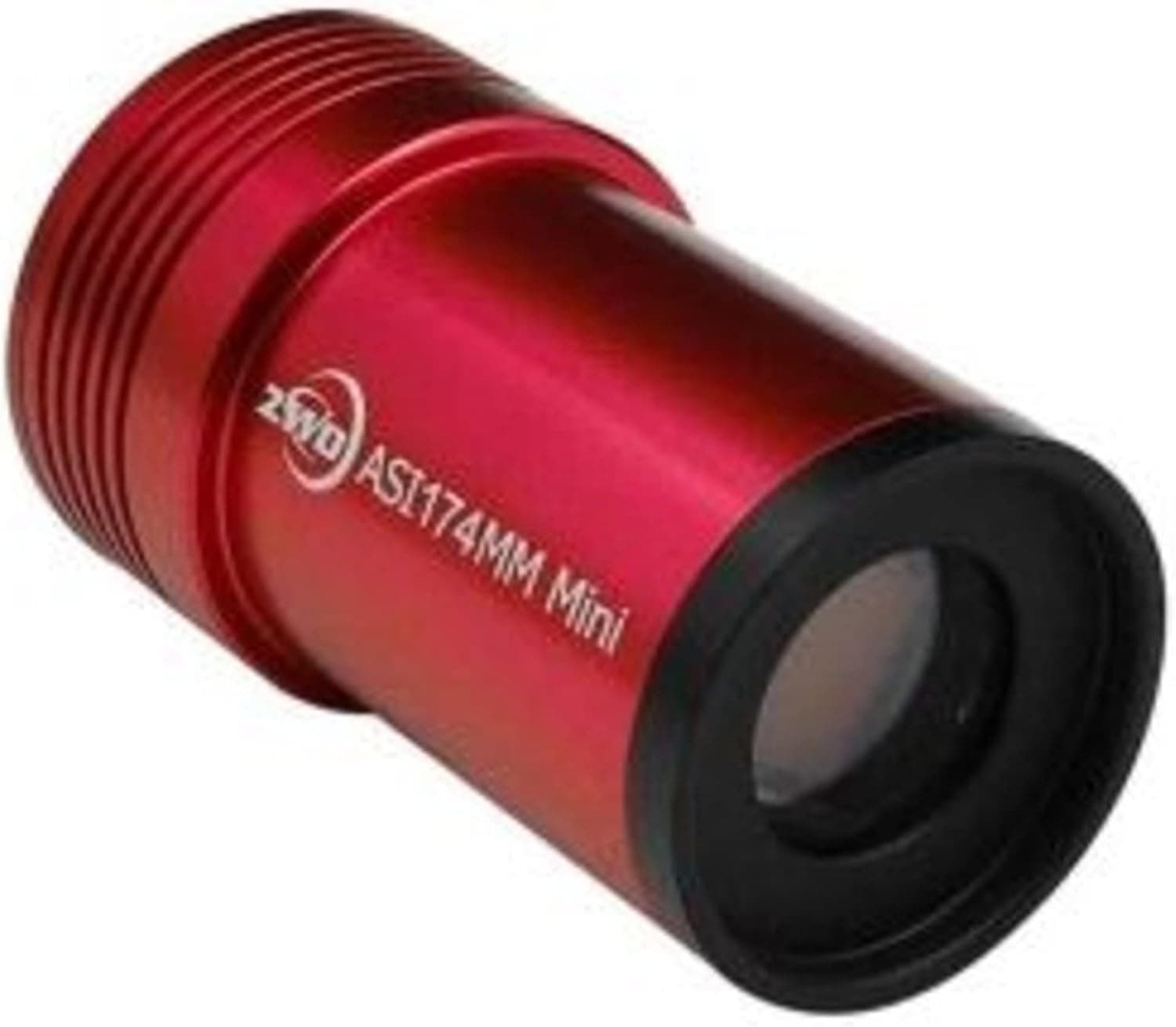
ZWO ASI174MM-MINI 2.1 MP CMOS monochrome camera with USB 2.0, built as a sensitive autoguider.
Price range: $ (Budget)
What we liked
- + Larger sensor than entry mini guide cams finds guide stars more easily
- + Monochrome sensor offers high sensitivity for off-axis guiding
- + Mini form fits compact guide scopes and OAG setups
Trade-offs
- - Costs more than basic guide cameras that handle simple guiding fine
- - USB 2.0 is not suited for high-speed imaging
Who this camera is for
The ASI174MM-MINI is built for astrophotographers who want a dedicated autoguiding camera, typically paired with a mini guide scope or used off axis with a guider, to keep a main imaging telescope precisely tracking a target during long exposures. Its monochrome sensor and larger chip than ZWO's smallest guide cameras make it a strong choice for observers whose mount or guide scope combination has struggled to find enough usable guide stars with a smaller sensor camera, since a bigger sensor covers more sky and increases the odds of a bright star landing in frame. It also works for basic planetary imaging given its sensitivity, though that is a secondary use case.
Sensor and imaging specifications
At the core of the camera is a Sony IMX174 monochrome sensor measuring about 11.3 by 7.1 millimeters, delivering 1936 by 1216 pixels at 2.1 megapixels with a pixel size of 5.86 by 5.86 micrometers, a physically larger sensor and pixel size than entry level guide cameras built around smaller 1.2 megapixel sensors. The camera uses a 12-bit analog to digital converter and reaches a peak quantum efficiency of about 77 percent, meaning it captures a high proportion of the light that reaches the sensor, which translates into detecting fainter guide stars than a less sensitive sensor would pick up under the same conditions.
Speed, interface and physical size
The camera connects over USB 2.0 rather than USB 3.0, with an exposure range spanning from 32 microseconds up to 300 seconds and a frame rate of about 18.4 frames per second at full resolution, which is more than adequate for the relatively low frame rate demands of autoguiding software but a real ceiling for anyone hoping to also use it for high frame rate planetary lucky imaging. Despite its larger sensor, the mini housing keeps the camera compact and light, weighing about 140 grams, so it fits small guide scopes and off axis guider ports without adding significant weight or bulk to the imaging train.
Guiding performance in practice
Because autoguiding relies on repeatedly and quickly measuring a guide star's position to send tiny correction signals to the mount, a sensor with low read noise and high dynamic range, both cited for this sensor, helps the guiding software lock onto and track a star accurately even under less than perfect sky conditions or with a fainter guide star than a noisier sensor could use reliably. The larger sensor area compared with ZWO's smallest 1.2 megapixel mini guide cameras also means less need for precisely centering the guide scope, since a wider field increases the chance a bright enough star falls within frame on the first try.
Verdict and how it compares
This camera earns a strong score as a sensitive, larger sensor autoguiding camera, and it ranks just behind ZWO's own smaller and less expensive ASI120MM-Mini in the autoguider comparison it belongs to, reflecting that many observers find the smaller, cheaper camera sufficient for straightforward guiding while this model earns its higher price through better star detection in more difficult guiding situations. Buyers whose guide scope or off axis guider setup has struggled to find enough guide stars, or who want headroom for occasional planetary imaging, will get clear value from the larger sensor, while anyone guiding a simple, well matched setup may find a smaller, cheaper guide camera performs just as well.
Frequently asked questions
Is this camera meant for deep sky imaging or guiding?
It is primarily an autoguiding camera, paired with a guide scope or off axis guider to keep a main imaging camera tracking accurately, though its sensitivity also suits basic planetary imaging.
What sensor does it use?
It uses a Sony IMX174 monochrome CMOS sensor with 1936 by 1216 pixels at 2.1 megapixels, larger than ZWO's smallest 1.2 megapixel mini guide cameras.
Can it be used for high speed planetary imaging?
Its USB 2.0 interface and roughly 18.4 frames per second at full resolution work for guiding and casual planetary use, but higher frame rate USB 3.0 cameras are better suited to serious lucky imaging.
How much does the camera weigh?
It weighs about 140 grams, light enough to mount on small guide scopes or off axis guider ports without significantly affecting balance.
Prices change often, so check the current price and availability on Amazon.
Check price on AmazonStargazer Nest may earn a commission from the link above.