ZWO ASI120MM-Mini 1.2MP Monochrome Astronomy Camera 1280x960 CMOS USB2.0 Type-C ST4 Port Review (2026)
Updated September 20, 2026 · Research-based review
Our verdict
The ZWO ASI120MM-Mini is a compact monochrome guide camera with a 1.2 megapixel sensor, an ST4 port for direct mount guiding, and a USB2.0 Type-C connection. Its small body fits 1.25 inch focusers and finder brackets, making it a practical autoguider, though the small sensor and USB2.0 speed limit its use for planetary imaging.
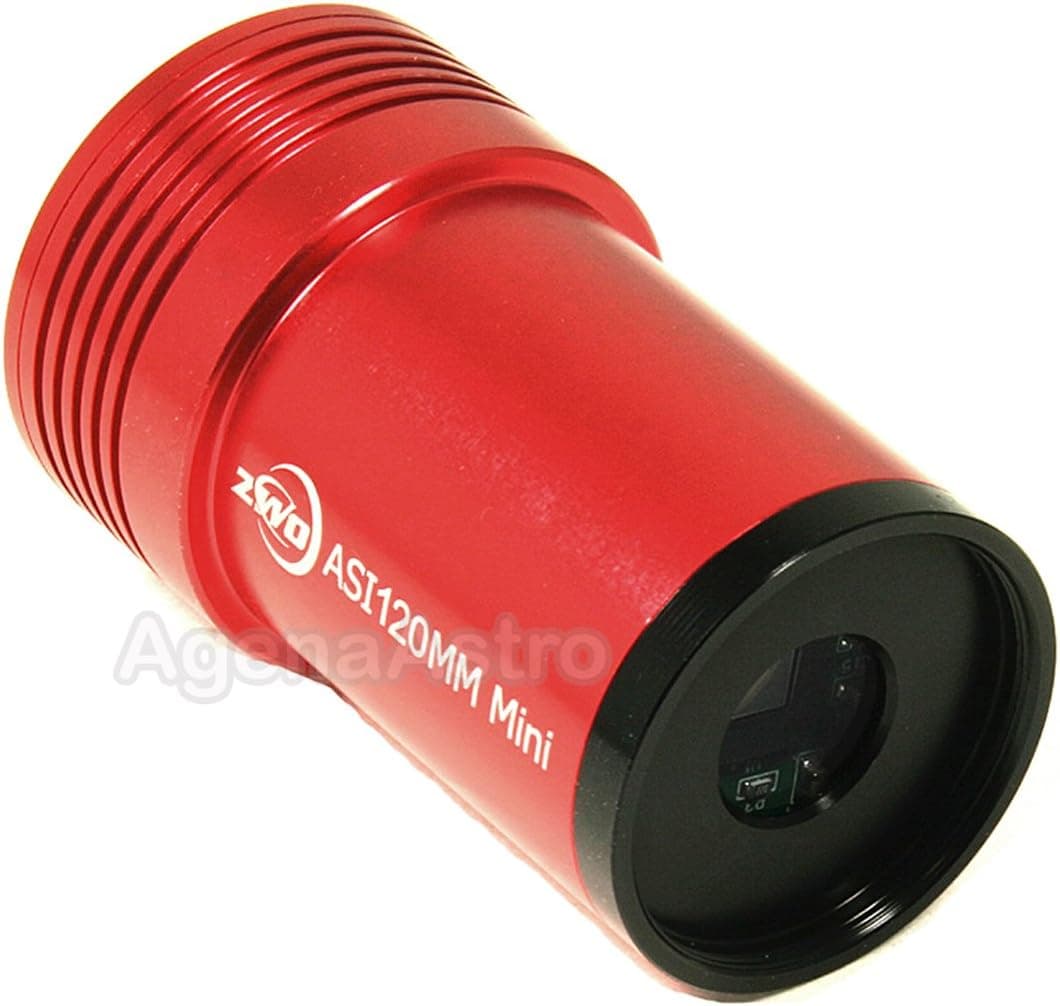
ZWO ASI120MM-Mini 1.2MP monochrome camera, 1280x960 CMOS, USB2.0 Type-C with ST4 port for autoguiding.
Price range: See on Amazon
What we liked
- + ST4 port allows direct guide pulses to mounts without an ASCOM connection
- + Monochrome 1280x960 sensor is sensitive enough to find guide stars easily
- + Mini body slips into guide scopes and finder brackets
Trade-offs
- - USB2.0 speed is slow for planetary imaging compared with USB3 cameras
- - Small sensor field can make finding guide stars harder in sparse areas
Sensor and what it is designed to do
At the core of the ASI120MM-Mini is a monochrome AR0130CS sensor measuring 4.8 by 3.6 millimeters, delivering a 1280 by 960 pixel image with individual pixels sized at 3.75 by 3.75 microns. ZWO lists the sensor's peak quantum efficiency at around 80 percent, which helps the camera pick out relatively faint guide stars even through a small, fast guide scope rather than requiring a large aperture just to find something to lock onto. The monochrome design specifically favors sensitivity over color capture, which is exactly the tradeoff wanted in an autoguider, since a guide camera only needs to track a star's position rather than record its actual color.
The ST4 port and how guiding works
A built-in ST4 port lets the camera send guide pulses directly to a compatible mount's autoguider port, correcting small tracking errors during a long exposure without needing a full ASCOM software chain running on the imaging computer. That direct connection can simplify a guiding setup for imagers who want a straightforward hardware link rather than troubleshooting driver compatibility between guiding software and a mount, though it still requires guiding software running on a laptop to analyze the star's position and issue the correction pulses through the port. The camera connects to that computer over USB2.0 using a small Type-C connector, a departure from the older Micro-USB connectors ZWO used on earlier mini guide cameras.
Compact size for tight guide scopes
ZWO built the Mini body to be genuinely small, at about 36 millimeters in diameter and roughly 60 grams in weight, letting it slip into a standard 1.25 inch focuser drawtube or a finder bracket the same way an eyepiece would, and it includes an M28.5x0.6 female thread for standard 1.25 inch astronomy filters. That compact form factor is particularly useful on small guide scopes or off axis guiders where a larger camera body would be awkward to fit or would add unwanted weight to an already loaded imaging train. The tradeoff for that small size is a correspondingly small sensor, which narrows the field of view available for finding a guide star in a sparse patch of sky.
Where USB2.0 and sensor size become limits
Because the ASI120MM-Mini uses a USB2.0 connection rather than USB3.0, its usable frame rate tops out well below what ZWO's USB3 planetary cameras can deliver, which matters less for guiding, where only a modest number of frames per second are needed to track a star, but becomes a real constraint for anyone hoping to also use it for lucky imaging of the Moon or planets. The small sensor area likewise means a narrower field of view through a given guide scope, so in star-sparse regions of the sky an imager may need to nudge the guide scope slightly to find a suitable guide star, a step that is less often necessary with larger-sensor autoguiders.
How it compares to other autoguiders on the site
In the site's Best Autoguiders guide, this camera ranks first of seven, just ahead of ZWO's own larger-sensor ASI174MM-Mini and an SVBONY mini guide scope, with two other autoguiding camera options from ZWO and SVBONY ranked further down the list. Its top spot reflects a practical balance of low price, small size, and a reliable ST4 hardware guiding port, even though its sensor and USB2.0 interface are modest compared with pricier alternatives in the same guide. Imagers who also want to use the same camera occasionally for planetary or lucky imaging may want to compare it against the USB3.0 options ranked lower in the same list.
Frequently asked questions
Does the ZWO ASI120MM-Mini need ASCOM software to guide a mount?
No, its ST4 port sends guide pulses directly to a compatible mount's autoguider port, though guiding software is still needed on a computer to detect the star and trigger those pulses.
What is the sensor resolution on the ASI120MM-Mini?
It uses a monochrome 1280 by 960 pixel sensor with 3.75 micron pixels.
Can this camera fit in a standard 1.25 inch focuser?
Yes, the compact body is sized to slip into a 1.25 inch focuser drawtube or finder bracket much like an eyepiece.
Is the ASI120MM-Mini a good choice for planetary imaging?
It can be used for planetary imaging, but its USB2.0 connection limits frame rate compared to ZWO's USB3.0 cameras, so it works best as a dedicated autoguider.
Prices change often, so check the current price and availability on Amazon.
Check price on AmazonStargazer Nest may earn a commission from the link above.