Telescope Filters Explained
Published How we research
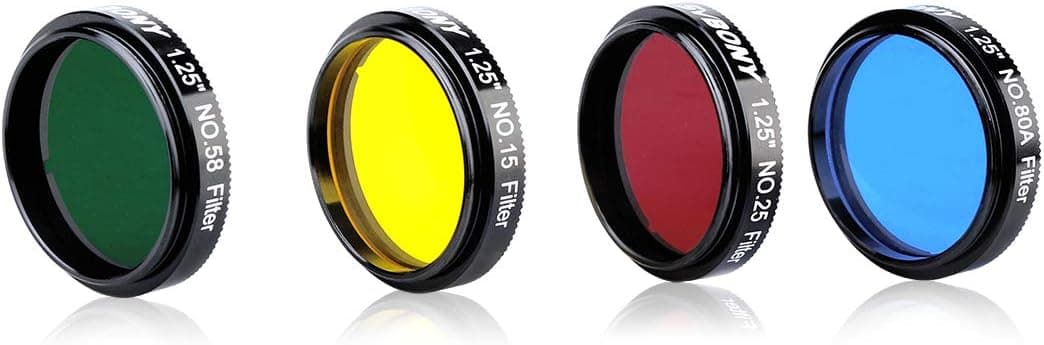
Filters thread onto eyepieces to modify the light reaching your eye, and only some are worth buying. A Moon filter dims the Moon's uncomfortable glare and reveals more contrast, the most useful for many beginners. Coloured planetary filters give real but subtle contrast gains, best on larger apertures. Broadband light-pollution filters help some nebulae from suburban skies but do nothing for galaxies or clusters. Narrowband oxygen and hydrogen filters transform emission nebulae only. Solar filters are a separate, safety-critical category. Filters are small accessories that thread onto eyepieces to modify the light reaching your eye, and they can meaningfully improve certain views. However, they are frequently misunderstood, with some sold on exaggerated promises. Knowing what each type actually does helps you buy only the filters that will genuinely enhance your observing rather than clutter your accessory case.
Products from this article
The highest-scoring picks from the buying guides this article links to. Scores are our editorial assessment, not customer ratings.
+ Variable grey polarizing filter adjusts brightness for bright lunar views
From our guide: Best Eyepiece Filters to Sharpen Every View (2026)
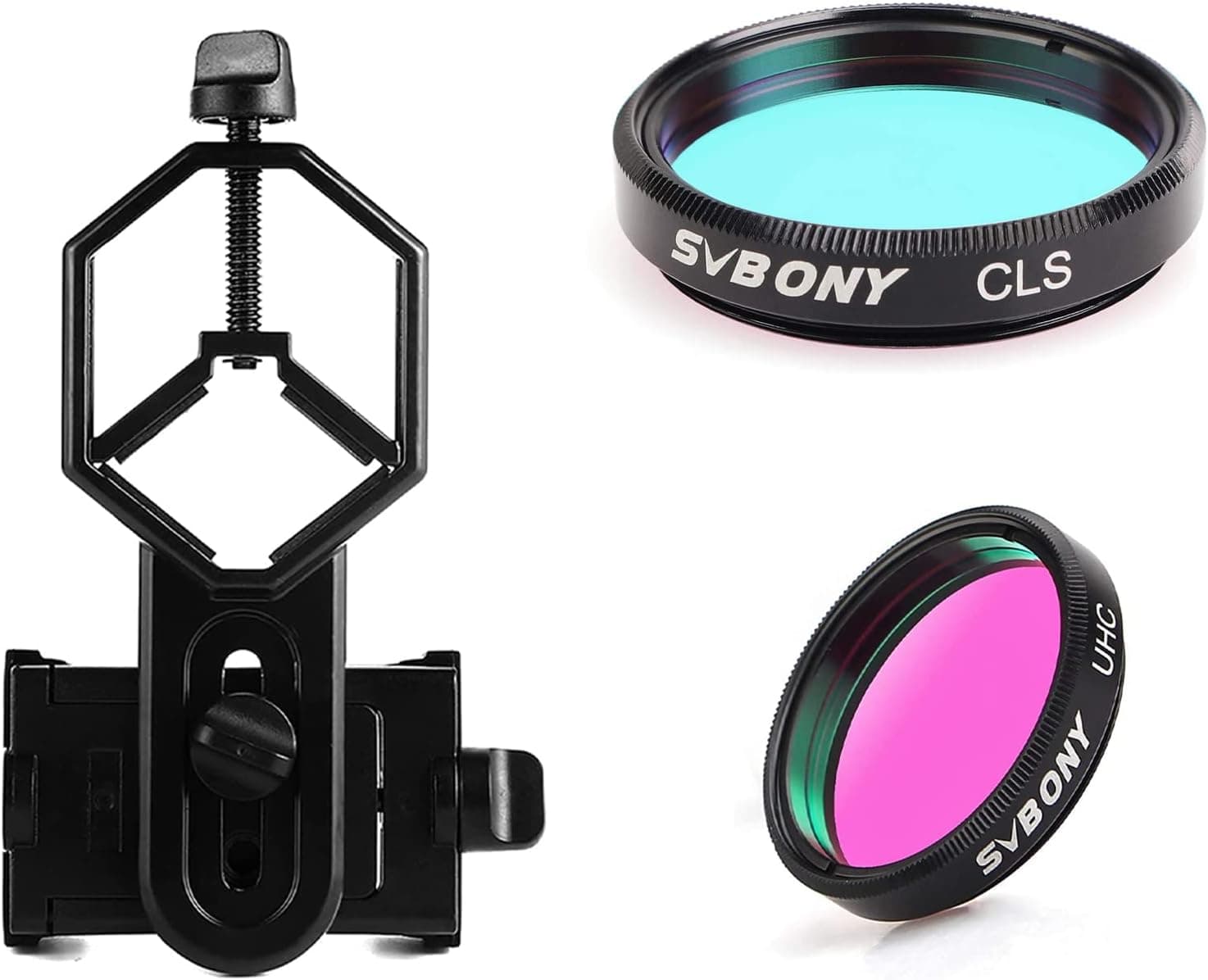
+ CLS and UHC filters cover broadband city glow and narrower nebula contrast
From our guide: Best Light Pollution Filters for City Skies (2026)
+ Sheet lets you build a custom full-aperture filter sized to your instrument
From our guide: Best Solar Filters for Safe Sun Observing (2026)
+ Moon and CPL filters reduce glare for comfortable lunar observing
From our guide: Best Eyepiece Filters to Sharpen Every View (2026)
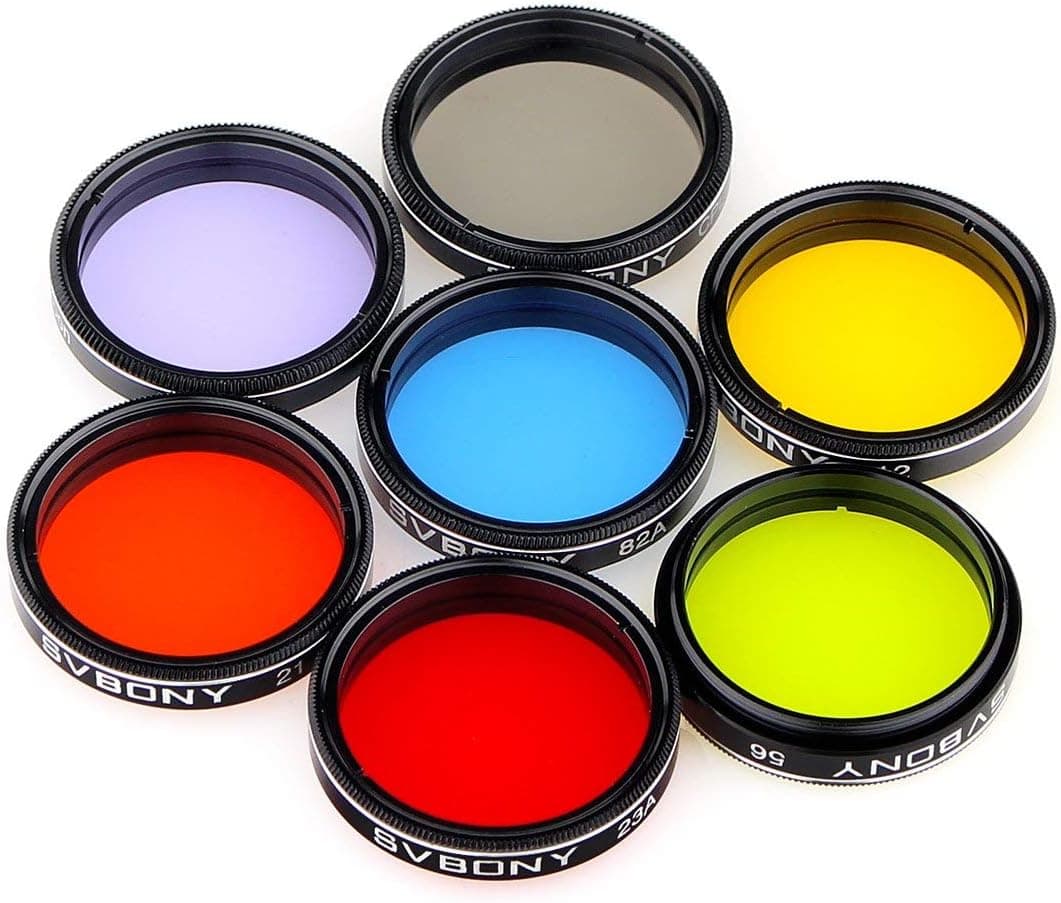
The Moon filter: the most immediately useful
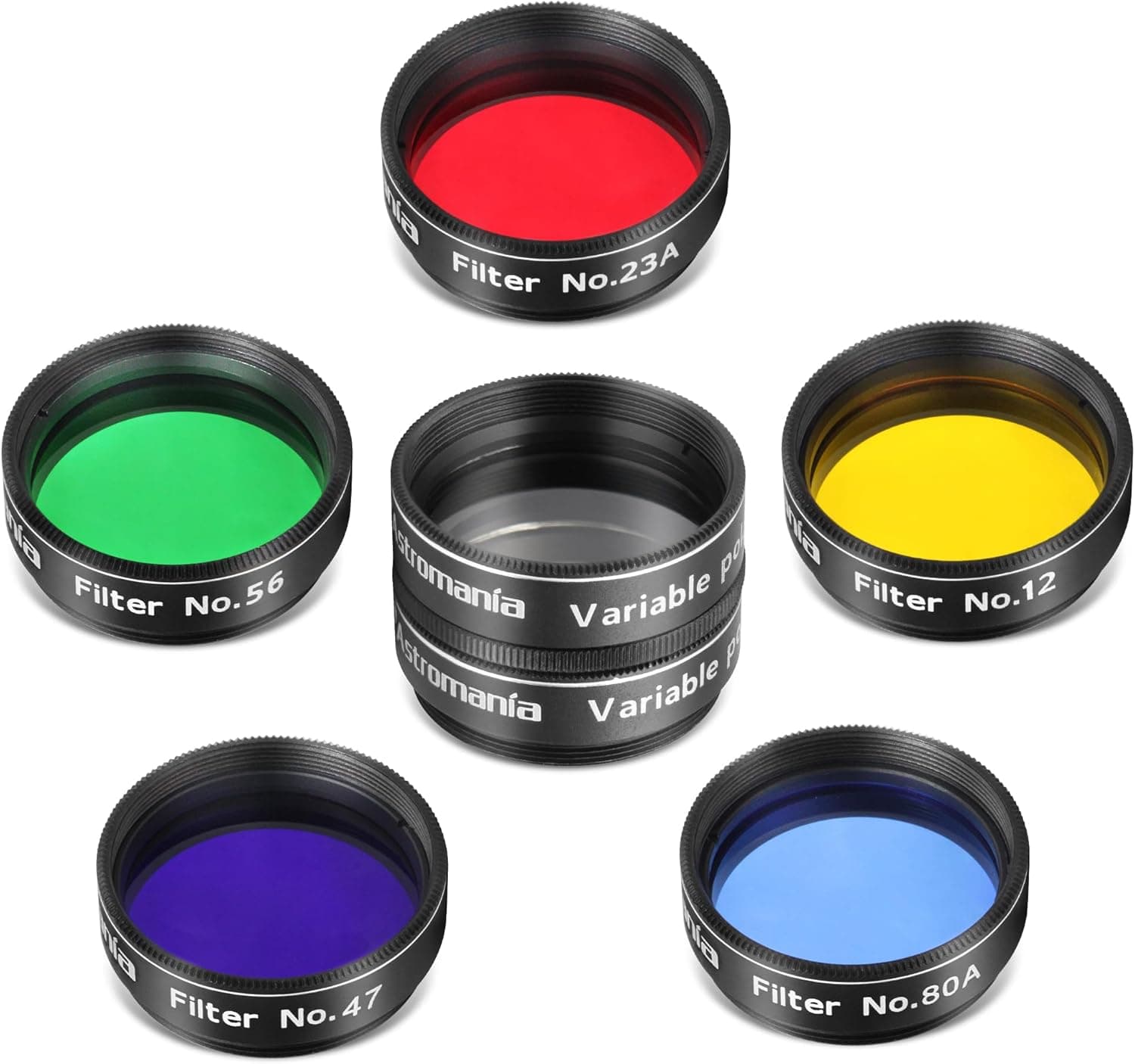
The most immediately useful filter for many beginners is a Moon filter. The Moon is surprisingly bright through a telescope, especially near full phase, and its glare can be uncomfortable and can wash out subtle detail. A neutral density Moon filter simply dims the view evenly, making it more comfortable and revealing more contrast. A variable polarizing filter does the same job with adjustable darkening, offering more flexibility.
Coloured planetary filters
Colored planetary filters aim to boost contrast on specific planetary features. A light blue filter can help define cloud belts on Jupiter, while an orange or red filter may sharpen surface markings on Mars. These effects are real but subtle, and they work best on larger apertures where there is plenty of light to spare. Beginners often find the improvement modest, so these are worth trying only once you are chasing fine planetary detail.
Light-pollution reduction (broadband nebula) filters
Light-pollution reduction filters, sometimes called broadband nebula filters, target the specific wavelengths emitted by streetlights. By blocking some of this artificial glow while passing starlight, they can improve the contrast of certain nebulae from suburban skies. Their benefit varies with the type of light pollution and the object, and they do nothing for galaxies or star clusters, which emit across the full spectrum.
Narrowband and line filters
Narrowband and line filters, such as those isolating the light of oxygen or hydrogen, offer more dramatic gains on emission nebulae. An oxygen filter can make objects like the Veil Nebula leap into view from skies where they were nearly invisible. These filters are more specialized and more expensive, and they only help on emission nebulae, not on reflection nebulae, galaxies, or clusters. For dedicated deep-sky observers, though, they are transformative.
Solar filters: a safety-critical category
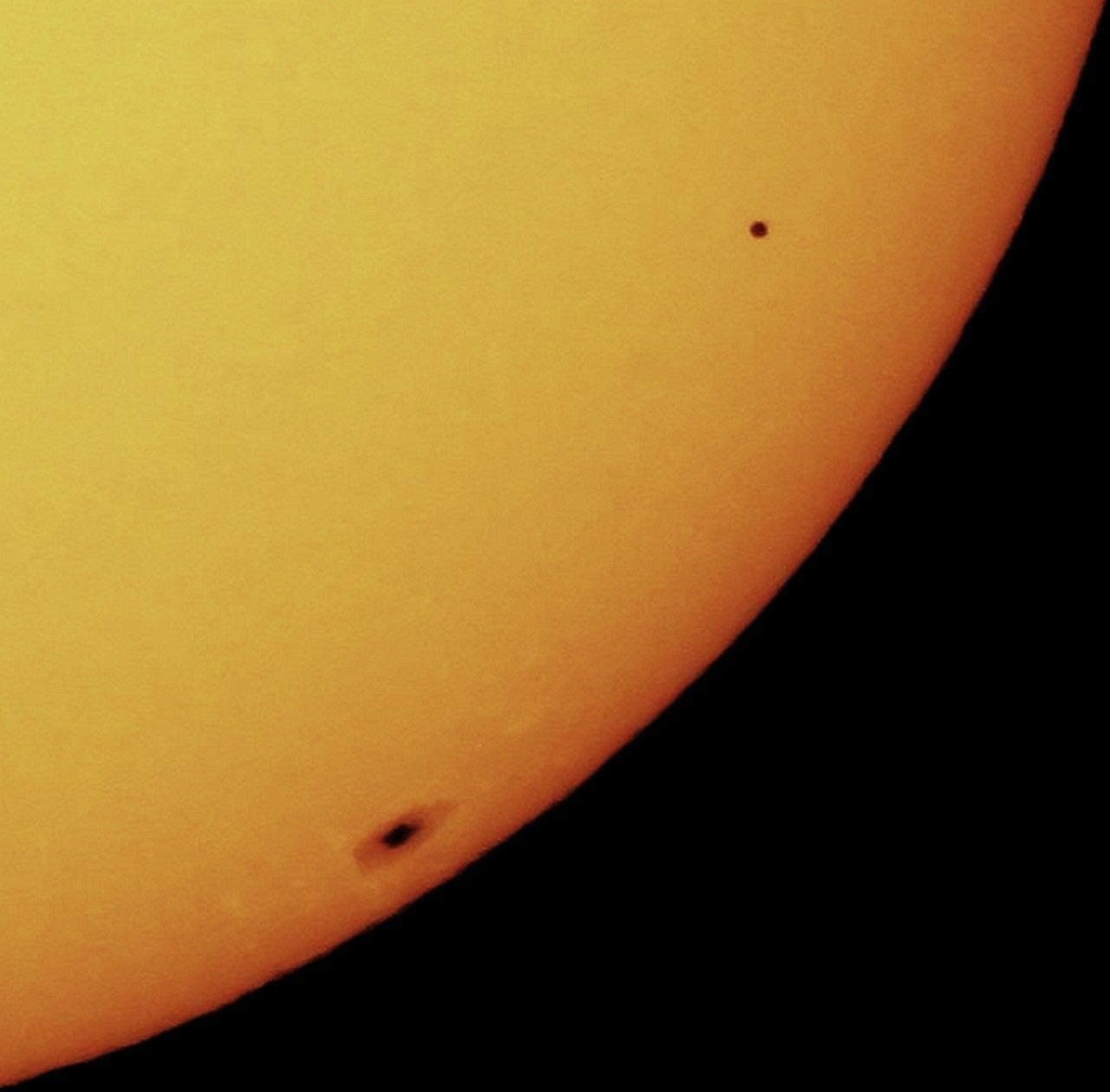
Solar filters are a separate and safety-critical category. A proper full-aperture solar filter fits over the front of the telescope and blocks all but a tiny, safe fraction of sunlight, allowing you to observe sunspots and the Sun's disk. These must be certified for solar use and inspected for damage before every session. Never confuse them with the small, dangerous screw-in solar filters that once shipped with cheap telescopes and can crack under heat.
Building a filter collection
When building a filter collection, start with a Moon filter if lunar glare bothers you, and consider a narrowband nebula filter only if you observe emission nebulae regularly. Avoid buying large filter sets on impulse, since many will rarely leave the case. Filters are refinements rather than magic upgrades, and matching each one to a specific observing goal ensures your money goes toward views you will actually appreciate.
Frequently asked questions
Do I need a Moon filter for my telescope? If lunar glare bothers you, yes. The Moon is surprisingly bright near full phase, and a neutral density Moon filter dims the view evenly, making it more comfortable and revealing more contrast.
Do light-pollution filters work? Broadband ones can improve the contrast of certain nebulae from suburban skies by blocking streetlight wavelengths, but the benefit varies, and they do nothing for galaxies or star clusters, which emit across the full spectrum.
What filter helps most with nebulae? A narrowband oxygen filter, which can make objects like the Veil Nebula leap into view. It only helps on emission nebulae, not reflection nebulae, galaxies, or clusters.
Are cheap screw-in solar filters safe? No. Never use the small screw-in solar filters that shipped with cheap telescopes; they can crack under heat. Use only a certified full-aperture solar filter that fits over the front of the scope, inspected before every session.
Popular right now
- Best Intervalometers for Automated Astro Shots (2026)Buying guide
- Best Finder Scopes to Locate Targets Fast (2026)Buying guide
- Telescope Aperture and Magnification ChartArticle
- Best Star Diagonals for Comfortable Viewing (2026)Buying guide
- Best Red Flashlights to Protect Night Vision (2026)Buying guide
- Equatorial mount explainedGlossary
Based on the last 28 days of search and visitor data.