Thousand Oaks Optical 6"x6" Solar Filter Sheet for Telescopes, Binoculars and Cameras White Light Sun Viewing Review (2026)
Updated September 21, 2026 · Research-based review
Our verdict
Best for hobbyists who want to build a custom full-aperture solar filter sized to their own telescope, binoculars, or camera rather than buy a factory cell. The film shows sunspots safely in a natural orange tone, but mounting it securely takes care and a steady hand.
Thousand Oaks Optical 6 x 6 inch solar filter sheet for making safe white light filters for telescopes, binoculars and cameras.
Price range: See on Amazon
What we liked
- + Sheet lets you build a custom full-aperture filter sized to your instrument
- + White light filter shows sunspots and eclipse phases safely when properly fitted
- + Works for telescopes, binoculars and cameras with one purchase
Trade-offs
- - Must be mounted securely over the full front aperture, never used loosely or behind an eyepiece
- - DIY cell building takes care, and any pinhole or tear means the film must be replaced
What this sheet is
Thousand Oaks Optical is an Arizona based maker of white light solar film and glass filters, and this listing is a flat 6 by 6 inch sheet of that film rather than a finished, ready to mount filter. Buying the raw sheet lets an observer cut and frame a filter sized to whatever telescope, pair of binoculars, or camera lens they own, instead of ordering a separate factory made cell for every instrument. Because the material is sold in a set size, one sheet can often be split to cover more than one small aperture, which is useful for anyone who already owns several scopes or cameras and wants a shared source of filter film rather than paying for individual finished filters each time.
How the filter behaves at the eyepiece
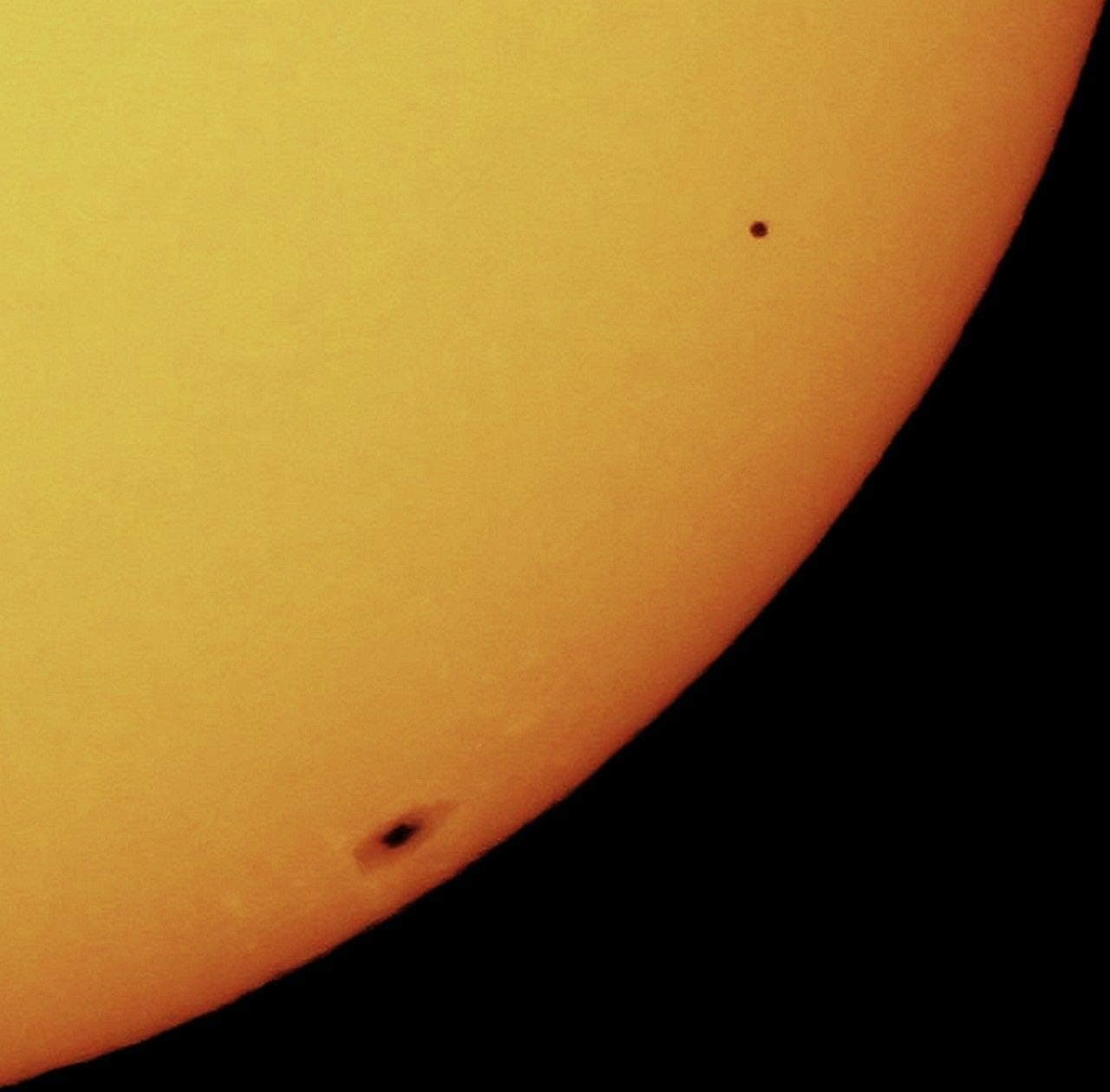
This is a white light filter, so the sun shows up as a natural orange disc rather than the blue white tint common with some mylar based films. That coloring makes it easier to read fine surface detail such as sunspot groups and, during a partial solar eclipse, the changing shape of the disc as the moon crosses it. The filter is meant to sit over the full front opening of the optical system, whether that is a telescope objective, a pair of binocular lenses, or a camera lens, so both eyes or the whole optical path see only filtered light. It is not designed to sit behind an eyepiece or anywhere inside the light path after the front element.
Building a secure cell
Because the sheet arrives unmounted, the buyer is responsible for building a cell, typically from cardboard, foam board, or PVC pipe fittings sized precisely to the front of the instrument. The cell needs to grip the tube or lens barrel firmly enough that wind, a bump, or normal handling cannot loosen or dislodge it during a session, since any gap around the edge lets unfiltered sunlight reach the optics and the eye. Hobbyists commonly tape or glue the film taut across the frame first, checking for wrinkles, then friction fit or strap the finished cell over the front of the scope. This DIY step is the main tradeoff against a pre-made filter, since it takes time, some craft skill, and a test fit before the first sunny day.
Durability and upkeep
Thousand Oaks describes the material as tougher than standard aluminized mylar, with the filtering layer protected within the substrate rather than exposed as a thin surface coating. Even so, any solar filter film should be checked before every session for pinholes, creases that have cracked the coating, or tears near the edge of the cell, since a single small breach can let a damaging amount of concentrated sunlight through to the eye. If the sheet shows any of these signs of wear it should be retired rather than patched. Storing the finished filter in a rigid case when not in use, away from sharp edges and away from being stepped on or crushed in a bag, extends its useful life considerably.
Who should buy this sheet
This product suits owners of multiple telescopes, binoculars, or camera lenses who want one source of filter material instead of buying a separate finished filter for each instrument, and who are comfortable spending an afternoon building a snug, secure cell before their first solar session. It is a poor fit for anyone who wants to observe the sun the same day the filter arrives, since a rushed or loose homemade mount is the main way full aperture solar filters fail. Buyers who would rather not fabricate anything are generally better served by a factory assembled filter cell sized to their exact instrument, even though it costs more per aperture than a shared sheet of raw film like this one.
Frequently asked questions
Is this filter safe for direct sun viewing?
Yes, when it is mounted as a full aperture filter that covers the entire front opening of the telescope, binoculars, or camera and is checked for pinholes or tears before use.
What color does the sun look like through this filter?
A natural orange, which is typical of white light solar film rather than the blue white cast seen through some mylar filters.
Does it come as a ready to use filter?
No, it ships as a flat sheet of film only, so you need to build or buy a separate rigid cell to hold it securely over your optics.
Can one sheet be used on more than one instrument?
A 6 by 6 inch sheet can often be cut to size for a couple of smaller apertures, but each piece still needs its own snug, dedicated cell.
Prices change often, so check the current price and availability on Amazon.
Check price on AmazonStargazer Nest may earn a commission from the link above.