ZWO ASI662MC 2.1 Megapixel USB3.0 Color Astronomy Camera for Astrophotography Review (2026)
Updated September 21, 2026 · Research-based review
Our verdict
A strong, affordable entry point into dedicated planetary and lunar video astronomy for anyone stepping up from a general purpose webcam style camera. The fast USB3.0 frame rates and color sensor simplify capture, though the small sensor is not meant for wide deep sky framing.
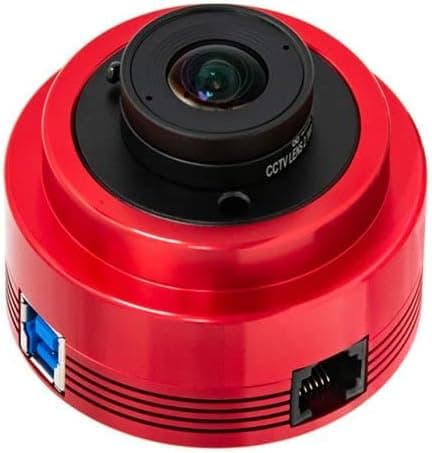
ZWO ASI662MC 2.1 megapixel USB3.0 color astronomy camera for planetary and lunar astrophotography.
Price range: See on Amazon
What we liked
- + High frame rates over USB3.0 help capture sharp planetary video
- + Color sensor simplifies imaging with no filter wheel needed
- + Affordable entry into dedicated planetary cameras
Trade-offs
- - 2.1 megapixel sensor is small for wide deep-sky fields
- - Requires a laptop and capture software in the field
Sensor and imaging performance
The ASI662MC uses a Sony IMX662 CMOS sensor in the 1 over 2.8 inch format, delivering roughly 2.1 megapixels at a 1920 by 1080 resolution with 2.9 micron pixels and a peak quantum efficiency around 91 percent. That combination of a back illuminated sensor design and low read noise, quoted at well under 1 electron in the camera's high gain mode, means it can pull in a usable, low noise image even during short exposures, which matters for planetary and lunar work where thousands of short frames are stacked together to freeze atmospheric blur. The color Bayer pattern sensor also means there is no need for a separate filter wheel or manual red, green, and blue channel captures to get a color image.
Frame rate and capture speed
Over its USB3.0 connection the camera can reach frame rates above 100 frames per second at full resolution, and a built in 256MB DDR3 buffer helps keep that data flowing to a connected laptop without dropped frames during a capture run. High frame rates matter specifically for planetary and lunar imaging because the technique relies on capturing large numbers of short video frames and keeping only the sharpest ones, a process called lucky imaging, to counteract the blurring effect of atmospheric turbulence. A camera that can only manage a handful of frames per second simply cannot gather enough raw material for this approach to work well, which is where a fast sensor like this one has a clear advantage over older or slower planetary cameras.
What you still need to run it
This camera is not a standalone device, it requires a laptop or comparable computer running capture software connected over USB3.0 in the field, along with a telescope that has a focal length long enough to give useful image scale on the moon or planets, typically achieved with a Barlow lens on shorter focal length scopes. There is no built in screen or storage, so every session means setting up a computer alongside the telescope and mount, which adds both cost and complexity compared with a simple visual eyepiece session. Buyers new to planetary imaging should budget for this supporting gear and expect a learning curve with the capture and stacking software before results start looking sharp.
Sensor size and its limits
At roughly 2.1 megapixels and a 1 over 2.8 inch sensor format, this camera is sized for planetary, lunar, and solar imaging where the target fills only a small part of the field of view at long focal lengths, not for wide framed deep sky targets like large nebulae or galaxies that need a bigger sensor to capture in one frame. Owners hoping to image both planets and wide deep sky fields with a single camera will likely find this sensor too small for the second job and may eventually want a larger, cooled camera for deep sky work alongside this one for planets. Within its intended planetary and lunar role, though, the small sensor size is not really a downside, since it keeps the frame rate high.
Who this camera fits
This is a sensible choice for an astrophotographer moving from casual smartphone afocal shots, or from an older, slower planetary camera, toward a fast dedicated imaging setup for the moon, planets, and the sun, using a safe solar filter. The price sits at the affordable end of ZWO's current planetary camera lineup, making it a reasonable first dedicated astro camera for someone who already owns a telescope and wants sharper, more detailed video captures of the solar system. It is a poor match for anyone whose main interest is wide field deep sky imaging of nebulae and galaxies, where a larger sensor camera will do a noticeably better job.
Frequently asked questions
Do I need a laptop to use this camera?
Yes, it connects over USB3.0 to a laptop or similar computer running capture software, since it has no built in screen or storage of its own.
Is this camera good for photographing galaxies and nebulae?
Not really, its roughly 2.1 megapixel sensor is sized for planetary, lunar, and solar imaging rather than wide framed deep sky targets, which generally need a larger sensor.
Does it need a separate filter wheel for color images?
No, it uses a color Bayer pattern sensor, so it captures color images directly without a filter wheel or separate red, green, and blue exposures.
What kind of frame rates can it reach?
Over USB3.0 at full resolution it can exceed 100 frames per second, which helps with the lucky imaging technique used for sharp planetary and lunar video.
Prices change often, so check the current price and availability on Amazon.
Check price on AmazonStargazer Nest may earn a commission from the link above.