ZWO ASI2600MC-Pro 26 Megapixel USB3.0 Cooled Color Astronomy Camera for Astrophotography Review (2026)
Updated September 14, 2026 · Research-based review
Our verdict
A 26 megapixel APS-C cooled color camera built around Sony's IMX571 sensor, with two-stage cooling that pulls sensor temperature well below ambient for genuinely low-noise long exposures. It is a serious deep-sky imaging tool that demands a field flattener and real power budget, not a casual add-on for a beginner setup.
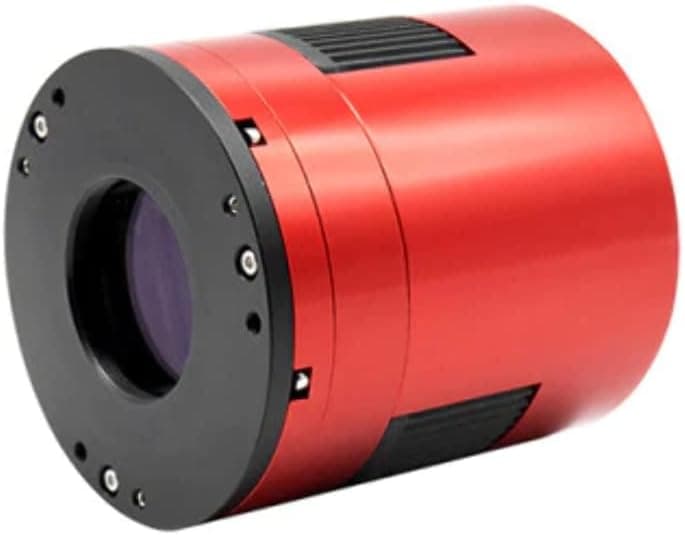
ZWO ASI2600MC-Pro 26 megapixel USB3.0 cooled color astronomy camera for deep-sky astrophotography.
Price range: See on Amazon
What we liked
- + Cooled sensor keeps thermal noise low for long exposures
- + 26 megapixel color sensor delivers detailed wide-field images
- + Pro model is a favorite among serious deep-sky imagers
Trade-offs
- - High price and power needs suit dedicated imagers only
- - Large sensor needs a field flattener for flat stars edge to edge
Who this camera is built for
The ASI2600MC-Pro is aimed squarely at dedicated deep-sky astrophotographers who are ready to move past a stock DSLR or an uncooled planetary camera and into a purpose-built imaging sensor. Its large APS-C format sensor and active cooling system are overkill for casual Moon or planet snapshots, where a small, uncooled planetary camera does the job for far less money and complexity. This camera earns its place with imagers doing multi-hour exposures of galaxies, nebulae and star clusters, where thermal noise accumulates over long sub-exposures and directly limits how much faint detail survives in the final stacked image.
What the sensor and cooling deliver
At its core sits Sony's back-illuminated IMX571 APS-C sensor, measuring 23.5 by 15.7mm with 3.76 micron pixels, delivering a 6248 by 4176 resolution for 26 total megapixels and a 73,000 electron full well capacity. Peak quantum efficiency reaches over 80 percent, and the true 16-bit analog-to-digital conversion gives roughly 14 stops of dynamic range, letting the sensor capture both bright star cores and faint nebulosity in the same exposure. The two-stage thermoelectric cooling system lowers sensor temperature 30 to 35 degrees Celsius below ambient, which sharply cuts dark current and the thermal noise that would otherwise build up during long unguided or guided exposures over many nights.
Setting it up for an imaging session
The camera connects over USB 3.0 for fast data transfer and includes a 512MB DDR3 buffer to smooth out frame delivery during capture. It needs a 12V DC power source, with roughly 3 amps recommended to run both the sensor and the cooling system, so a dedicated power supply or a capable battery pack is part of the real setup cost beyond the camera itself. A built-in polyimide anti-dew heater around the sensor window helps prevent condensation on cold, humid nights, a detail that matters for anyone imaging away from a climate-controlled observatory. The 55mm backfocus distance needs to be matched carefully with a field flattener or corrector for the optical train in use.
Trade-offs against smaller ZWO cameras
Within the astro camera comparison it leads, the ASI2600MC-Pro sits well above ZWO's smaller planetary cameras like the ASI662MC and ASI462MC, which use much smaller sensors built for high frame rate planetary and lunar imaging rather than wide-field deep-sky work. The monochrome ASI174MM and ASI183MM models further down the list trade color capture for the option to use narrowband filters, which some deep-sky imagers prefer for maximum detail at the cost of needing a filter wheel and longer total imaging time. Choosing between this color Pro model and a monochrome ZWO camera comes down to whether filtered narrowband imaging or straightforward one-shot color capture fits the imager's workflow better.
Verdict and who should start smaller
This camera earns our score of 9.4 out of 10 as one of the strongest one-shot color deep-sky imaging cameras in its class, with genuinely low-noise cooled performance and a large, detailed sensor. It is the right choice for a committed deep-sky imager who already has a telescope, mount and field flattener sized to match its APS-C sensor and 55mm backfocus. Beginners just starting astrophotography, or anyone mainly interested in planets and the Moon, should start with a smaller, less expensive planetary camera instead, since the cost, power needs and optical train demands of this Pro model are built for a more advanced imaging setup.
Frequently asked questions
Does the ASI2600MC-Pro need a field flattener?
Yes, its large APS-C sensor needs a field flattener or corrector matched to the telescope to keep stars sharp across the full frame, especially toward the corners.
How much cooling does the camera provide?
The two-stage thermoelectric cooler lowers sensor temperature 30 to 35 degrees Celsius below the surrounding ambient temperature, which significantly reduces thermal noise in long exposures.
What power supply does it need?
It requires a 12V DC source with about 3 amps recommended to run both the sensor and cooling system reliably during a session.
Is this camera good for beginners?
It is better suited to imagers with some experience and a matched telescope setup; beginners are usually better served starting with a smaller, less expensive camera first.
Prices change often, so check the current price and availability on Amazon.
Check price on AmazonStargazer Nest may earn a commission from the link above.