Orion SkyScanner BL135mm Dobsonian Reflector Telescope for Adults & Families - Easy-to-Use Tabletop Review (2026)
Updated September 14, 2026 · Research-based review
Our verdict
The SkyScanner BL135mm suits a family that wants a bigger step up in aperture from Orion's smaller tabletop scopes while staying simple and point-and-look easy. The 135mm mirror gathers real extra light, and the added bulk over smaller SkyScanner models is the main trade-off.
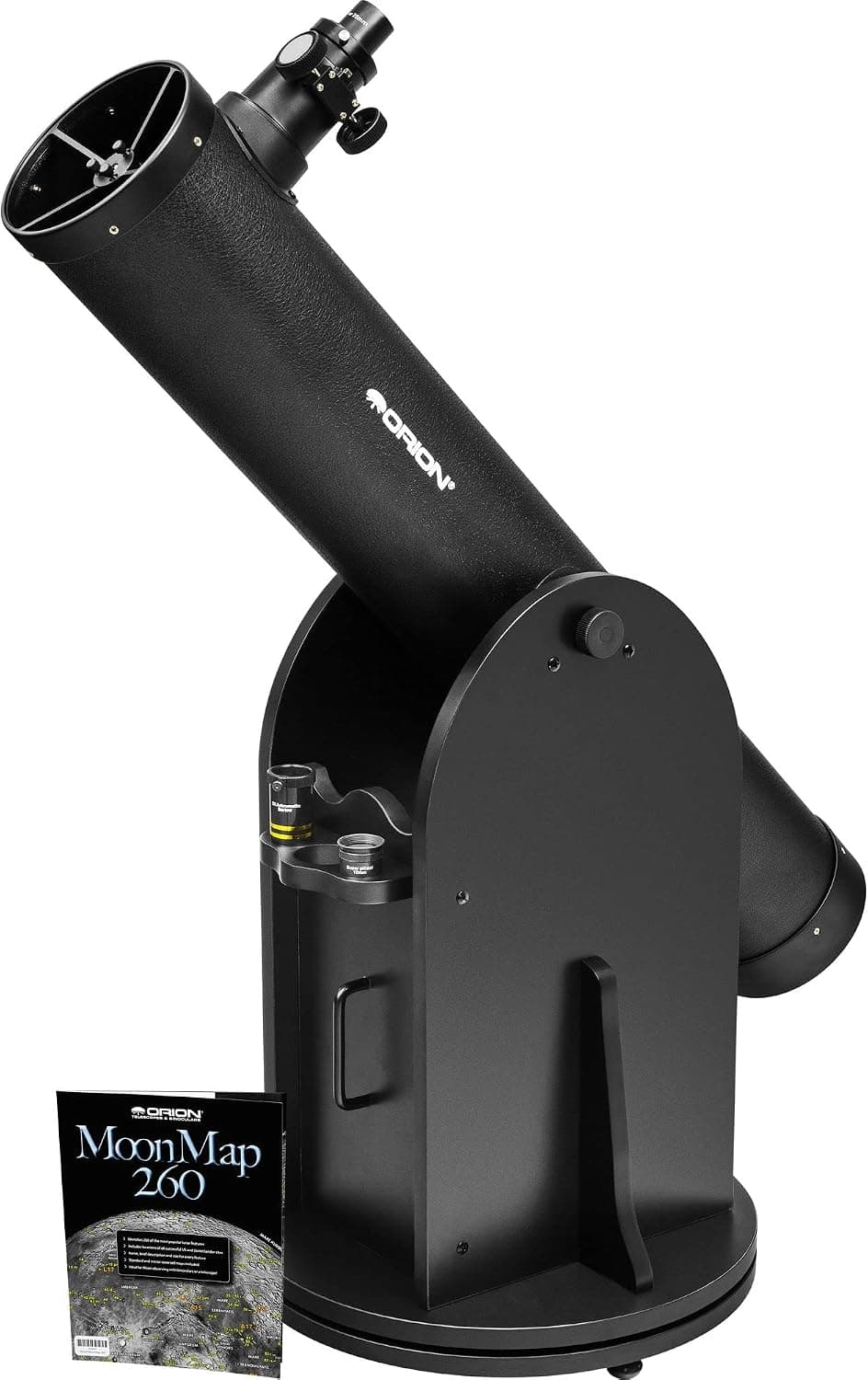
Orion SkyScanner BL135mm tabletop Dobsonian, a larger-aperture family scope that stays easy to set up and use.
Price range: See on Amazon
What we liked
- + 135mm mirror pulls in noticeably more light than the smaller SkyScanner models
- + Dobsonian motion is point-and-look simple for kids and adults alike
- + Tabletop format keeps a fairly big mirror portable enough for car trips
Trade-offs
- - Bulkier than the smaller SkyScanner models, so it takes more room in the car and on the table
- - Reflector tube may need collimation after rough handling or long drives
Who this tabletop Dobsonian is for
This telescope pairs a 135mm, or 5.25-inch, spherical mirror with a 1100mm focal length and f/8.1 focal ratio on a tabletop Dobsonian mount, a design that skips a full-height tripod in favor of sitting on a sturdy table, bench, or the included base placed on the ground. It is built for adults and families who want noticeably brighter, more detailed views than a small beginner scope offers, without taking on the learning curve of a full-size Dobsonian's polar alignment or a computerized mount's setup. The larger 135mm mirror compared with Orion's smaller SkyScanner 100mm model means meaningfully more light-gathering power for both planets and fainter deep-sky targets like star clusters and brighter nebulae. Buyers who want the absolute lightest, most compact tabletop option should compare against Orion's own smaller SkyScanner sizes, since this 135mm version is a genuine step up in bulk as well as aperture.
Specs and the tabletop Dobsonian design
The mirror is made from soda-lime plate glass with aluminum and silicon dioxide coatings, a standard, durable approach for a mirror in this telescope class, mounted in a 2-inch focuser that accepts both 2-inch and 1.25-inch eyepieces using an included adapter. Two eyepieces come in the box, a 25mm Kellner giving about 44x and a 10mm Plossl giving about 109x, along with a 3x Barlow lens that triples either eyepiece's magnification, a red dot finder for aiming, and Orion's MoonMap 260 as a reference guide. The optical tube weighs about 8 lb 15 oz and the base weighs about 23 lb 10 oz, for a combined total around 32.6 pounds, and the tube detaches from the base with two hand knobs for easier two-piece carrying when the full assembly is too much in one trip. Tension knobs let the observer tighten the altitude and azimuth movement to taste, which helps keep the view steady at higher magnification.
Setup, table placement and care
Because this is a tabletop design, the telescope needs a stable, sturdy surface at a comfortable height, a picnic table, a sturdy folding table, or even the ground with the observer seated, rather than the built-in height adjustment a full tripod provides, which is worth planning for before a first session. Motion is simple Dobsonian style, swiveling and tilting by hand with no tracking motor, so an object needs a small nudge every minute or two at higher power as it drifts out of the field of view. The detachable tube and base make the roughly 32-pound total kit more manageable to carry in two trips from a car or closet rather than hauling the fully assembled unit at once. As with any reflector, the mirror can need occasional collimation checks after bumps or long drives, and keeping the front of the tube capped when not observing helps protect the mirror coating over time.
How it compares with similar tabletop scopes
Against the Sky-Watcher Heritage 130mm, a similarly sized tabletop Dobsonian with a collapsible tube design that packs down smaller for storage, the SkyScanner BL135mm offers a touch more aperture but without the Heritage's collapsing feature, so the Heritage wins on packed size while this scope's fixed tube may feel sturdier in daily handling. Compared with the smaller Orion SkyScanner 100mm, this 135mm version is a clear step up in light-gathering power and detail at the cost of extra weight and a bigger footprint on the table. Against the Zhumell Z130 tabletop reflector, a similarly specced 130mm competitor, the two sit close in performance, with the choice often coming down to which brand's included accessories and finish suit the buyer.
Verdict and who should choose differently
For a family or adult beginner who wants a meaningful jump in aperture and brightness over a small starter telescope, while keeping the simplicity of point-and-look Dobsonian motion and skipping a full tripod, the SkyScanner BL135mm is a well-matched choice backed by Orion's established accessory kit. Anyone who needs the most compact, packable option for frequent travel should look at a collapsible tabletop model like the Sky-Watcher Heritage 130 instead, since this scope's fixed tube and 32-pound combined weight are bulkier than the smallest tabletop designs. Buyers who want automated tracking or GoTo finding should also look elsewhere, since this is a fully manual mount. Within its role as a bigger, brighter step up from entry tabletop scopes, it remains a solid, straightforward option.
Frequently asked questions
Does the SkyScanner BL135mm come with a tripod?
No, it uses a tabletop Dobsonian base rather than a tripod, so it needs to sit on a sturdy table, bench, or similar stable surface at a comfortable viewing height.
How much does the whole telescope weigh?
The optical tube weighs about 8 lb 15 oz and the base weighs about 23 lb 10 oz, for a combined total around 32.6 pounds, though the tube detaches from the base with two hand knobs for easier two-piece carrying.
Is this telescope good for viewing planets as well as deep-sky objects?
Yes, the 135mm mirror and 1100mm focal length give good detail on the Moon and planets while also gathering enough light for brighter deep-sky targets like star clusters and some nebulae, though very faint objects will still appear dim.
Does the mirror need maintenance over time?
Like any reflector telescope, the mirror can shift out of collimation after bumps or rough handling and should be checked periodically, and keeping the tube capped when not in use helps protect the mirror coating.
Prices change often, so check the current price and availability on Amazon.
Check price on AmazonStargazer Nest may earn a commission from the link above.