SVBONY SV191 Zoom Eyepiece 7.2 to 21.6mm 1.25 inch FMC 42-65 FOV Twist-Up Eyecups Review (2026)
Updated September 21, 2026 · Research-based review
Our verdict
The SVBONY SV191 suits telescope owners who want one eyepiece that covers a wide zoom range instead of carrying a bag of fixed focal lengths. Its 42 to 65 degree field beats most budget zooms, though it costs more than SVBONY's simpler zoom eyepieces and adds weight on smaller telescopes.
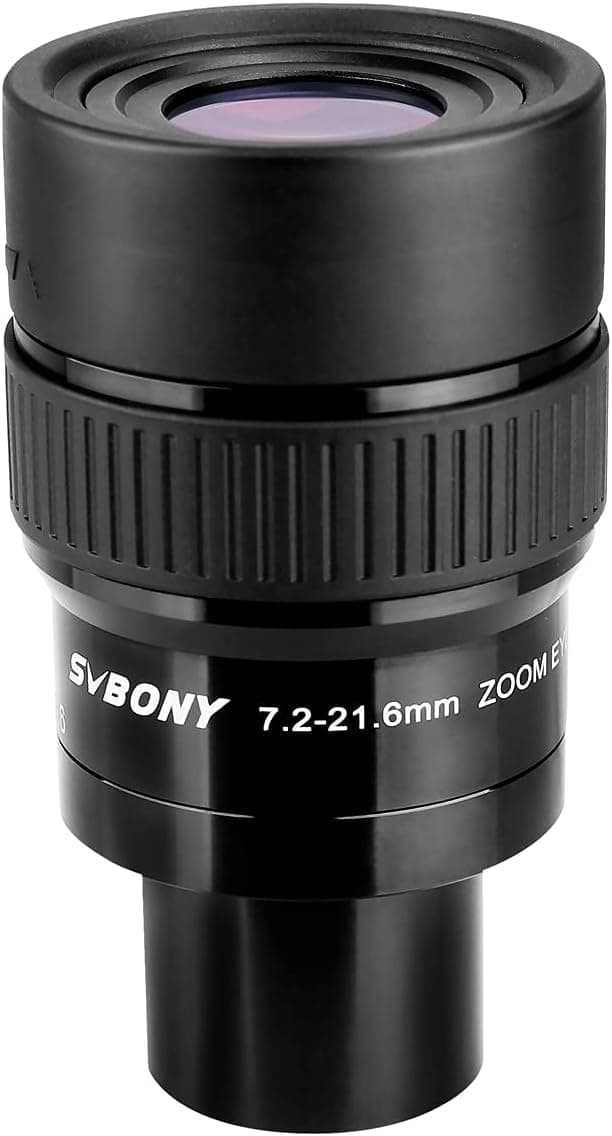
SVBONY SV191 zoom eyepiece from 7.2 to 21.6mm, 1.25 inch, FMC with 42-65 FOV and twist-up eyecups.
Price range: See on Amazon
What we liked
- + 42-65 FOV range gives a wider field than many zoom eyepieces
- + Twist-up eyecups improve comfort and help block stray light
- + FMC coatings support bright, contrasty views
Trade-offs
- - Wider zoom design costs more than basic SVBONY zooms
- - Heavier body may unbalance small telescopes
What a zoom eyepiece offers here
The SV191 zooms continuously through any focal length between 7.2mm and 21.6mm, letting an observer dial in the exact magnification a target needs rather than swapping between several fixed eyepieces. That is especially useful for planetary and lunar observing, where atmospheric seeing conditions change from night to night, or even minute to minute, and being able to nudge magnification down slightly on a turbulent night keeps the image sharp without pulling the eyepiece out to try a different one. The apparent field of view changes across the zoom range, running from 42 degrees at the long end to 65 degrees at the short end, which is a wider spread than many budget zoom eyepieces offer, most of which stay closer to a fixed 40 to 50 degree field throughout their range.
Optical design and coatings
Inside, the SV191 uses a 7-element, 4-group optical design built from high-index glass, aimed at keeping images sharp and high-contrast across the zoom range rather than only at one or two focal lengths. Fully multi-coated optics increase light transmission, which matters for a zoom eyepiece since zoom designs with more glass elements can lose more light to internal reflections than a simpler fixed-focal-length eyepiece with fewer elements. A 1.25 inch barrel with an M28.5 by 0.6 filter thread keeps it compatible with standard telescope filters for planetary or lunar observing. Eye relief runs from about 18 to 20 millimeters across the zoom range, which is workable for eyeglass wearers, and a twist-up eyecup with multiple click stops lets viewers dial in comfortable eye position without glasses fogging the lens.
How it compares with simpler SVBONY zooms
SVBONY sells other zoom eyepieces, including simpler models with a narrower and more fixed field of view throughout their zoom range, and the SV191 sits above those in both price and apparent field of view. The wider 42 to 65 degree range is the main reason to pick this model over a cheaper SVBONY zoom, since a narrower field can feel like looking through a tunnel at the long focal length end of a budget zoom. Buyers who mainly want a low-cost way to try variable magnification without much concern for field width may find a simpler, less expensive zoom eyepiece adequate for their needs, while anyone who cares about an immersive view even while zoomed out to lower power will notice the difference this model's wider field makes.
Weight and balance considerations
Zoom eyepieces generally carry more glass and a heavier mechanical zoom mechanism than a comparable fixed-focal-length eyepiece, and the SV191 is no exception, with a noticeably heavier body than a simple Plossl or basic eyepiece of similar focal length. On a larger telescope with a sturdy focuser this extra weight is rarely noticeable, but on a small, light travel telescope or a low-cost beginner scope with a plastic rack-and-pinion focuser, it can cause the focuser to slip or the eyepiece to shift under its own weight. Buyers with lighter or lower-cost telescopes should check their focuser's load tolerance before relying on this eyepiece as their primary one, since a focuser that cannot securely hold the weight will undermine the benefit of the wider zoom range.
Who should buy it
The SV191 fits telescope owners who want a single eyepiece that adapts to changing seeing conditions and different targets without carrying a full set of fixed focal lengths, particularly for lunar and planetary observing where fine magnification adjustments help find the sharpest usable power on a given night. Its wider-than-average zoom field of view is a real advantage over cheaper zoom eyepieces that feel narrow at their long focal length setting. Buyers on a tighter budget who do not mind a narrower field may be better served by a simpler, less expensive SVBONY zoom, and owners of very light or budget telescopes with weaker focusers should confirm their scope can comfortably support this eyepiece's weight before buying it as a primary eyepiece.
Frequently asked questions
What focal length range does the SV191 cover?
It zooms continuously from 7.2mm to 21.6mm, letting an observer adjust magnification without swapping eyepieces.
How does the field of view change across the zoom range?
The apparent field of view ranges from about 42 degrees at the long focal length end to 65 degrees at the short end, wider than many budget zoom eyepieces.
Is this eyepiece good for eyeglass wearers?
Eye relief runs from about 18 to 20 millimeters across the zoom range, and a twist-up eyecup with click stops helps find a comfortable eye position, which generally works for eyeglass wearers.
Will this eyepiece work on any telescope?
It fits any telescope with a standard 1.25 inch focuser, but its added weight compared to a fixed-focal-length eyepiece may be an issue on light travel telescopes or budget scopes with weaker focusers.
Prices change often, so check the current price and availability on Amazon.
Check price on AmazonStargazer Nest may earn a commission from the link above.