ZWO ASI462MC 2.1 Megapixel USB3.0 Color Planetary Astronomy Camera for Astrophotography Review (2026)
Updated September 21, 2026 · Research-based review
Our verdict
A compact, budget friendly planetary camera built around a highly light sensitive sensor, well suited to smaller telescopes and infrared imaging experiments. Fast frame rates help fight atmospheric blur, but the tiny sensor rules out wide deep sky fields and its strong infrared response can shift color without a filter.
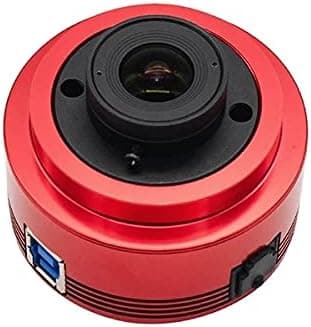
ZWO ASI462MC 2.1 megapixel USB3.0 color planetary astronomy camera for astrophotography.
Price range: $ (Budget)
What we liked
- + Planetary-focused sensor offers high sensitivity including infrared
- + Fast frame rates help freeze atmospheric turbulence
- + Budget-friendly and compact for small telescopes
Trade-offs
- - Small sensor is not suitable for large deep-sky targets
- - IR sensitivity may need an IR-cut filter for true color
Sensor and sensitivity
The ASI462MC is built around a Sony IMX462 CMOS sensor in the 1 over 2.8 inch format, producing roughly 2.1 megapixels at 1936 by 1096 resolution with 2.9 micron pixels, a size and resolution aimed squarely at planetary rather than wide field work. What sets this particular sensor apart from many other planetary cameras is its unusually strong sensitivity deep into the near infrared range, well beyond what the human eye or a typical daytime camera sensor picks up. That extra reach into infrared wavelengths is useful for imaging techniques that specifically use infrared light to see through some atmospheric turbulence and haze, a niche but valuable capability for planetary imagers working with smaller or less than ideal apertures.
Frame rate and low light performance
Over a USB3.0 connection the camera can reach roughly 136 frames per second at full resolution in its faster capture mode, and ZWO quotes a very low read noise figure, down near half an electron in the camera's high conversion gain setting, which helps preserve fine detail even in short exposures. As with other dedicated planetary cameras, the point of these fast frame rates is to capture large numbers of short video frames so that software can later select and stack only the sharpest ones, countering the blur that comes from air turbulence between the telescope and the target. A 12 bit analog to digital converter also gives some headroom for capturing both bright and faint detail on the lunar surface or a planet's disc in the same frame.
The infrared color trade off
Because this sensor is so sensitive into the near infrared, color images captured without any additional filtering can pick up an infrared contribution that shifts the resulting color balance away from how a planet or the moon actually looks to the eye. Many owners address this by adding a separate infrared cut filter in front of the sensor when they want accurate visible color, reserving the camera's native infrared sensitivity for dedicated infrared imaging sessions instead. This is a real extra step and an extra accessory to budget for if accurate color is the priority, and buyers who only want simple, ready to go color captures without extra filters should factor that into their expectations before ordering.
Size, weight and telescope fit
This is a compact, lightweight camera body, which makes it an easy fit on smaller refractors and other lighter telescopes where a bulkier, heavier astronomy camera might affect balance or overload a lightweight focuser. The small form factor also keeps it convenient for travel setups or grab and go planetary sessions where minimizing the amount of gear matters. As with any small sensor planetary camera, though, the low resolution and narrow field of view mean it is only capturing a small patch of sky at any one time, which is exactly what you want when the moon or a planet fills the frame at long focal length, but is a poor match for framing anything larger.
Who should choose this camera
This camera suits budget conscious planetary and lunar imagers with small to mid sized telescopes who want fast frame rates and do not mind adding an infrared cut filter for accurate color, or who are specifically interested in experimenting with infrared planetary imaging techniques. It is a reasonable first dedicated astronomy camera for someone already comfortable with basic astrophotography software and looking to move beyond a webcam style setup. Buyers whose main goal is wide field deep sky imaging, or who want accurate color straight out of the box without an added filter, will likely be better served by a different camera, either with a larger sensor or with a built in infrared cut filter.
Frequently asked questions
Why do my color images look different from what I expect?
This sensor is unusually sensitive to near infrared light, which can shift color balance unless you add a separate infrared cut filter in front of it.
Can this camera be used for deep sky imaging?
It is better suited to planetary and lunar imaging, since its small sensor and roughly 2.1 megapixel resolution are not designed for wide framed deep sky targets.
What frame rate can it reach for planetary video?
At full resolution over USB3.0 it can reach around 136 frames per second in its faster capture mode, which helps with stacking sharp frames from turbulent air.
Is this camera good for a small telescope?
Yes, its compact and lightweight body makes it a practical fit for smaller refractors and travel setups where a bulkier camera could affect balance.
Prices change often, so check the current price and availability on Amazon.
Check price on AmazonStargazer Nest may earn a commission from the link above.