SVBONY Red Dot Finder Scope for Astronomical Telescope Reflex Viewfinder Compatible for Celestron SE SLT Two Hole Fixing Review (2026)
Updated September 14, 2026 · Research-based review
Our verdict
This SVBONY red dot finder is a budget reflex sight for telescopes that already have the right two hole mounting pattern, such as many Celestron SE and SLT models. It makes aiming at a target far quicker than sighting down the tube. Fit depends entirely on your telescope's mounting holes matching this base, so check compatibility first.
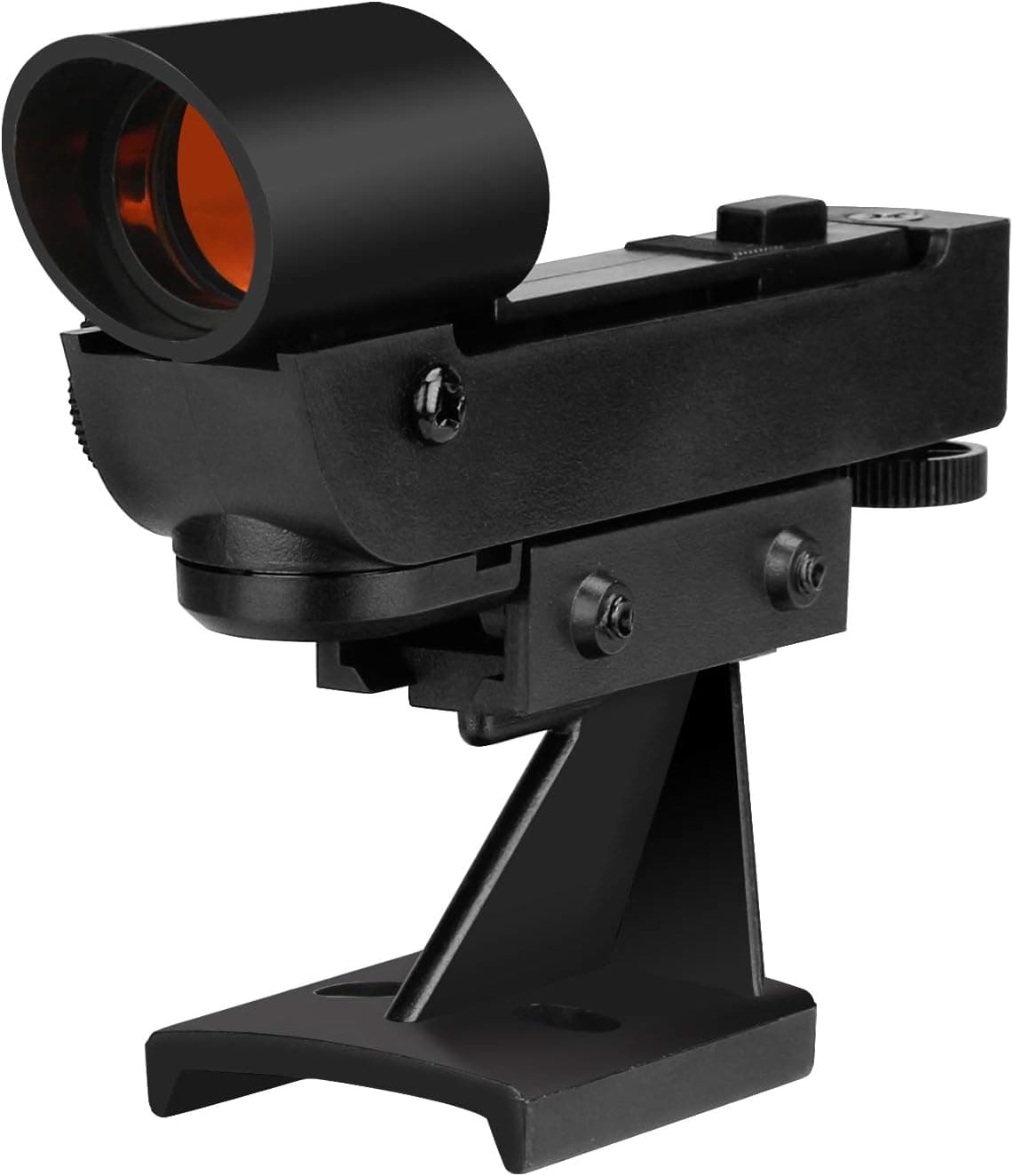
SVBONY red dot reflex viewfinder for astronomical telescopes, compatible with Celestron SE and SLT, two hole fixing.
Price range: See on Amazon
What we liked
- + Two hole fixing provides a secure mount on compatible telescopes
- + Reflex sight makes quick target acquisition easy
- + Budget alternative to branded red dot finders
Trade-offs
- - Fit is limited to telescopes with matching mounting holes
- - Red dot brightness may be too strong for dark sites without adjustment
Who This Finder Fits
This is a non magnifying reflex sight built for telescope owners who already have a compatible two hole mounting base on their tube, most commonly Celestron 80EQ, SE and SLT series scopes and some Meade Infinity and Polaris models. Rather than replacing a finderscope that has its own magnifying optics, a red dot finder projects an illuminated dot onto a small window so you look through it with both eyes open, the same way a rifle scope's red dot works, which makes swinging the main telescope onto a bright star or planet noticeably faster than using a small magnifying finder alone. It suits a beginner or budget minded owner who wants an easy upgrade over stock aiming hardware without spending on a name brand unit. Anyone whose telescope does not already have matching mounting holes should measure carefully before buying, since this finder does not include a universal dovetail bracket.
Mounting And Physical Specs
The base uses an elongated two hole fixing pattern with hole spacing around 5/8 to 1 inch, and the slots themselves accommodate mounting hardware from about 11mm to 30.3mm across, which is why SVBONY lists it as compatible with several different telescope brands that share a similar hole layout. At 72 grams, or about 2.5 ounces, and roughly 1.57 inches tall by 3.93 inches wide by 5.11 inches long, it is light enough that it will not meaningfully unbalance a telescope tube once attached. The unit runs on a standard battery to power the LED, which projects a red dot onto a clear, non magnifying window in front of the shooter's eye, and a dial or button adjusts the dot's brightness for different sky conditions and ambient light.
Aiming With A Red Dot Finder
Once mounted and roughly aligned during daylight on a distant object, the red dot finder lets you center a target simply by looking through the window until the dot sits on whatever you want to view, then swinging the main telescope to match without needing to squint through a small magnifying finderscope first. This approach works especially well for bright, easy to spot targets like the Moon, Venus or a first magnitude star, since the naked eye can already see them and the dot just confirms alignment. At darker sites away from light pollution, the lowest brightness setting is worth using, since a red dot finder set too bright can wash out your night vision and make it harder to see faint guide stars near your intended target. Two hole mounts generally hold alignment well once set, needing only occasional rechecking.
How It Compares With Other Finders
Stepping up to an Orion EZ Finder II brings a similar reflex sight concept from an established astronomy brand with a universal dovetail base rather than a fixed two hole pattern, which trades some plug and play simplicity on compatible Celestron scopes for broader mounting flexibility across other telescopes. A Telrad finder takes a different approach entirely, projecting a set of concentric circles instead of a single dot and standing taller off the tube, which many experienced observers prefer for star hopping to fainter deep sky targets even though it is bulkier and costs more. For an owner who already has the matching Celestron style mounting holes and just wants a functional, no frills reflex sight, this SVBONY unit covers the basics at a lower price than either of those alternatives.
Verdict
This SVBONY red dot finder is a sensible budget pickup for owners of Celestron SE, SLT or similarly holed telescopes who want faster target acquisition than a stock finderscope provides. Its light weight and adjustable brightness make it easy to live with night to night, and swapping it on takes only a couple of minutes with the existing mounting holes already in place. Buyers whose telescope lacks the matching two hole pattern, or who want the flexibility of a universal dovetail mount like the Orion EZ Finder II offers, should confirm compatibility carefully before ordering, or choose a differently mounted finder instead so they are not stuck returning it.
Frequently asked questions
Which telescopes is this SVBONY red dot finder compatible with
It is built for the two hole mounting pattern found on many Celestron 80EQ, SE and SLT telescopes, along with some Meade Infinity and Polaris models. Check your telescope's existing finder base before buying.
Does a red dot finder magnify the sky like a regular finderscope
No, it is non magnifying. You look through a clear window with a projected red dot and use both eyes to line the dot up with your target in the real sky.
Can the red dot be too bright at a dark observing site
Yes, a red dot set too bright can affect your night vision at darker locations. This finder includes adjustable brightness so you can dial it down away from city lights.
How much does this finder weigh on the telescope
It weighs about 72 grams, roughly 2.5 ounces, so it adds negligible weight and will not meaningfully affect the balance of most telescope tubes.
Prices change often, so check the current price and availability on Amazon.
Check price on AmazonStargazer Nest may earn a commission from the link above.