Telrad Finder Sight Non-Magnifying Reflex Sight for Telescope Aiming with Mounting Base Review (2026)
Updated September 20, 2026 · Research-based review
Our verdict
The Telrad is a non-magnifying reflex sight that projects three illuminated rings onto the sky so beginners can star hop using printed charts. It runs on two AA batteries, mounts with a no-drill double sided tape base, and is a long-standing favorite among amateur astronomers, though its base adds noticeable bulk to a small telescope.
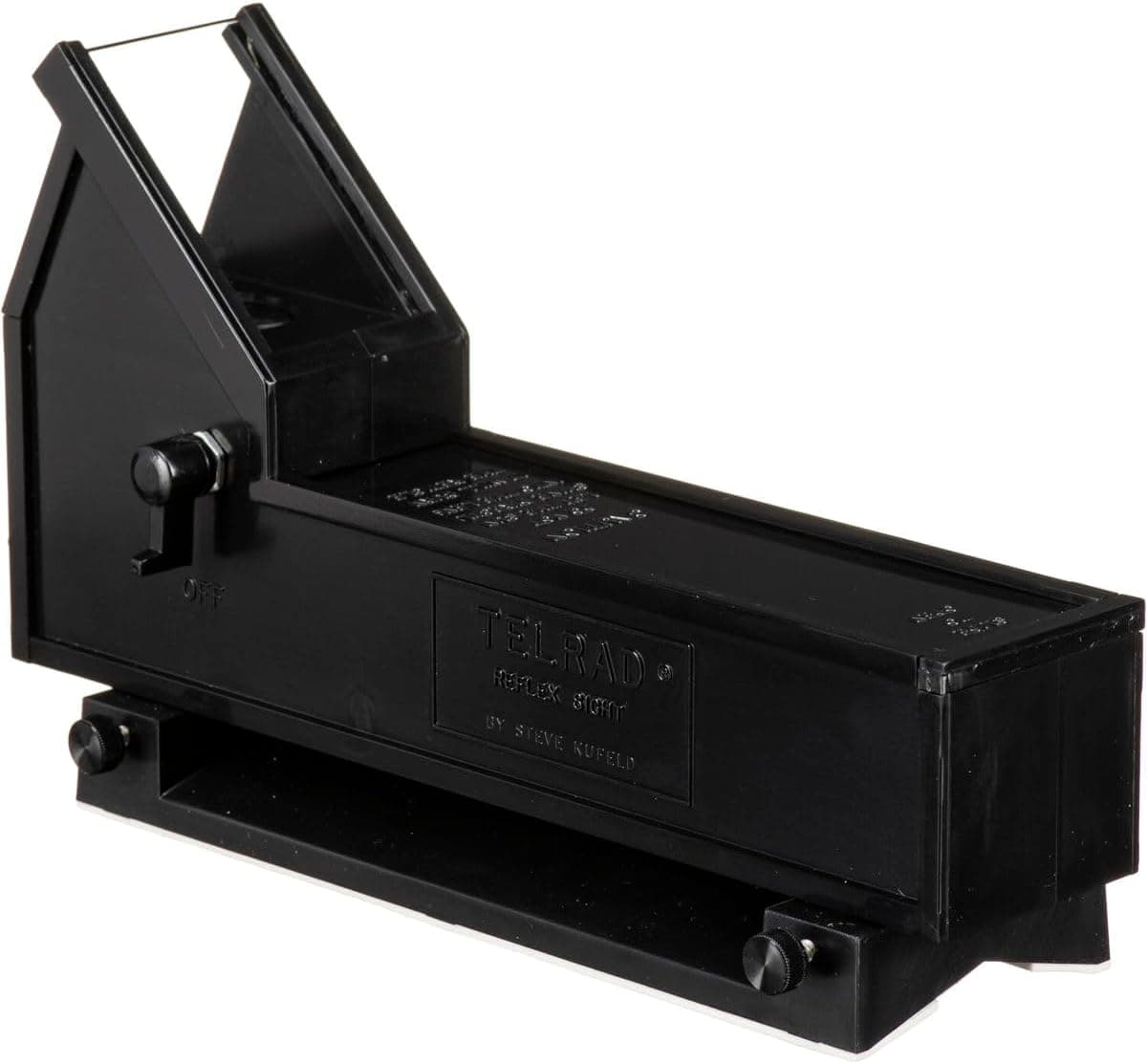
Telrad finder sight, a non-magnifying reflex sight with mounting base for fast telescope aiming.
Price range: See on Amazon
What we liked
- + Bullseye rings make it easy to estimate distances between stars
- + Non-magnifying view shows the sky as you see it, ideal for star charts
- + Classic Telrad design is widely used by amateur astronomers
Trade-offs
- - Large base adds bulk to small telescopes
- - Batteries power the reticle, so keep spares for long sessions
How the Telrad's bullseye reticle works
Rather than magnifying the sky like a small finder scope, the Telrad projects three concentric illuminated rings at 0.5, 2, and 4 degrees onto a angled glass window, so the observer sees the naked eye sky with a glowing bullseye overlaid on top of it. That non-magnifying view is what makes it useful for star hopping with a printed star chart or app, since most beginner charts already show distances between stars in degrees, letting an observer match the rings directly to the spacing shown on the page rather than mentally converting between a magnified finder view and an unmagnified chart. The design has been a standard reference point in amateur astronomy circles for decades, and many star atlases print Telrad-sized circles directly on their charts to make the matching even more direct.
Size, weight, and power
The Telrad measures about 8 inches long and weighs around 11 ounces, built from ABS plastic that keeps it light while still standing up to regular use at the eyepiece. It runs on two AA batteries, which are not included, and those batteries power the red LED that projects the illuminated rings through a masked reticle rather than through any lens or magnifying optic. Because the reticle depends on battery power, it is worth keeping a spare set in an accessory bag for longer observing sessions, particularly in cold weather when battery output drops and dims the rings sooner than it would on a mild night.
Mounting and moving it between telescopes
The Telrad attaches without drilling any holes, using a double sided tape base that sticks to the telescope's tube, and the finder body then locks onto and unlocks from that base as needed. That two piece design means an observer with more than one telescope can buy an extra base for each scope and move the same Telrad head between them in seconds, rather than needing a separate finder for every telescope in a collection. The base does add some bulk and height compared with a small optical finder scope, which is worth considering on compact refractors or travel telescopes where every added inch of tube clearance matters.
Why it remains a default choice for beginners
Because it shows the sky exactly as the naked eye sees it, with no magnification or image flip to mentally correct for, the Telrad tends to be easier for a first time telescope owner to use correctly than a small magnifying finder scope, which can confuse a beginner about which way is up or how far apart two stars really are. That ease of use is a major reason star charts, planetarium apps, and observing guides frequently reference Telrad-style circles when describing how to locate a faint object, since so many amateur astronomers already own one. It pairs naturally with a planisphere or printed star atlas for hopping from a bright naked eye star to a fainter target nearby.
How it compares to other red dot finders on the site
In the site's Best Red Dot Finders guide, the Telrad ranks first of eight, ahead of magnifying reflex sights from Orion, Celestron, and SVBONY that use a simple red dot rather than the Telrad's three ring bullseye. Those competing finders are generally smaller and lighter, which can suit compact telescopes better, but they lack the degree-marked rings that make distance estimation on a star chart straightforward. Observers who prioritize a minimal footprint on a small travel telescope may prefer one of the compact red dot options instead, while anyone doing serious star hopping from printed charts is likely to find the Telrad's rings worth the extra bulk.
Frequently asked questions
What batteries does the Telrad use?
It runs on two AA batteries, which are not included with the finder.
Does the Telrad magnify the sky?
No, it is a non-magnifying reflex sight that overlays three illuminated rings onto the naked eye view of the sky.
Can the Telrad be moved between different telescopes?
Yes, the finder body unlocks from its mounting base, so an observer can buy an extra base for a second telescope and swap the same Telrad head between scopes.
How is the Telrad mounted to a telescope tube?
It uses a double sided tape base that requires no drilling, and the finder locks onto that base once it is stuck to the tube.
Prices change often, so check the current price and availability on Amazon.
Check price on AmazonStargazer Nest may earn a commission from the link above.