Bushnell Marine 7x50 Waterproof Fogproof Binoculars with Internal Rangefinder and Illuminated Compass Review (2026)
Updated September 21, 2026 · Research-based review
Our verdict
A 7x50 porro prism marine binocular with an illuminated compass and an internal rangefinder reticle, sealed and nitrogen filled against fog and water for use on deck. Its 7.1mm exit pupil suits low light viewing on the water or under a dark sky, though the compass overlay is a distraction for anyone using it purely for stargazing.
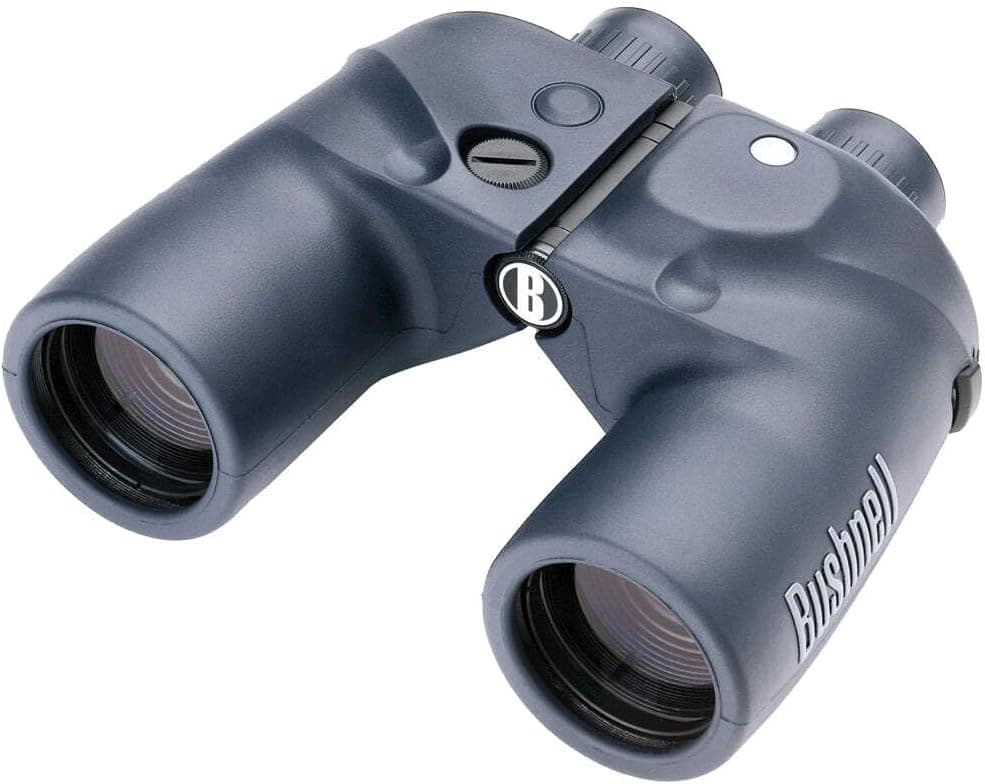
Bushnell Marine 7x50 waterproof fogproof binoculars with internal rangefinder and illuminated compass for boaters.
Price range: See on Amazon
What we liked
- + Illuminated compass gives bearings to buoys and landmarks at night
- + Internal rangefinder reticle helps estimate distance to other vessels
- + Fogproof and waterproof build handles cold mornings on the water
Trade-offs
- - Reticle and compass overlay can distract when simply stargazing
- - Heavier than basic marine binoculars because of the added features
Built for the water, useful under a dark sky too
This Bushnell binocular uses a classic 7x50 porro prism configuration, a long standing combination for marine and astronomy use because the 50mm objective lenses paired with 7x magnification produce a 7.1mm exit pupil, close to or larger than a fully dark adapted human eye's maximum pupil size, which lets in as much light as the eye can use in dim conditions. BaK-4 prism glass and fully multi coated optics are used throughout, features aimed at maximizing light transmission and contrast, both useful whether tracking a distant boat at dusk or scanning a star field away from city lights.
Compass and rangefinder features
An illuminated analog compass is built into the binocular's field of view, giving boaters a bearing to a landmark or buoy without needing to lower the binoculars and check a separate handheld compass, along with an internal rangefinding reticle that helps estimate distance to other vessels or shoreline features. These features are the binocular's primary selling point for its intended marine audience, but they sit within the same field of view as whatever else is being observed, so anyone using the binocular purely to look at stars or the Moon will see the reticle markings and compass overlay as visual clutter rather than a useful addition.
Waterproofing and durability
The binocular is O-ring sealed and filled with nitrogen gas, a combination that prevents both water intrusion and internal fogging when moving between temperature extremes, such as bringing the binocular from a warm cabin out into cold night air, a transition that would fog an unsealed binocular's internal optics. Bushnell rates it to an IPX7 water resistance level, and the exterior uses thick rubber armoring designed to resist impact and corrosion from saltwater spray, with a grip texture intended to stay secure even when wet. This build quality is aimed squarely at marine conditions rather than general terrestrial or astronomy use, though the same ruggedness carries over well to a dewy observing field.
Handling and field performance
At 37 ounces, this is a substantial binocular to hold steady for extended periods, heavier than typical general purpose or dedicated astronomy binoculars because of its rugged housing and internal compass and rangefinder mechanisms. The rubber armoring is designed to float, a marine safety feature that also happens to make the binocular easier to grip securely with cold hands during a winter observing session. Field of view is rated at 267 feet at 1000 yards with an 18mm eye relief figure and a 35 foot close focus distance, all specifications oriented toward scanning open water rather than close range or wide field astronomical framing.
Verdict and how it compares
This binocular ranks second among marine binoculars in this comparison, behind a Steiner model with HD stabilized optics and ahead of Bushnell's own simpler 7x50 compass model, reflecting a strong feature set for its price point even though it is not the top rated option. Its illuminated compass, internal rangefinder and rugged waterproof build make it a genuinely useful tool for boaters first and an incidental stargazing binocular second, since the reticle and compass markings will distract from a purely astronomical view. Buyers who want a dedicated astronomy binocular without any onboard overlays should look at a plain 7x50 model instead, while boaters who also enjoy the occasional look at the night sky will get solid dual use value here.
Frequently asked questions
What is the exit pupil and why does it matter?
The 7x50 configuration produces a 7.1mm exit pupil, close to the maximum a dark adapted eye can use, which helps in both low light marine viewing and stargazing.
Is it waterproof?
Yes, it is O-ring sealed and nitrogen filled, rated to an IPX7 water resistance level, and designed to resist internal fogging as well.
Does the compass get in the way when stargazing?
The illuminated compass and rangefinder reticle sit in the same field of view as everything else, so they can be a distraction for users who only want to view stars.
How heavy is it?
It weighs 37 ounces, heavier than a typical dedicated astronomy binocular because of its rugged housing and internal compass and rangefinder mechanisms.
Prices change often, so check the current price and availability on Amazon.
Check price on AmazonStargazer Nest may earn a commission from the link above.