Orion SkyQuest XT6 Classic Dobsonian Telescope for Adults, High Powered Beginner Astronomy Telescope Review (2026)
Updated September 14, 2026 · Research-based review
Our verdict
A 150mm parabolic Dobsonian that trades some aperture from the larger XT models for a tube and base one person can carry out in a single trip. The f/8 focal ratio gives crisp lunar and planetary views with a shorter learning curve, while larger XT siblings still out-resolve it on faint galaxies.
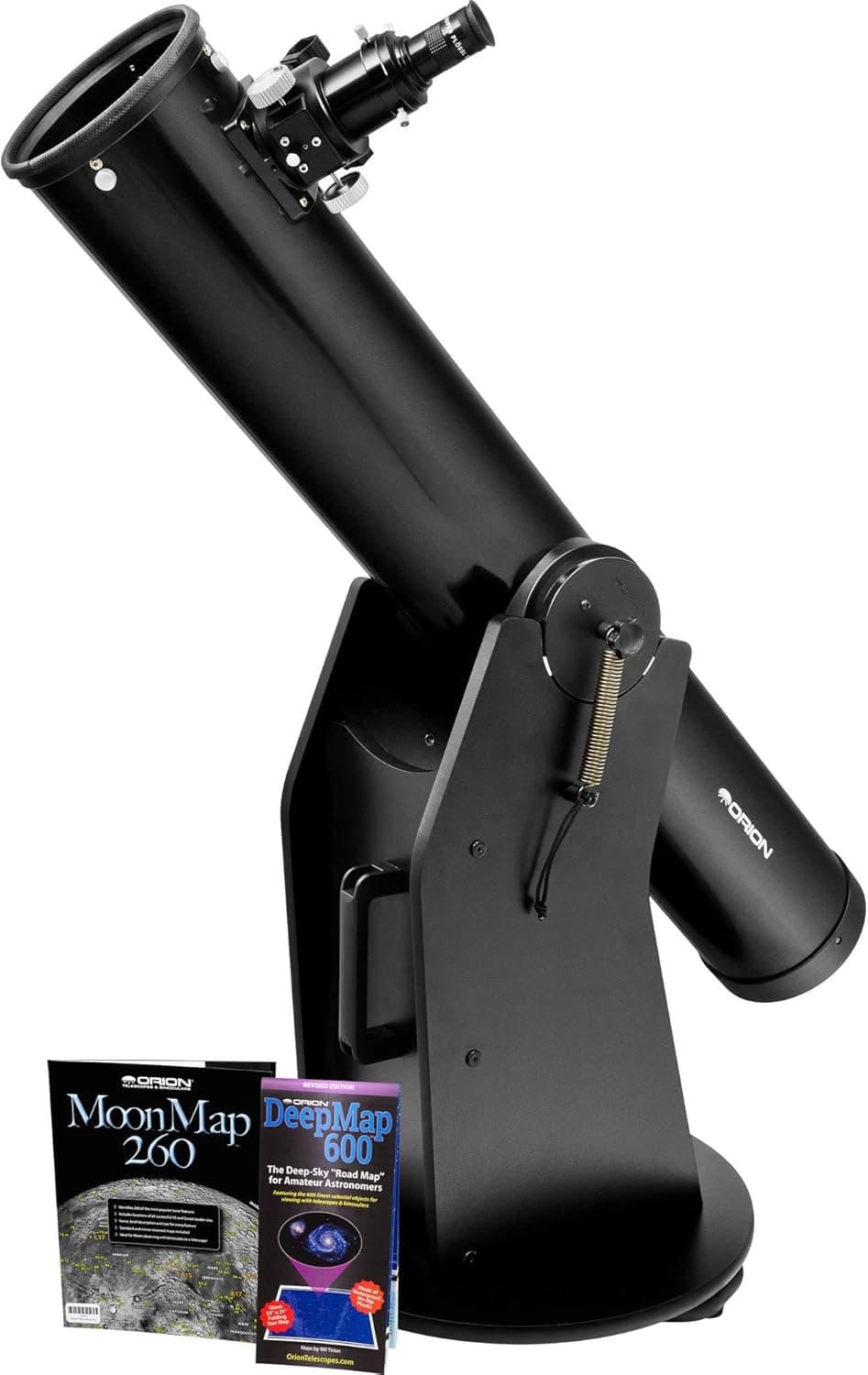
Orion SkyQuest XT6 Classic, a smaller Dobsonian for adults and beginners who want lighter weight with real aperture.
Price range: $ (Budget)
What we liked
- + Lighter tube and base than the bigger XT models, so one person can carry it out easily
- + Good planetary and lunar performance with a shorter learning curve
- + Simple Dobsonian mount is quick to set up after work on clear evenings
Trade-offs
- - Less light-gathering than larger XT models, so faint galaxies look dimmer
- - Base sits low, so a small observing chair helps for comfortable viewing
Who the XT6 Classic fits
This is a 6 inch Dobsonian built for adults and beginners who want real aperture without the bulk of the larger 8 or 10 inch XT models in the same Orion lineup. Its lighter tube and base mean one person can carry it from a closet or car trunk to the backyard in a single trip, which matters more than raw aperture for many owners since a telescope that is annoying to set up tends to get used less often. It suits someone taking their first serious step up from a small refractor or tabletop scope, wanting noticeably brighter views without committing to the size and weight of a bigger Dobsonian.
What the 150mm mirror and f/8 ratio deliver
The XT6 uses a 150mm parabolic primary mirror with a 1200mm focal length at f/8, a combination well suited to planetary and lunar observing where the longer focal ratio gives higher contrast and sharper detail than a faster, shorter-tube scope of similar aperture. It collects nearly 80 percent more light than a 4.5 inch reflector, a meaningful jump in image brightness for star clusters and brighter deep-sky objects. The telescope uses a 2 inch Crayford-style focuser with a 1.25 inch adapter included, so it accepts both standard 1.25 inch eyepieces and larger 2 inch eyepieces if the owner upgrades later without needing a different focuser.
Setting it up and observing regularly
The Dobsonian mount uses a rocker box base with a spring-assisted altitude system and a Teflon-padded turntable, giving smooth up-down and side-to-side motion with no motors, computer alignment or counterweights to manage. Included accessories cover a collimation cap for checking mirror alignment, an EZ Finder II reflex sight for aiming, and a 25mm Sirius Plossl eyepiece to get started. Because the base sits fairly low to the ground, many owners add a small observing chair or stool for comfortable eyepiece access, especially when the scope is pointed near the zenith. Collimation should be checked periodically since transport can nudge the mirrors out of alignment over time.
Where it gives up ground to bigger XT models
Within the Dobsonian telescope comparison it sits in, the XT6 Classic ranks at the bottom of the group, behind the 8 inch Zhumell DOB-8 and Orion's own 8 inch XT8 Classic, both of which share the same simple rocker box design but gather considerably more light for faint galaxies and nebulae thanks to their larger mirrors. The 10 and 12 inch Zhumell and Orion models further up the list push that light-gathering advantage even further, at the cost of more size and weight to store and carry. The trade-off is consistent across the whole lineup: every step up in aperture buys brighter deep-sky views in exchange for a heavier, bulkier telescope to manage.
Verdict and who should size up
The XT6 Classic earns our score of 7.8 out of 10 as a genuinely portable Dobsonian that still delivers real aperture and sharp planetary views, with a simple setup that keeps it from becoming a closet ornament. It is the right pick for anyone who values grab-and-go convenience and strong Moon and planet performance over maximum light-gathering power. Observers whose main goal is picking out faint galaxies and nebulae, and who have the space and back for a larger telescope, should look at the 8 inch XT8 or a 10 inch Dobsonian instead, since those models will consistently show more detail on the dimmest deep-sky targets.
Frequently asked questions
Is the XT6 Classic good for beginners?
Yes, its simple Dobsonian mount needs no alignment or motors, and the included accessories cover collimation and finding targets right out of the box.
Does it use 1.25 inch or 2 inch eyepieces?
It has a 2 inch Crayford-style focuser with a 1.25 inch adapter included, so it accepts both sizes, giving room to upgrade eyepieces later.
How often does it need collimation?
Collimation should be checked periodically, especially after transporting the telescope, since bumps can nudge the mirror alignment even with careful handling.
How does it compare with the 8 inch XT8?
The XT8 shares the same basic design but gathers more light through a larger mirror, giving brighter views of faint galaxies at the cost of extra size and weight.
Prices change often, so check the current price and availability on Amazon.
Check price on AmazonStargazer Nest may earn a commission from the link above.