Celestron SkyMaster 15x70 Astronomy Binoculars for Stargazing & Long-Range Viewing, Tripod Adapter & Case Review (2026)
Updated September 21, 2026 · Research-based review
Our verdict
A classic big-lens binocular for anyone who wants brighter views of star clusters and the Milky Way than a small pair can give. The tripod adapter and case are included, but plan on using a tripod for most sessions since the 15x70 size is too heavy to hold steady for long.
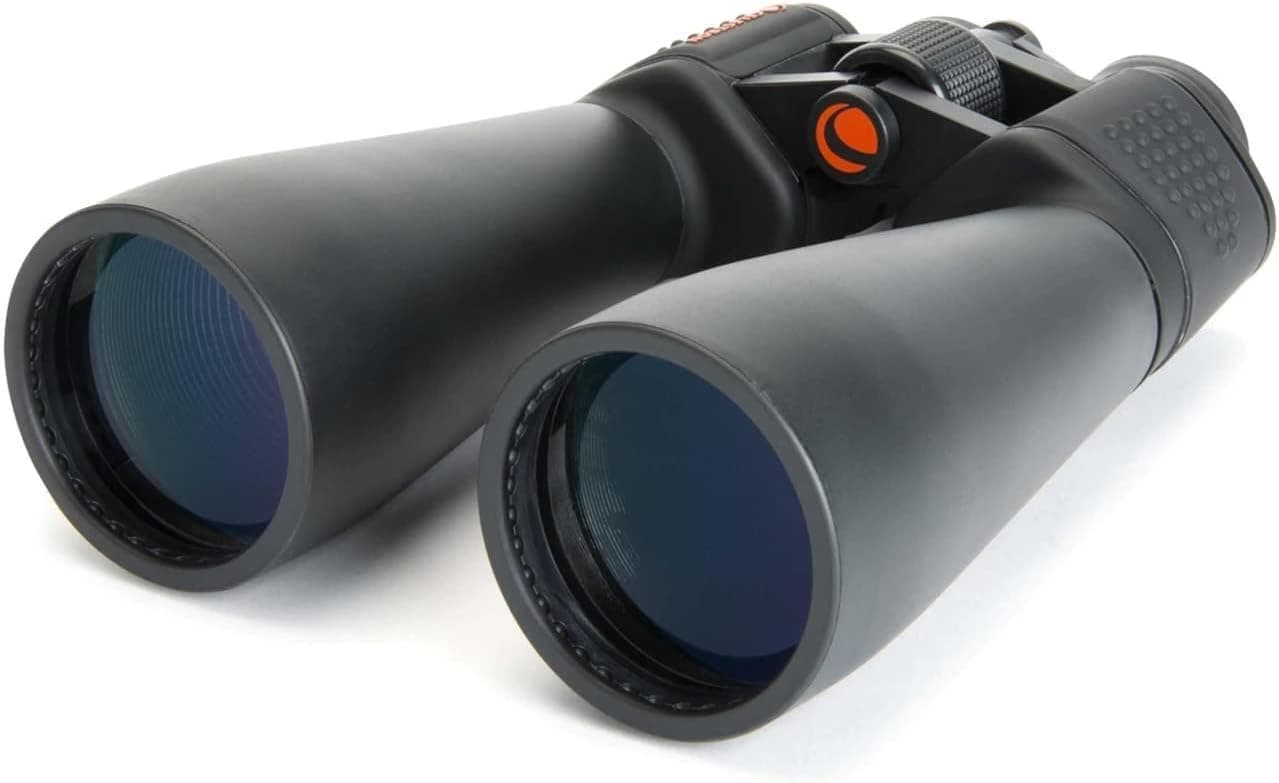
Celestron SkyMaster 15x70 astronomy binoculars with tripod adapter and case, a classic big-lens pair for stargazing.
Price range: See on Amazon
What we liked
- + 70mm objectives gather lots of light for star clusters and the Milky Way
- + Tripod adapter included, which matters because 15x is hard to hold steady by hand
- + Case keeps the binoculars protected in the car and on trips to dark skies
Trade-offs
- - Heavy for long handheld sessions, so plan to use a tripod most of the time
- - Budget Porro prisms can arrive out of collimation, so check the image on delivery
What this binocular is built for
The SkyMaster 15x70 pairs 15x magnification with 70mm objective lenses, a combination Celestron has sold for years as an entry point into giant astronomy binoculars. The Porro prism body is the traditional wide-set design rather than a slim roof-prism shape, which is part of why it can gather so much light for the size of the eyepieces. Celestron lists the field of view at 4.4 degrees, or about 231 feet at 1,000 yards, which is wide enough to frame open clusters like the Pleiades or sweep along the Milky Way without constantly repositioning. Close focus is rated at 43 feet, so it is not meant for close-up work, but that is normal for a binocular built around distant sky targets and long-range terrestrial viewing rather than backyard birding at short range.
Optical quality and low-light performance
Celestron builds the SkyMaster 15x70 with BaK-4 glass prisms and multi-coated optics, which the manufacturer's own spec sheet credits with better contrast and light transmission than uncoated or single-coated alternatives at this price. The exit pupil works out to about 4.7mm, a reasonable match for the way a dark-adapted eye's pupil behaves, and eye relief is listed at 18mm, which is generally enough for people who keep glasses on while observing. None of that makes it optically equal to premium ED-glass binoculars, and Celestron itself sells a step-up SkyMaster Pro ED version at a higher price for buyers who want less color fringing and sharper edge performance. For the cost, though, the core formula of a large 70mm aperture and 15x power is still an efficient way to pull in more starlight than compact binoculars can.
Weight, handling and why the tripod adapter matters
Celestron's own listing puts the SkyMaster 15x70 at 48 ounces, or about 1.36kg, with a body measuring roughly 8.7 by 4.3 by 11 inches. That is heavy enough that handheld views tend to drift and shake within a minute or two, which is why the included tripod adapter is not a bonus accessory so much as a required part of getting a steady image most nights. The rubber-armored body gives a secure grip and some resistance to knocks, and Celestron calls the binocular water resistant, though it is not rated fogproof the way nitrogen-purged models are. A center focus knob handles both barrels at once, which is faster in the field than focusing each eyepiece independently, but it also means the whole binocular needs to be refocused if you hand it to someone else.
What is in the box and how it compares
Along with the binocular itself, Celestron includes the tripod adapter, a padded carrying case, objective lens caps, a rainguard, a neck strap, a lens cloth and an instruction manual, backed by Celestron's limited lifetime warranty. That is a complete kit apart from the tripod itself, which buyers need to supply separately. Within Celestron's own lineup, the 15x70 sits below the 20x80 SkyMaster for buyers who want more raw aperture and are willing to accept a heavier, longer body, and below the SkyMaster Pro ED 15x70 for those who want upgraded glass. Compared with a basic 10x50 binocular, the 15x70 pulls in noticeably more light for faint deep-sky targets, at the cost of needing support to hold steady.
Who should buy it
This is a sensible choice for a stargazer who already owns or is willing to buy a tripod and wants a meaningful step up in light gathering from small binoculars, without spending telescope money. It also works as a dual-purpose pair for long-range terrestrial viewing when not pointed at the sky. Buyers who mainly want a grab-and-go handheld binocular for quick looks, or who cannot use a tripod, will likely find the weight frustrating and should look at a lighter 10x50 or 12x50 model instead. As with any budget Porro prism binocular, it is worth checking collimation as soon as it arrives, since occasional units can ship slightly out of alignment.
Frequently asked questions
Do I need a tripod for the SkyMaster 15x70?
Not strictly, but at 48 ounces and 15x magnification, handheld views shake noticeably within a minute or two. Celestron includes a tripod adapter specifically because most owners end up using one for extended sessions.
Is this binocular waterproof or fogproof?
Celestron lists it as water resistant, not fully waterproof, and it is not fogproof like nitrogen-purged premium models, so avoid heavy rain and sudden temperature swings that can cause internal condensation.
What is the difference between this and the SkyMaster 20x80?
The 20x80 has a larger 80mm objective and higher 20x magnification for more reach and light gathering, but it is heavier and requires a tripod even more than the 15x70 does.
Can I use these for daytime or birding use?
Yes, the 43 foot close focus and wide field work fine for long-range terrestrial viewing, though the weight and 15x power make them less practical for close or moving subjects than a compact birding binocular.
Prices change often, so check the current price and availability on Amazon.
Check price on AmazonStargazer Nest may earn a commission from the link above.