Celestron SkyMaster Pro ED 15x70 Astronomy Binocular with ED Glass, XLT Coating, Tripod Adaptable, Case Review (2026)
Updated September 14, 2026 · Research-based review
Our verdict
The Celestron SkyMaster Pro ED 15x70 pairs ED glass and XLT coatings with the classic big Porro prism formula, giving crisper, less fringed views of the Moon and wide star fields than the standard SkyMaster. It suits observers ready to use a tripod, since the nearly 4.6 pound body is too heavy to hold steady by hand for long.
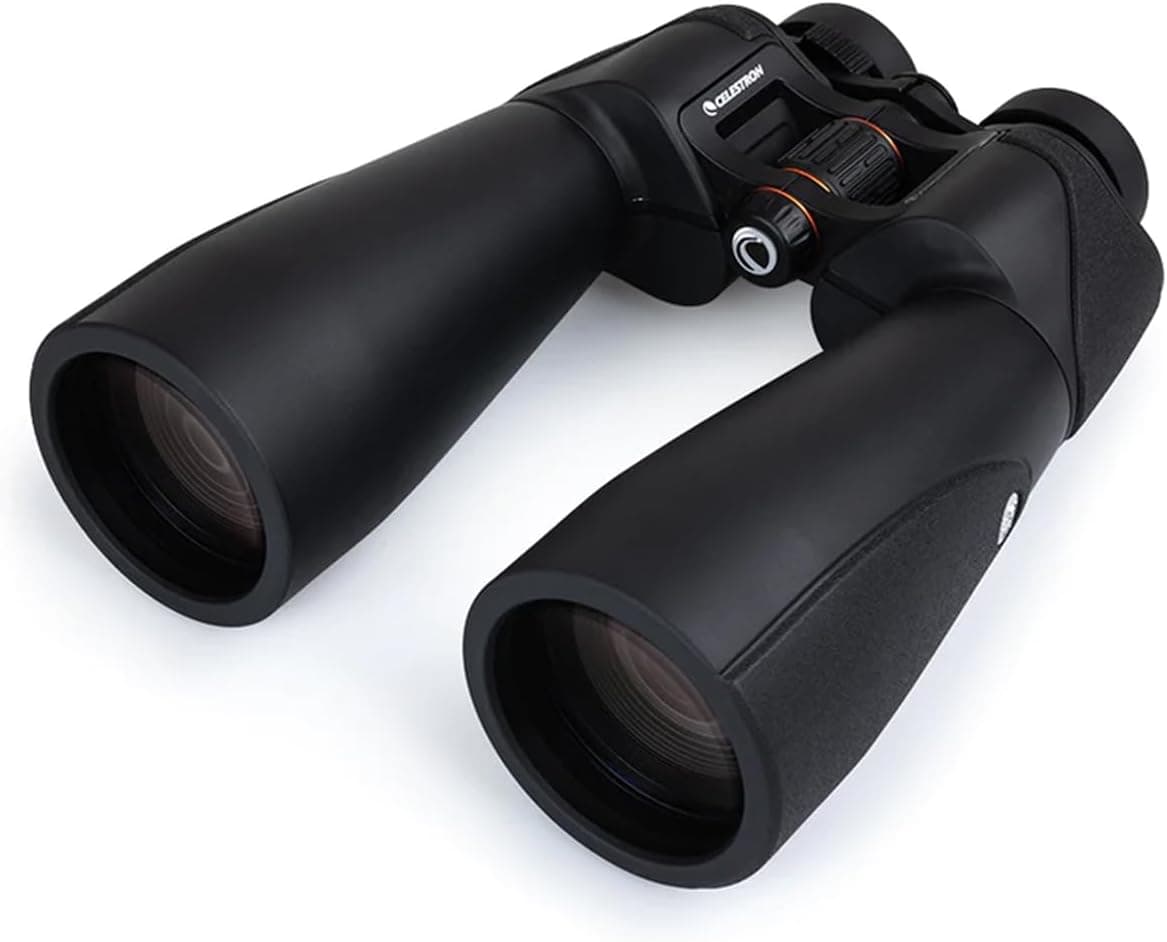
Celestron SkyMaster Pro ED 15x70 with ED glass and XLT coating, a tripod-adaptable premium astronomy binocular with case.
Price range: See on Amazon
What we liked
- + ED glass reduces color fringing around the Moon and bright stars
- + XLT coatings boost light transmission for crisper faint objects
- + Tripod adaptable design and case make it ready for regular field use
Trade-offs
- - ED upgrade costs more than the standard SkyMaster Pro
- - Weight and size are unchanged, so support is still needed
Who should consider a 15x70 astronomy binocular
Big Porro prism binoculars like this one fill a specific niche between a compact grab and go pair and a full telescope, delivering wide, immersive views of star fields, open clusters, and the Moon that a telescope's narrower field cannot match. The SkyMaster Pro ED targets observers who already understand that binoculars this size need support, whether a tripod or a monopod, and who want the sharpest version of that experience Celestron currently sells in the 70mm SkyMaster line. It is a strong second instrument for telescope owners who want quick, wide field scanning sessions, and it also works well for terrestrial long range viewing when ED glass benefits distant detail. Casual users who only want something to glance at the sky occasionally will find the size and weight overkill, since smaller binoculars serve that casual role better.
What the ED glass and XLT coatings change
The headline upgrade over the standard SkyMaster Pro is extra low dispersion glass in the 70mm objective lenses, which reduces the color fringing that shows up as purple or blue halos around the Moon's edge or bright stars in ordinary achromatic binoculars. Celestron pairs that glass with its proprietary XLT fully multi coated lens treatment, aimed at maximizing light transmission for a brighter image at the 4.4mm exit pupil this 15x70 combination produces. BaK-4 prisms and a 4.4 degree true field of view round out the optical package, with eye relief around 15.7mm and the ability to stretch further with twistable eyecups for eyeglass wearers. The body is IPX7 rated waterproof and nitrogen filled against internal fogging, and weighs about 4 pounds 10 ounces at roughly 10.2 by 8.7 by 3.4 inches, dimensions that make handheld use tiring within minutes.
Getting the most out of it in the field
A tripod adapter, sold separately, is close to mandatory here, since holding a 70mm binocular steady by hand defeats much of the benefit of the extra aperture and magnification through inevitable shake. Once mounted, the wide 4.4 degree field makes casual sweeps across the Milky Way or the Pleiades genuinely rewarding, and the ED glass difference is most visible on the Moon's limb, where color fringing is noticeably reduced compared with standard SkyMaster models. The included case, rainguard, neck strap, and lens cloth cover the basics for storage and cleaning, and the limited lifetime warranty backs up the build for long term ownership. Close focus sits around 42.7 feet, so this is strictly a distance instrument, not something that doubles for nearby nature viewing the way a compact binocular can.
How it stacks up against the rest of the SkyMaster line
The standard Celestron SkyMaster 15x70 costs less and shares the same body size and weight, but uses ordinary glass, so buyers upgrading specifically for the ED glass and XLT coatings are paying for a real but incremental sharpness gain rather than a completely different instrument. The non ED SkyMaster Pro 72030 sits in between, offering the improved eyecups and coatings of the Pro line without the ED glass upgrade, a reasonable middle ground for budget conscious buyers. Celestron's 25x70 SkyMaster pushes magnification higher at the same aperture, trading a dimmer, shakier view for extra reach, which suits a narrower set of users. None of these alternatives change the fundamental reality that a 70mm binocular this size needs tripod support to perform at its best.
The bottom line on this ED upgrade
Buyers who already know they want a large aperture astronomy binocular and are willing to pair it with a tripod will appreciate what the ED glass and XLT coatings add in sharpness and reduced color fringing over the standard SkyMaster, and our score of 9.2 out of 10 reflects that this is a well built, genuinely improved instrument within its class. It is not the right choice for anyone wanting a light, handheld binocular, and the price premium over the non ED SkyMaster Pro only makes sense if crisp, fringe free views matter more than saving money. For dedicated wide field stargazing from a tripod, though, it remains one of the more capable options in the 70mm Porro prism class.
Frequently asked questions
Do I need a tripod for the SkyMaster Pro ED 15x70?
Practically yes. At nearly 4.6 pounds, holding this binocular steady by hand for more than a minute or two is difficult, and a tripod adapter, sold separately, lets you actually benefit from the aperture and magnification.
What does the ED glass actually improve?
Extra low dispersion glass reduces the color fringing that appears as purple or blue halos around bright objects like the Moon's edge, giving a crisper, more color accurate view than the standard non ED SkyMaster.
Is it waterproof?
Yes, the body is IPX7 rated waterproof and nitrogen purged to prevent internal fogging, which is useful for dewy nights and humid climates.
Does it work for daytime or terrestrial viewing?
It can, and the ED glass benefits distant detail there too, but the 42.7 foot close focus distance and large size make it far better suited to long range and astronomical use than nearby nature viewing.
Prices change often, so check the current price and availability on Amazon.
Check price on AmazonStargazer Nest may earn a commission from the link above.