Gskyer 70mm Aperture 400mm AZ Mount Astronomical Refracting Telescope for Kids Beginners with Carry Bag Review (2026)
Updated September 14, 2026 · Research-based review
Our verdict
The Gskyer 70mm 400mm AZ refracting telescope is a lightweight, bagged starter scope aimed at kids and first-time buyers. It shows the Moon well and is easy for a child to aim, but the small aperture limits planetary detail and independent reviews flag build-quality compromises typical of the budget class.
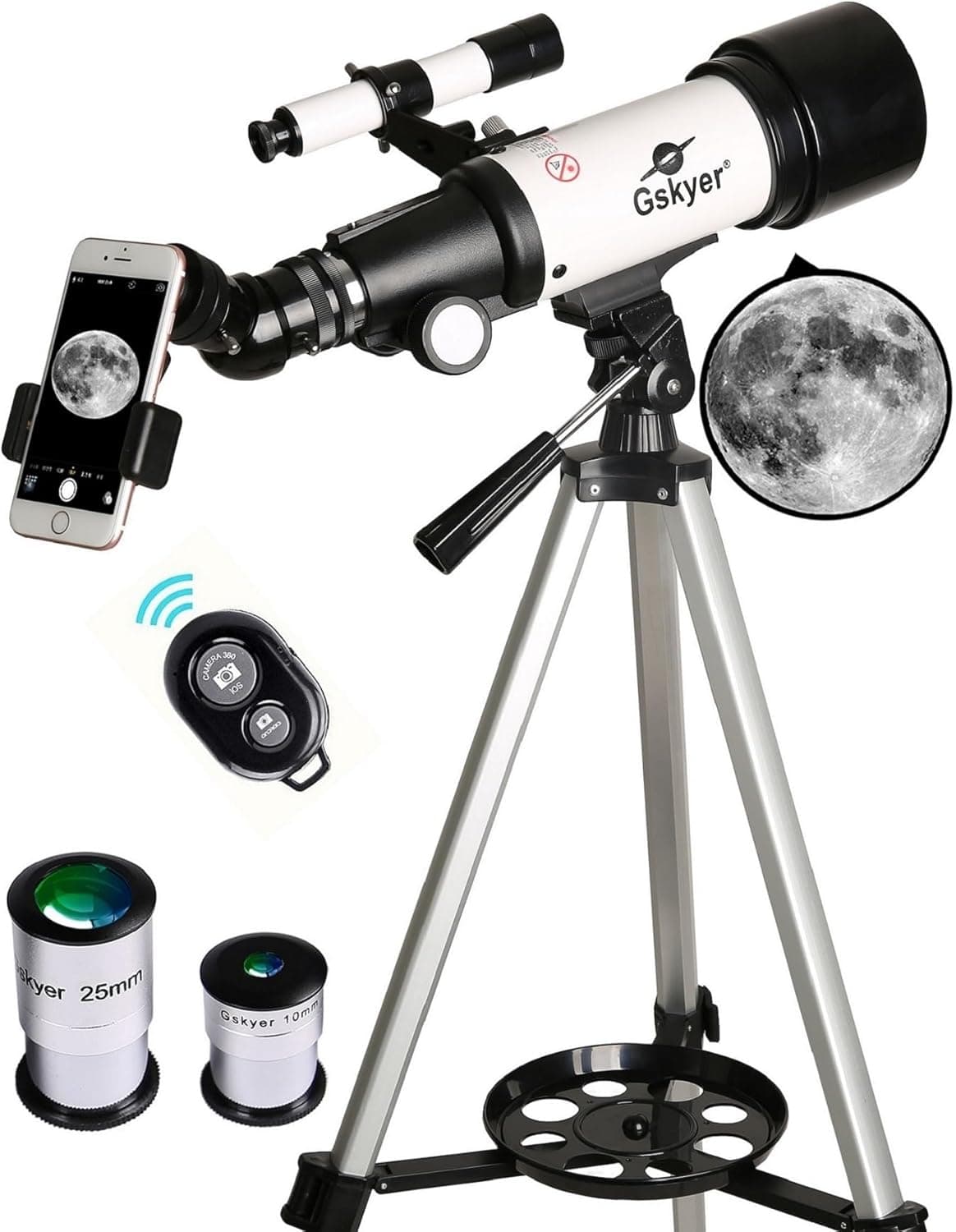
Gskyer 70mm aperture 400mm AZ refracting telescope for kids and beginners, supplied with a carry bag.
Price range: See on Amazon
What we liked
- + Carry bag keeps the scope and parts together for trips and storage
- + Short 400mm focal length gives wider views that help kids find objects
- + Simple AZ mount is easy for children to move and aim
Trade-offs
- - Small aperture shows the Moon well but only tiny, pale planetary disks
- - Light tripod needs adult help to set up on uneven ground
Who this telescope fits
This 70mm refractor is built as an entry-level, travel-friendly telescope for children and beginners rather than a serious instrument for advanced hobbyists. The 400mm focal length keeps the field of view relatively wide for a refractor, which helps a young or first-time user actually locate the Moon and bright stars without the frustration of a very narrow, hard-to-aim field. The included carry bag is a meaningful practical feature for this audience, since it keeps the tube, tripod and small parts together for a car trip, a scout outing or storage in a closet between uses. It suits a household testing whether a child will stick with stargazing before investing more, but anyone who already knows they want to resolve fine planetary detail or do serious astrophotography should look at a larger-aperture instrument instead, since 70mm is a modest amount of light-gathering power.
Specs and design explained
The optical tube has a 70mm aperture and 400mm focal length, an f/5.7 system, with coated glass optics intended to improve light transmission and contrast over uncoated budget lenses. It ships with two replaceable eyepieces plus a 3x Barlow lens for a spread of magnifications, and a 5x24 finder scope with a mounting bracket and cross-hair lines helps with initial aiming before switching to the main eyepiece. A smartphone adapter and wireless camera remote are included for basic afocal photography of the Moon through the eyepiece, and the carry bag is sized to hold the disassembled telescope, tripod and accessories together. The mount is a simple altazimuth design with no motor or tracking, built to be light enough for a child to move and aim without adult assistance in most cases.
Living with it day to day
Setup involves unpacking the bag, extending the light tripod legs, attaching the optical tube, and inserting an eyepiece, a process meant to be simple enough for a supervised child to help with. Because it is a sealed refractor, there is no mirror collimation to maintain, so the telescope goes from storage back to use without realignment. Independent reviews of this same 70mm, 400mm optical tube note the eyepieces lack built-in eyecups to block stray light, so users may need to shield their eye by hand in bright surroundings, and one review found no printed manual included, which can make first-time setup less intuitive without searching online for instructions. Basic care is limited to cleaning the front lens and eyepieces with a proper optical cloth rather than a cloth or tissue that could scratch coatings, and storing the bagged telescope indoors to protect it from dew and temperature swings.
Trade-offs and how it compares
The clear trade-off is aperture and tripod quality for portability and price. An independent review of this Gskyer 70mm AZ400 optical tube describes the bundled tripod as a lightweight, camera-style design adequate for basic support but lacking the stability serious viewing benefits from, and notes visible chromatic aberration around bright edges like the Moon's limb, both typical limitations of budget achromatic refractors rather than defects unique to this listing. Compared with the larger 80mm Gskyer AZ Space models in the same lineup, this 70mm version gathers less light, so planets appear smaller and dimmer, though its lighter overall weight and included carry bag make it more convenient to transport for families who prioritize portability over raw aperture. Buyers deciding between this and a similarly priced tabletop Dobsonian should note the Dobsonian generally offers noticeably more light-gathering power for the same budget, at the cost of not folding into a small bag.
Verdict and who should pick something else
For a family wanting the lightest, most packable starter telescope to test a child's interest in the Moon and stars, this Gskyer 70mm model earns its place, consistent with our score of 7.4 out of 10 for fit and value at this level. Buyers who want to resolve real planetary detail, view fainter deep-sky targets, or need a tripod steady enough for extended high-magnification viewing should choose a larger-aperture telescope or a tabletop Dobsonian instead, since this scope's small lens and light tripod are built around portability rather than performance. Anyone who has already read that independent reviewers find the bundled tripod and eyepieces only adequate should treat this as a genuine entry point to upgrade from, not a long-term instrument for a committed hobbyist.
Frequently asked questions
Is this telescope good enough to see planets clearly?
It shows the Moon well and can reveal Jupiter and Saturn as small, pale disks, but the 70mm aperture limits fine planetary detail compared with larger telescopes, so expect a modest rather than dramatic view.
Does the carry bag fit the whole telescope?
Yes, the bag is designed to hold the disassembled optical tube, tripod and small accessories together for travel or storage.
Is the tripod sturdy on uneven ground?
It is a light tripod, and independent reviews describe it as adequate for basic support but not especially stable, so setting it up on level ground and avoiding bumping it during high magnification helps image steadiness.
Does it come with a printed instruction manual?
At least one independent review of this optical tube reported no printed manual in the box, so first-time users may want to look up setup instructions online if none is included with their unit.
Prices change often, so check the current price and availability on Amazon.
Check price on AmazonStargazer Nest may earn a commission from the link above.