Astromania Finder Scope 9x50 Right Angle Correct Image Optical Telescope Finder Multi-Coated Crosshair Bracket Review (2026)
Updated September 21, 2026 · Research-based review
Our verdict
A solid step up from a stock finder for anyone tired of hunting for faint stars through a factory optic. The 9x50 aperture and correct image orientation make star hopping with a printed chart genuinely easier, though the unlit crosshair and added weight are real trade offs.
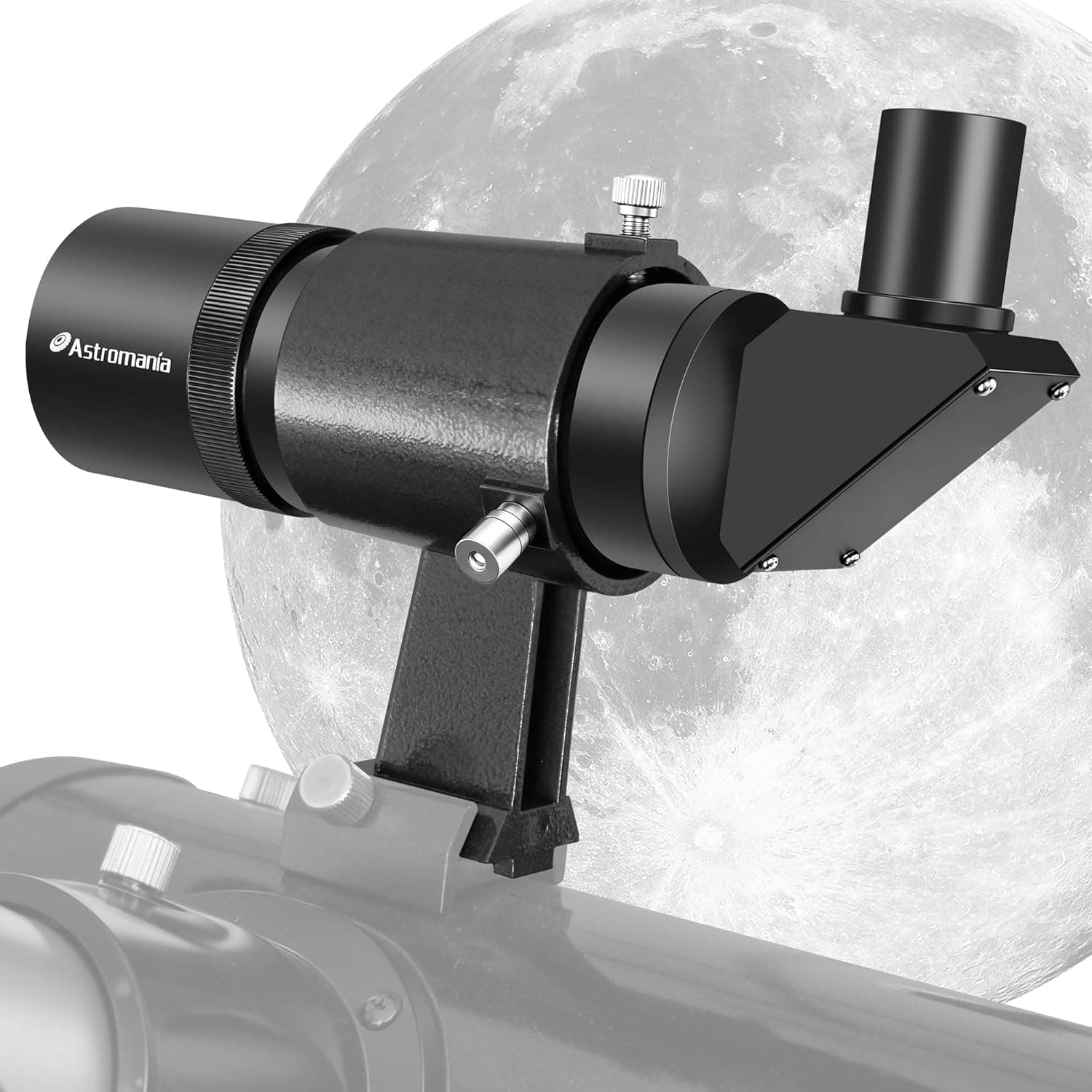
Astromania 9x50 right angle correct image optical telescope finder with multi-coated optics and crosshair bracket.
Price range: $ (Budget)
What we liked
- + Correct image orientation makes matching charts easy
- + 9x50 aperture shows plenty of guide stars
- + Right angle eyepiece is comfortable for overhead objects
Trade-offs
- - Heavier than red dot finders, adding weight to the tube
- - Crosshair is not illuminated, which can be hard to see on dark nights
Optical design and image orientation
This is a 9x magnification, 50mm aperture finder scope with fully multi coated optics and a right angle eyepiece, built to bolt onto a telescope in place of a stock finder. The key feature is its correct image, achromatic design, which delivers an upright and non reversed view rather than the mirror flipped or upside down image common on simpler finders. That matters most when star hopping from a printed chart, since what you see through the eyepiece lines up directly with what is printed on the page instead of needing a mental flip. The 90 degree right angle path also keeps the eyepiece in a comfortable position even when the telescope is aimed high overhead.
Build and mounting
The housing is anodized aluminum with internal threading meant to cut down on stray reflections inside the tube, and the whole unit attaches through a standard Synta style dovetail base, the same bracket pattern used across most Skywatcher, Orion, Vixen, and GSO telescopes. That compatibility means it should drop into an existing finder shoe on most beginner and mid level scopes without needing an adapter. Alignment is handled with a crosshair reticle and a pair of adjustment screws plus a compression ring, letting you center the finder's field of view on the same target as the main telescope before a session, a step that only needs to be repeated occasionally once it is dialed in.
Trade offs against a red dot finder
A 9x50 finder like this one gathers far more light than a red dot or reflex sight, which means it shows stars several magnitudes fainter than the naked eye can see, making it much easier to star hop to targets that are not visible without help. The cost of that extra reach is size and weight, since a 50mm objective and its housing add noticeably more mass to the front of the telescope than a small plastic reflex sight, which can affect balance on lighter mounts and may require re balancing the tube in its rings. It also needs its own alignment routine, unlike a red dot finder that mostly just needs pointing.
Using it in the dark
The crosshair reticle inside this finder is not illuminated, so on a moonless night away from any ambient light it can be difficult to see the crosshair lines against a dark sky background, which makes precise centering on a faint star harder than it would be with a lit reticle. Many observers work around this by using a dim red flashlight to briefly light the field of view before centering a target, or by practicing with the finder under brighter twilight conditions first. This is a real limitation compared to illuminated 9x50 finders, and buyers who mostly observe under very dark skies should weigh whether that feature is worth paying more for.
Who this finder suits
This finder is a good match for anyone upgrading from a basic red dot sight who wants to see and identify faint guide stars before slewing the main telescope, and who already uses paper star charts or a planetarium app where a correct, non reversed image is a real convenience rather than a nice to have. It is less suited to observers with very lightweight travel scopes, where the added weight up front could unbalance the tube, or to anyone who strongly prefers an illuminated reticle for deep sky work under dark rural skies. For most backyard telescopes on a standard alt azimuth or equatorial mount, though, it is a practical, widely compatible upgrade.
Frequently asked questions
Will this finder fit my telescope?
It uses a standard Synta style dovetail bracket found on most Skywatcher, Orion, Vixen, and GSO telescopes, so it should fit existing finder shoes on those brands without an adapter.
Is the image right side up through this finder?
Yes, it is a correct image design, so the view appears upright and not mirror reversed, which matches what you see on a printed star chart.
Is the crosshair illuminated?
No, the crosshair reticle is not lit, so centering on faint stars under very dark skies can be harder than with an illuminated finder.
How do I align it with my telescope?
Point the main telescope at a distant object during daylight or twilight, then use the finder's adjustment screws and compression ring to center the same object in the crosshair.
Prices change often, so check the current price and availability on Amazon.
Check price on AmazonStargazer Nest may earn a commission from the link above.