Celestron Nature DX 10x32 Compact Binoculars for Birding, BaK-4 Prisms, Fully Multi-Coated, Waterproof Review (2026)
Updated September 14, 2026 · Research-based review
Our verdict
The Celestron Nature DX 10x32 suits birders and casual stargazers who want a bright, waterproof pair that still fits in a jacket pocket. The 32mm objectives and BaK-4 prisms give a noticeably brighter, sharper image than true pocket compacts, though it will not replace a dedicated astronomy binocular for serious deep-sky work.
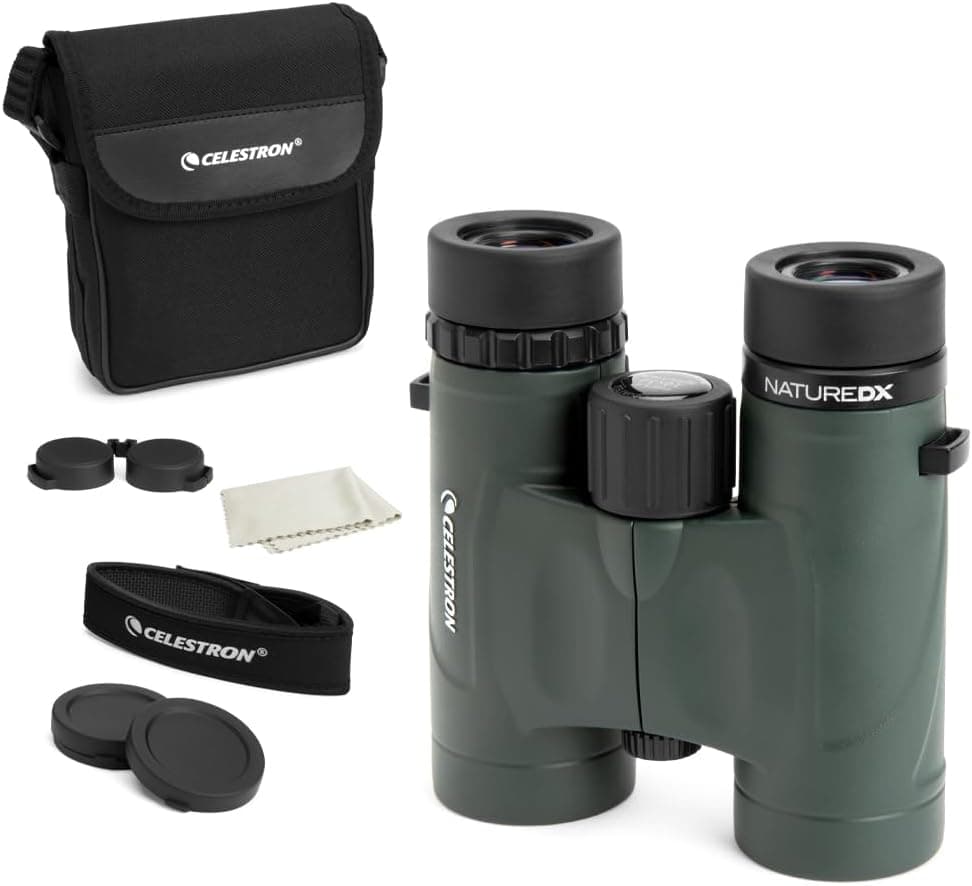
Celestron Nature DX 10x32 compact binoculars for birding with BaK-4 prisms, fully multi-coated optics and waterproofing.
Price range: $ (Budget)
What we liked
- + 32mm objectives are much brighter than pocket compacts for dusk viewing
- + BaK-4 prisms and full multi-coating deliver crisp, bright images
- + Waterproof build suits birding and casual stargazing trips
Trade-offs
- - Larger and heavier than true pocket-size compact binoculars
- - Still too small for serious deep-sky work compared with bigger astronomy pairs
Who this pair of binoculars is for
The Nature DX 10x32 sits between a pocket compact and a full-size birding binocular, which makes it a good match for anyone who wants one pair that works for daytime birding, hiking and casual night sky scanning. The 10x magnification pulls in distant songbirds and raptors without the shake that heavier 12x or 15x glass introduces in handheld use. Because it packs into a jacket pocket or a small daypack pouch, it travels well for weekend trips where a full binocular case would be overkill. Stargazers who mainly want to sweep the Milky Way, resolve the Pleiades or check out the Moon's terminator before setting up a telescope will find the extra light gathering over a pocket compact genuinely useful, while still keeping the kit light enough to grab on the way out the door.
Specs and optical design explained
The 32mm objective lenses sit in the middle of the compact-binocular range, gathering meaningfully more light than the 20 to 25mm lenses on true pocket models, which matters most at dawn, dusk and under a dark sky. Inside, BaK-4 glass prisms with full multi-coating on every air to glass surface keep the image bright and reduce the color fringing and dimness that cheaper prism glass introduces. Celestron lists a 58 degree apparent field of view, wide enough to track a bird in flight or take in a broad swath of stars without constantly re-aiming. A close focus point under seven feet also lets the same pair double as a close-up viewer for butterflies or flowers on a walk, a feature dedicated astronomy binoculars rarely bother with.
Setting it up and living with it
There is no real setup beyond adjusting the central focus wheel and the diopter ring for your eyes, and after that one-time calibration a single focus knob handles both barrels at once. The housing is nitrogen purged and sealed, so the body is waterproof and will not fog internally after a cold night outside or a sudden shower on a hike, and the rubber armor gives a secure grip in damp conditions. Cleaning is limited to a lens cloth or blower on the objective and eyepiece glass, since the sealed housing means there is nothing to open or maintain inside. Owners who use them for birding tend to keep the neck strap attached permanently, since the compact size makes it tempting to carry them loose in a bag otherwise, which risks scratching the lenses.
Trade-offs and how it compares with rivals
Against smaller pocket compacts like the Nikon Trailblazer 8x25 or 10x25 and the Bushnell Legend Ultra HD 10x25, the Nature DX trades a bit of pocketability for a genuinely brighter image thanks to its larger 32mm objectives, which is the right trade for most buyers who spend real time glassing rather than making an occasional quick check. Weighing 18 ounces, it is heavier than those 25mm models but still light enough for an all-day neck strap carry. Compared with a purpose-built astronomy binocular in the 10x50 or larger class, the Nature DX simply cannot match the light grasp needed to pull in fainter nebulae or galaxy detail, so serious deep-sky binocular observing still calls for a larger instrument with a tripod adapter.
Verdict and who should look elsewhere
Buyers who want a single, waterproof, pocketable binocular that handles birding, hiking and casual stargazing duty will get strong value from the Nature DX 10x32, and our score of 8.6/10 reflects how well it balances brightness against portability. Anyone whose main goal is squeezing into the smallest possible bag should look at a true 25mm pocket compact instead and accept the dimmer view. Anyone whose main goal is serious deep-sky binocular astronomy, hunting down faint clusters and nebulae, should step up to a larger aperture astronomy binocular on a tripod rather than relying on a compact pair built primarily for daytime use.
Frequently asked questions
Is the Celestron Nature DX 10x32 good for stargazing?
It works well for casual sky scanning, the Moon and bright star clusters thanks to its 32mm objectives and BaK-4 prisms, but a larger 10x50 or bigger astronomy binocular will pull in more detail on faint deep-sky targets.
Are these binoculars waterproof?
Yes, the housing is nitrogen purged and sealed to be waterproof and fogproof, so they hold up to rain, dew and humid nights outside.
How much do the Nature DX 10x32 binoculars weigh?
Celestron lists them at 18 ounces, light enough for an all-day neck strap carry while still noticeably larger than a 25mm pocket compact.
Can I use the Nature DX 10x32 for close-up viewing like butterflies or flowers?
Yes, the close focus distance is under seven feet, which is unusually close for a binocular this size and useful for nature viewing beyond birding.
Prices change often, so check the current price and availability on Amazon.
Check price on AmazonStargazer Nest may earn a commission from the link above.