NightWatch: A Practical Guide to Viewing the Universe, Terence Dickinson Review (2026)
Updated September 21, 2026 · Research-based review
Our verdict
A long-running, widely used beginner astronomy guide from Firefly Books, built around star charts and practical advice on what to look at and how. This particular listing does not state its edition number, so buyers who want the newest content and equipment advice should confirm the edition before ordering.
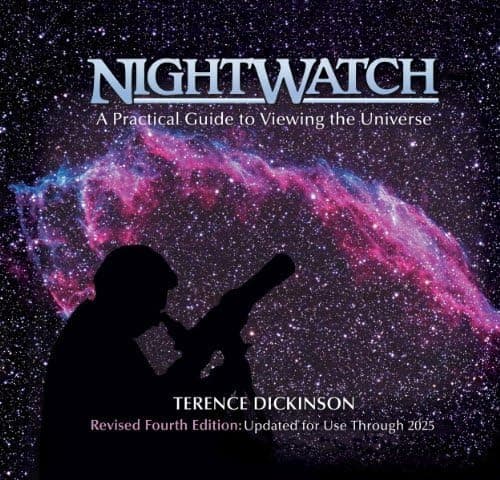
NightWatch by Terence Dickinson, a practical guide to viewing the universe for amateur astronomers.
Price range: See on Amazon
What we liked
- + Practical approach covers equipment and what to observe
- + Terence Dickinson is a respected astronomy writer
- + Star charts help beginners learn the sky
Trade-offs
- - Check which edition you are getting since older editions may be dated
- - Some equipment recommendations may be out of date
A long-running beginner astronomy guide
NightWatch: A Practical Guide to Viewing the Universe is written by Canadian astronomy writer Terence Dickinson and published by Firefly Books. Publisher listings and retailer records show the book has gone through multiple editions since it first appeared, with the first three editions alone selling more than 600,000 copies combined, and later editions continuing to update the content. Firefly Books has released a newer fifth edition that expanded the book from 192 to 208 pages, which gives a sense of how actively this title gets revised over time rather than being a one-off publication. The version sold under this listing is a spiral-bound edition published by Firefly Books, a binding style the publisher uses because it lets the book lie flat for reference at the eyepiece.
What the book actually covers
NightWatch is structured as a practical, how-to guide rather than a pure reference text, covering equipment selection, how to get started with a telescope or binoculars, and what objects are worth seeking out across the seasons. Its star charts are one of the most consistently mentioned features in retailer and reader descriptions, designed to help a beginner learn constellations and locate objects without needing a separate planisphere. Contributors credited across various editions include astronomical artist Adolf Schaller for illustrations and writer Timothy Ferris, giving the book a mix of practical instruction and readable narrative sections rather than a dense technical reference.
Which edition you are actually getting
This particular listing does not specify an edition number in its title, and the associated barcode traces to a spiral-bound printing dated to 2006 in some retailer records. That places it earlier than the fourth edition, which retailers date to around 2009, and well before the newer fifth edition Firefly Books has since released. Since NightWatch has been revised repeatedly, with updates to equipment recommendations and content reflecting changes in amateur astronomy gear over the decades, a buyer who wants the most current advice on cameras, GoTo telescopes or other modern equipment should look specifically for the fifth edition rather than assume this listing includes the latest updates.
Format and practical use
The spiral binding is a deliberate design choice for a book meant to be used outdoors at a telescope or on a table with a red flashlight, since it can be folded flat or back on itself without the spine fighting to close, unlike a standard perfect-bound paperback. That makes it more practical as a field reference than many other astronomy books, which are often better suited to reading indoors before a session rather than being consulted while actually observing. The tradeoff is that spiral-bound books are generally less durable on the shelf and can develop bent wire coils with heavy use, so buyers who want a book to last for many years of frequent outdoor use should handle it with that in mind.
Who should buy this edition
NightWatch remains a respected starting point for anyone new to backyard astronomy who wants both the how-to advice and practical star charts in one book. Because this particular listing does not clearly state a current edition, it suits a buyer who is comfortable with slightly older content and mainly wants the star charts and general observing guidance, which change less over time than equipment-specific recommendations. Anyone specifically wanting the newest edition, with updated gear advice and the expanded page count of the fifth edition, should search for that edition by name rather than relying on this listing.
Frequently asked questions
What edition of NightWatch is this?
The listing does not state an edition number in the title. Available retailer records trace this specific spiral-bound printing to around 2006, which predates the fourth and fifth editions.
Is NightWatch good for a complete beginner?
Yes, it is widely used as a first astronomy book because it combines practical how-to advice with star charts meant to help new observers learn the sky and choose equipment.
Why is the book spiral-bound?
The spiral binding lets the book lie flat or fold back on itself, which is useful for using it as a reference at the telescope or table outdoors, unlike a standard paperback spine.
Should I buy the newest edition instead?
If updated equipment advice matters to you, yes. Firefly Books has released a fifth edition with expanded content, and buyers wanting the most current recommendations should confirm they are ordering that edition specifically.
Prices change often, so check the current price and availability on Amazon.
Check price on AmazonStargazer Nest may earn a commission from the link above.