A Field Guide to Stars and Planets (Peterson Field Guide), Pasachoff, Peterson, Tirion Review (2026)
Updated September 21, 2026 · Research-based review
Our verdict
A dense, comprehensive reference from the long-running Peterson Field Guide series, built around Wil Tirion's detailed star charts and covering far more ground than a beginner-focused guide like NightWatch. It rewards someone who wants a lasting reference book more than it suits someone looking for a light first read.
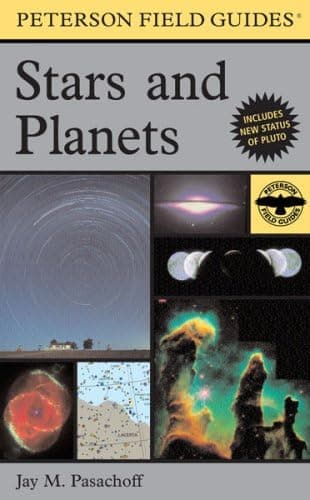
A Field Guide to Stars and Planets, Peterson Field Guide by Pasachoff, Peterson and Tirion, a detailed sky reference.
Price range: $ (Budget)
What we liked
- + Detailed star charts by Tirion are highly regarded
- + Comprehensive reference for stars, planets and deep-sky objects
- + Peterson Field Guide format is compact for fieldwork
Trade-offs
- - Dense information may overwhelm total beginners
- - Older content may lack newer discoveries
Part of a well-established reference series
A Field Guide to Stars and Planets is written by astronomer Jay M. Pasachoff, building on the original Peterson Field Guide framework associated with naturalist Roger Tory Peterson, with star charts by cartographer Wil Tirion. Retailer listings identify this as the fourth, updated edition, published by Houghton Mifflin Harcourt. The Peterson Field Guide series has a long publishing history across natural history and science subjects, and this astronomy volume follows that series format: compact enough for field use but dense with reference material rather than built as a narrative read. Multiple retailer catalog entries describe it as the field guide series' astronomy volume, distinct from the general nature guides the Peterson name is best known for.
What is inside: charts and reference depth
One retailer's product description for the fourth edition lists twenty-four color monthly sky maps and fifty-two color atlas charts covering the entire sky, which is a substantially deeper charting system than a single all-purpose star map found in lighter beginner books. Wil Tirion's charts are widely regarded in the amateur astronomy community as some of the most detailed and accurate available in a printed field guide, a reputation that extends across his other star atlas work as well. Beyond the charts, the book functions as a general reference on stars, planets and deep-sky objects rather than a step-by-step how-to guide, which suits an observer who already has some basic familiarity with the sky and wants more depth.
Format and length
This is a substantially longer book than a typical beginner guide, running several hundred pages across its reference sections, sky maps and atlas charts combined, reflecting its role as a comprehensive field guide rather than a short introductory text. Retailer listings describe it in the standard Peterson Field Guide paperback format, sized for portability despite its page count. Because the fourth edition was published in the late 1990s, some of the fast-moving areas of amateur astronomy, particularly recommendations around specific consumer equipment or very recent discoveries, will not reflect anything from the past two decades, even though the star charts and general reference content age much more slowly.
How it compares to a beginner guide like NightWatch
Where a book like NightWatch is built around practical getting-started advice and equipment recommendations, this Peterson guide leans further into reference depth, with far more extensive star charts and a broader survey of objects across the sky. That makes it a strong complement to, rather than necessarily a replacement for, a beginner-focused guide, since a new observer often benefits from NightWatch's practical structure first before graduating to the denser charting and reference material here. Experienced amateur astronomers and anyone wanting a serious field atlas rather than a light casual read will likely get more sustained, repeated use out of this book's depth over the years than out of a slimmer introductory title, simply because there is more reference material here to keep returning to as observing skills grow.
Who should buy it
This guide fits an observer who wants a long-term astronomy reference with detailed star charts rather than a quick introductory read, including intermediate stargazers who have outgrown a basic all-sky map and want the more granular monthly and atlas charts this book provides. Total beginners looking for a gentler, more narrative introduction to equipment and observing technique may find the density here overwhelming as a first book and might be better served starting with a more beginner-oriented guide before adding this one to the shelf as a reference later on. Anyone building a small home astronomy library will likely want a copy on hand regardless of experience level, simply for how often the charts get pulled out before a session.
Frequently asked questions
Is this a good first astronomy book for a complete beginner?
It can be dense for a total beginner since it is built as a comprehensive reference rather than a step-by-step guide. Many readers pair it with a lighter, more narrative beginner book first.
What edition is this Peterson Field Guide?
Retailer listings identify this as the fourth, updated edition, published by Houghton Mifflin Harcourt, featuring star charts by Wil Tirion.
How detailed are the star charts in this guide?
The fourth edition includes twenty-four monthly sky maps and fifty-two atlas charts covering the entire sky, a notably deeper charting system than a single general-purpose star map.
Is the content up to date?
The star charts and general reference material hold up well, but because the fourth edition dates to the late 1990s, any specific equipment recommendations will not reflect recent gear.
Prices change often, so check the current price and availability on Amazon.
Check price on AmazonStargazer Nest may earn a commission from the link above.