Canon 10x42 L IS WP Image Stabilized Binoculars, Waterproof L-Series Optics with UD Lens Elements Review (2026)
Updated September 14, 2026 · Research-based review
Our verdict
The Canon 10x42 L IS WP uses powered image stabilization to erase hand shake, revealing more stars and sharper lunar detail than an unstabilized handheld binocular at 10x. It suits stargazers who value steady handheld views over ultimate portability, but the roughly 2 pound weight adds up on long outings.
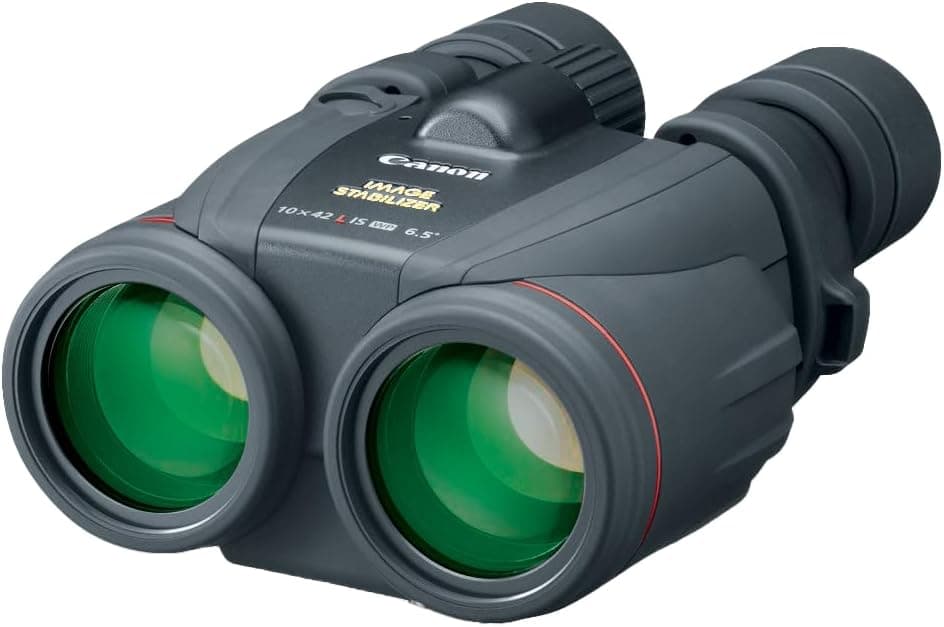
Canon 10x42 L IS WP image stabilized binoculars with waterproof L-series optics and UD lens elements.
Price range: See on Amazon
What we liked
- + Image stabilization removes hand shake, revealing more stars and lunar detail
- + L-series optics with UD elements give sharp, color-corrected views
- + Waterproof build suits dewy nights and wet field conditions
Trade-offs
- - Heavy for a 42mm binocular because of the stabilizer system
- - Requires batteries for stabilization, so carry spares on long trips
Who benefits most from powered stabilization
Canon built the 10x42 L IS WP for anyone who has tried handheld astronomy binoculars and found the view jittery at 10x or higher, since image stabilization fundamentally changes what a handheld binocular can show. Stargazers who want to scan the Milky Way, resolve double stars, or study lunar craters without setting up a tripod are the clearest audience, along with birders and boaters who need a steady view from an unstable position. The L series designation signals Canon's premium optical line, so buyers already comfortable investing in quality glass will find the price easier to justify than someone shopping purely on a budget. It is less suited to ultralight hikers, since the stabilization motor and batteries add real weight that a simple non stabilized binocular avoids entirely.
How the stabilization and L series optics work together
At the core is Canon's image stabilizer system, activated by a button and powered by two AA batteries, which counteracts hand tremor and lets 10x magnification feel closer to a tripod mounted view. The optical path uses L series glass with ultra low dispersion, UD, lens elements aimed at controlling chromatic aberration, paired with a 42mm objective for reasonable light gathering in dim conditions. Field of view comes in at 59.2 degrees apparent, with eye relief around 16mm and close focus at about 8.2 feet, useful for nearby subjects as well as distant ones. The body is rated waterproof and weighs approximately 39.2 ounces, or about 2.2 pounds, noticeably heavier than an unstabilized 42mm binocular because of the internal stabilization hardware and battery compartment. Dimensions run roughly 5.4 by 6.9 by 3.4 inches, sized more like a small telescope than a compact travel binocular.
Living with it on long nights and long hikes
Owners who have used the 10x42 L IS WP for astronomy report that the stabilization genuinely reveals more, including resolving Jupiter's moons as steady points of light rather than a shaky smear, which is the core selling point delivering on its promise. One recurring complaint from long term owners is the green stabilization indicator LED, which is bright enough to interfere with dark adaptation during a stargazing session, and a red LED would suit night use better. The weight becomes noticeable on hikes beyond five or six miles or technical terrain, with owners describing real fatigue after several hours around the neck, even though it feels manageable on shorter outings. Two AA batteries typically last for many hours of intermittent stabilizer use, so carrying spares on extended trips is a reasonable precaution rather than a strict necessity.
Trade-offs against other stabilized and unstabilized choices
Canon's own 12x36 Image Stabilization III trades objective size for a lighter, more compact body, appealing to users who prioritize portability over the 42mm's greater light gathering, though it gives up some low light performance for astronomy. The SIG Sauer Zulu6 HDX Pro offers stabilization at a larger 50mm aperture aimed more at hunting than astronomy, with a different weight and balance profile. Against any non stabilized 10x42 binocular, the L IS WP's core advantage is simply steadiness, since even excellent optics cannot overcome visible hand shake at 10x magnification when held freely, and that steadiness is what most owners cite as transformative for both astronomy and daytime use.
The bottom line on this stabilized pair
For stargazers who want to observe handheld rather than hauling a tripod every time, the Canon 10x42 L IS WP delivers a genuinely different viewing experience than ordinary binoculars at the same magnification, and our score of 9.2 out of 10 reflects how well the stabilization technology performs in practice. The trade-offs are real but manageable: extra weight that adds up on long hikes, a battery dependency, and a stabilizer LED that could be friendlier to night vision. Buyers who mostly observe from a backyard, deck, or short outing, and who value steady 10x views over ultralight carry, are the ideal fit, while anyone prioritizing minimal weight above all else should look at a lighter, unstabilized binocular instead.
Frequently asked questions
How much does the Canon 10x42 L IS WP weigh?
It weighs about 39.2 ounces, or roughly 2.2 pounds, noticeably heavier than a comparable unstabilized 42mm binocular because of the built in image stabilization hardware and battery compartment.
What batteries does it use and how long do they last?
It runs on two AA batteries that power the image stabilization system, typically lasting for many hours of intermittent use, so carrying spares is sensible for extended trips or events.
Does the stabilizer affect night vision?
Some long term owners note the green stabilization indicator LED is bright enough to disturb dark adaptation during stargazing, and would prefer a red indicator for night use.
Is it good enough to see Jupiter's moons?
Owners report the stabilization helps resolve Jupiter's moons as steady points of light rather than a shaky smear, which is a noticeable improvement over unstabilized handheld viewing at the same magnification.
Prices change often, so check the current price and availability on Amazon.
Check price on AmazonStargazer Nest may earn a commission from the link above.