Celestron 71018 SkyMaster 20x80 Binoculars - High-Power Astronomy BaK-4 Prisms Tripod Adapter Review (2026)
Updated September 21, 2026 · Research-based review
Our verdict
A giant 80mm binocular for owners who already have a sturdy tripod and want more reach than a 15x70 offers. BaK-4 prisms and 20x power reward patient sky sweeping, but the long, heavy body is genuinely awkward to aim overhead without a good mount doing the work.
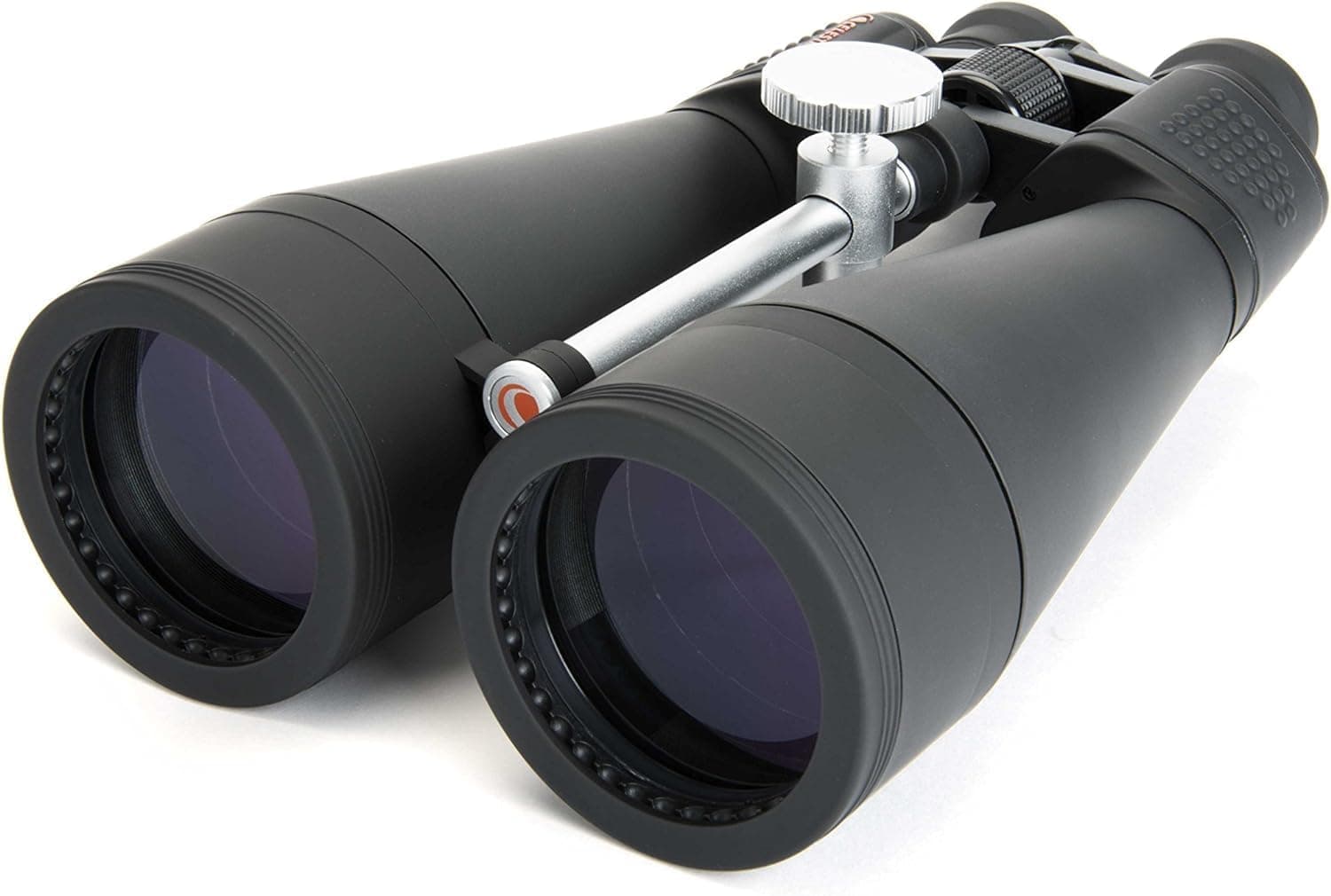
Celestron 71018 SkyMaster 20x80 with BaK-4 prisms and tripod adapter, a high-power giant binocular for astronomy.
Price range: See on Amazon
What we liked
- + BaK-4 prisms give brighter, rounder exit pupils than cheaper glass
- + Tripod adapter included for the steady support these giants require
- + 20x80 format excels at open clusters, the Moon and bright comets
Trade-offs
- - Collimation can be knocked out by bumps, which is hard to fix at home
- - Long, heavy body is awkward to aim at objects high overhead
Why 20x80 is a step up from smaller giants
The Celestron 71018 SkyMaster pairs 20x magnification with 80mm objective lenses, a larger aperture than the more common 15x70 or 10x50 astronomy binoculars. B&H's listed specifications put the angular field of view at 3.2 degrees and near focus at 80 feet, both narrower numbers than a 15x70 model, which is the tradeoff that comes with more magnification and a bigger front lens. That narrower view rewards patient, planned sky sweeps of open clusters, the Moon, and bright comets rather than fast, wide scanning of the Milky Way. Optics4Birding and B&H both list this as a Porro prism design, the traditional wide-body shape rather than a slim roof-prism binocular, which suits the large 80mm objectives this model uses.
Prism glass and image quality
Celestron builds the 71018 with BaK-4 glass prisms, which produce a rounder, brighter exit pupil than the BK-7 glass found in cheaper binoculars, according to Celestron's own product materials. The 80mm objectives are multi-coated for better light transmission, and B&H lists an exit pupil of about 4mm with 17mm of eye relief. Together, those specs make this a genuinely bright instrument for its size class, well suited to pulling detail out of open star clusters and giving a wide, bright view of the Moon. It is not immune to the optical quirks common in budget giant binoculars, and Celestron itself sells an upgraded SkyMaster Pro version with better coatings for buyers chasing sharper edge performance.
Weight, handling and mount requirements
B&H lists this binocular at 4.8 pounds, noticeably heavier than a 15x70 pair, and the body is long enough that holding it steady by hand is not realistic for more than a few seconds. Celestron's own description is direct about this, noting the design was never meant to be handheld. The included tripod adapter threads onto a standard photographic tripod, and a fluid pan-tilt head or a dedicated binocular mount makes a real difference when tracking objects that pass overhead, since a basic photo tripod head can be stiff and awkward at steep upward angles. Buyers should plan on a tripod purchase as part of the real cost of owning this binocular if they do not already have a suitable one.
Durability and what is included
One recurring theme across owner discussions and specialty retailer listings is that collimation, the alignment of the internal prisms, can be knocked out of true by a drop or a hard bump, and it is not something most owners can fix at home. That is a common limitation of Porro prism binoculars in this price range generally, not unique to this model, but it is worth handling the unit gently and checking the view carefully after any travel. Celestron includes a carrying case with the 71018 and backs it with a Limited Lifetime Warranty, which covers manufacturing defects, according to Celestron and B&H. The tripod adapter ships in the box as well, so the only major accessory buyers need to add is the tripod itself.
Who this is for
The 71018 suits an observer who wants more aperture and reach than a 15x70 offers and who already has, or is ready to buy, a solid tripod and head to support it. It is a poor match for anyone hoping for a grab-and-go handheld binocular, since the weight and length make that impractical. For comparison, Celestron's own 15x70 SkyMaster models are lighter and easier to aim at objects high overhead, while still gathering substantial light, so buyers unsure about committing to a full tripod setup may be better served starting there before stepping up to the 20x80.
Frequently asked questions
Can the 20x80 SkyMaster be used handheld?
Not practically. At 4.8 pounds with 20x magnification, hand shake makes the view unusable within seconds, which is why Celestron includes a tripod adapter and designed the binocular around tripod use.
What kind of tripod does it need?
Any standard photographic tripod works with the included adapter, but a fluid pan-tilt head makes tracking objects overhead much smoother than a basic photo tripod head, which can bind at steep angles.
How does the 20x80 compare to the 15x70 SkyMaster?
The 20x80 has more magnification and a larger 80mm objective for more reach and light, but it is heavier, has a narrower field of view, and is harder to aim straight up than the 15x70.
What happens if the binoculars get knocked out of collimation?
Misalignment from a drop or bump is a known risk with budget Porro prism binoculars and usually cannot be fixed at home, so it is worth handling this model carefully and checking the view after any travel.
Prices change often, so check the current price and availability on Amazon.
Check price on AmazonStargazer Nest may earn a commission from the link above.