Celestron 93588 Astro Night Vision Flashlight, Variable Red Illumination, Preserves Night Vision Review (2026)
Updated September 21, 2026 · Research-based review
Our verdict
A simple, dedicated red flashlight with dual red LEDs and a thumbwheel dimmer, powered by a single 9V battery for reading star charts without ruining dark adaptation. Its square shape resists rolling off an observing table, and it is a straightforward, single purpose companion for anyone who already owns a general use flashlight.
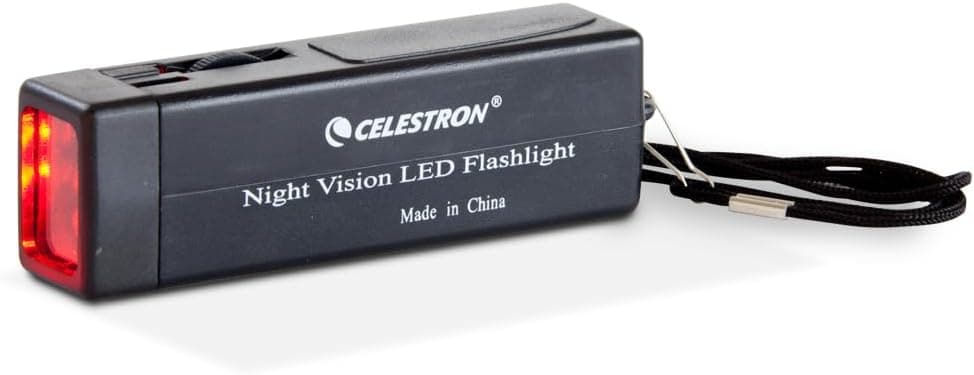
Celestron 93588 Astro Night Vision flashlight with variable red illumination that preserves night vision.
Price range: See on Amazon
What we liked
- + Variable red illumination lets you dim light to protect dark adaptation
- + Red light is ideal for reading star charts and adjusting gear
- + Compact flashlight fits in a pocket or eyepiece case
Trade-offs
- - Single-purpose red light is less useful for general camp tasks
- - Check the battery type and expected runtime before buying
Why a dedicated red flashlight matters
Human eyes take roughly 20 to 30 minutes to fully adapt to darkness, and a single burst of white light can undo that adaptation almost instantly, which is why observers keep a red only flashlight on hand for reading star charts, adjusting eyepieces or walking around an observing site. This Celestron model is built specifically for that role rather than as a general purpose flashlight, using red LEDs instead of a white LED with a red filter or lens cap, which some cheaper alternatives rely on and which can still leak some white light around the edges.
Light output and dimming control
The flashlight uses two red LEDs for even illumination across the beam rather than a single point source, and brightness is adjustable through a thumbwheel that lets the observer dial the light down to a dim glow for reading a star atlas or up brighter for tasks like adjusting a tripod leg or finding a dropped eyepiece cap. Celestron's own product page does not publish a specific lumen figure, so buyers should treat any exact brightness number they see elsewhere with some caution and rely on the adjustable range itself as the key feature rather than a peak output spec.
Power source and battery life
It runs on a single, widely available 9V battery rather than a rechargeable cell or a less common battery size, which keeps replacement simple during a multi night observing trip or at a dark site far from an outlet. A 9V battery also has enough capacity to power a low draw red LED design for many hours of typical intermittent use, such as brief chart checks between telescope moves, though total runtime will vary with how often the thumbwheel is left at a brighter setting. Carrying a spare 9V battery in an eyepiece case is a reasonable precaution for longer sessions, and because the battery type is common at any hardware or grocery store, running out unexpectedly during a multi day trip away from home is rarely a serious inconvenience compared with flashlights that rely on less common cell sizes.
Design details for the observing field
The flashlight has a square rather than cylindrical body, a small but useful detail that keeps it from rolling off a sloped observing table or the hood of a car onto the ground in the dark, where a dropped flashlight can be hard to find by feel alone. It also includes an attached lanyard so it can be worn around the neck, keeping both hands free while setting up a telescope or handling eyepieces, and reducing the chance of losing track of it entirely during a session. These are small, practical touches aimed squarely at the observing field rather than general outdoor use.
Verdict and how it compares
This flashlight earns a strong score as a purpose built, no frills red light for astronomy, and it ranks at the top of the red flashlight comparison it belongs to, narrowly ahead of the similarly specified Carson RedSight SL-33 and Celestron's own PowerTank Glow power bank flashlight. Its main limitation is being a single purpose tool, since the dedicated red only design that makes it ideal for protecting night vision also makes it less useful than a standard flashlight for general camp chores. Anyone who already owns a general purpose light and wants a second, dedicated red option for chart reading will find this a straightforward, affordable choice.
Frequently asked questions
What battery does this flashlight use?
It runs on a single 9V battery, which is widely available and easy to carry a spare of on multi night observing trips.
Can the brightness be adjusted?
Yes, a thumbwheel lets you dim the light down for reading charts or increase it for general tasks around the telescope.
Why does the flashlight have a square shape?
The square body is designed to keep the flashlight from rolling off a sloped observing table or tripod tray in the dark.
Does it produce any white light?
No, it uses two dedicated red LEDs rather than a white LED with a red filter, which helps avoid the white light leakage some filtered lights have.
Prices change often, so check the current price and availability on Amazon.
Check price on AmazonStargazer Nest may earn a commission from the link above.