Celestron EclipSmart Safe Solar Eclipse Telescope - 50mm Refractor for Sun Viewing, ISO 12312-2 Certified Review (2026)
Updated September 21, 2026 · Research-based review
Our verdict
A 50mm f/7.2 refractor built exclusively for safe solar viewing, with a permanently attached, ISO 12312-2 certified glass filter that removes the need for a separate filter purchase. It is a dedicated daytime instrument for eclipses and sunspots, not a night sky telescope, suited to families and eclipse travel over serious solar imaging.
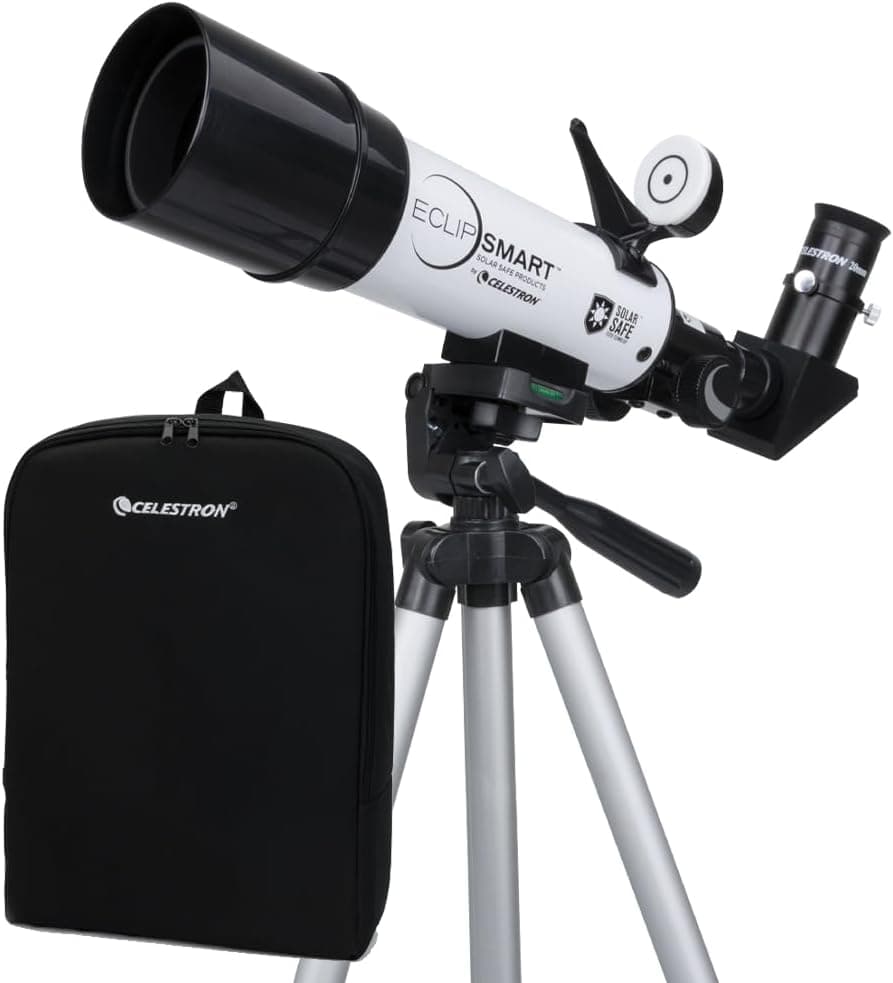
Celestron EclipSmart Safe Solar Eclipse Telescope, a 50mm refractor for Sun viewing certified to ISO 12312-2.
Price range: $ (Budget)
What we liked
- + ISO 12312-2 certified solar filtering is built in for safe Sun viewing
- + Ideal for eclipses and sunspots without buying a separate filter
- + Small 50mm refractor is light and easy for families and schools
Trade-offs
- - Dedicated solar design means it is not suitable for night-sky use
- - White-light views show sunspots but not the prominences seen in hydrogen-alpha scopes
Who this solar telescope is for
The EclipSmart 50 is built for anyone who wants a safe, ready to use telescope for watching a solar eclipse or observing sunspots without assembling a separate filter onto a regular telescope, which is a task that carries real risk of eye damage if done incorrectly. Its light 50mm aperture and compact design make it well suited to families, classrooms and first time solar observers who want a straightforward, grab and go setup for eclipse day rather than a permanent observatory instrument. Because the filter is permanently built in rather than a removable cap, there is no separate part that can be misplaced or accidentally left off before pointing the telescope at the Sun.
Optical specifications
The telescope is a 50mm aperture achromatic refractor with a 360mm focal length, giving it a focal ratio of f/7.2, and it ships with a 20mm eyepiece that produces about 18x magnification, enough to resolve sunspot groups and the sharp edge of the Moon during a partial or total eclipse without magnifying atmospheric turbulence the way a much higher power instrument would. Celestron also publishes a maximum useful magnification figure well above the supplied eyepiece's power, which would require buying additional eyepieces to reach, since the solar filter itself does not limit magnification the way it limits which wavelengths of light pass through.
Solar filter and safety certification
Safety is built around a dual-lens, non-removable glass solar filter that meets the ISO 12312-2:2015(E) standard for safe direct solar viewing, the same international standard used to certify solar eclipse glasses, and Celestron states the filter blocks the vast majority of visible light along with harmful infrared and ultraviolet radiation before it reaches the eyepiece. Because the filter is permanently fixed over the front of the telescope rather than a separate accessory, this model removes the most common and dangerous mistake in solar observing, which is pointing an unfiltered telescope at the Sun or using a filter that has slipped or been left off.
Included accessories and portability
The kit includes the 20mm Kellner eyepiece, a hybrid mirror star diagonal for comfortable viewing angle, an integrated solar safe finderscope so the observer never needs to sight along the tube directly at the Sun, and a travel backpack for carrying the whole setup to an eclipse viewing site. This bundled accessory set means the telescope is usable straight out of the box without hunting down a separate finder or diagonal, which matters for a telescope likely to be used occasionally around specific solar events rather than every clear night.
Verdict and what it does not do
This telescope earns a strong score as a dedicated, safety focused solar instrument, and it ranks at the top of the solar telescope comparison it belongs to, ahead of the higher priced Lunt Solar Systems modular refractor and above Lunt's compact Sunoculars, reflecting its combination of certified safety and accessible price for casual solar viewing. Its most important limitation is that it is built exclusively for daytime solar use and is not intended for night-sky observing at all, so anyone wanting a dual purpose telescope for both eclipses and evening stargazing will need a separate instrument. It also shows sunspots and the solar disk in white light only, not the reddish prominences and flares visible through more expensive hydrogen-alpha solar telescopes.
Frequently asked questions
Can this telescope be used at night for stargazing?
No, it is built specifically for safe solar viewing with a permanently attached solar filter and is not intended for night-sky observing.
Is the solar filter safety certified?
Yes, the built-in glass filter meets the ISO 12312-2:2015(E) standard, the same international safety standard used for solar eclipse glasses.
What magnification does it provide out of the box?
The included 20mm eyepiece produces about 18x magnification, enough to see sunspot groups and the sharp lunar limb during an eclipse.
Does it show solar prominences like a hydrogen-alpha scope?
No, it is a white light solar telescope that shows sunspots and the solar disk, not the prominences and flares visible through dedicated hydrogen-alpha instruments.
Prices change often, so check the current price and availability on Amazon.
Check price on AmazonStargazer Nest may earn a commission from the link above.